Fumitada Moriwaki (森脇文直) | Vintage Oribe Ware Square Tea Plate (Mukōzuke) with signed tomobako
Gallery Overview
This exceptional, hand-built mukōzuke (vessel for the tea ceremony meal) represents a masterful late-20th-century interpretation of classic Momoyama-period Oribe aesthetics by Seto and Mino ceramicist Fumitada Moriwaki (b. 1948). The vessel commands immediate attention through its vivid, pooling copper-green glaze (rokushō), which flows dynamically over the subtly undulating, highly textured stoneware body. At the heart of the plate, a reserved, unglazed circular medallion reveals the warm, iron-flecked clay beneath, featuring a deeply incised, stylized tree-of-life motif. This striking juxtaposition of the glassy, vitreous green exterior against the matte, earthy interior perfectly encapsulates the bold, avant-garde spirit of traditional Oribe ware, making it a compelling centerpiece for both the discerning collector's cabinet and the kaiseki dining experience.
Curatorial Notes
Oribe ware, historically championed by the 16th-century tea master Furuta Oribe, deliberately broke from the austere, quiet restraint of earlier tea aesthetics to embrace intentional asymmetry (hizumi), vivid coloration, and geometric playfulness. Moriwaki honors this revolutionary lineage through the plate's robust, hand-carved edges and the organic, sweeping application of the glaze, which intentionally pools in the corners to create deep, translucent variations in color
The central carving—a meticulously executed botanical emblem—serves as a grounding focal point, drawing the eye inward while offering a stunning textural contrast. The square mukōzuke form was historically utilized during the kaiseki meal preceding a formal tea gathering, designed to harmonize with and elevate the seasonal delicacies it held. The tactile variations across the plate's surface—from the glossy, crackled pools of glaze to the rougher, carved lines of the medallion—invite both visual exploration and physical touch, embodying a sophisticated appreciation for natural, unrefined beauty.
Condition & Provenance
This work is preserved in pristine, museum-grade vintage condition, free from any chips, hairlines, or restorations. The unglazed foot is cleanly executed and bears the artist's deeply incised personal seal.
The piece is fully authenticated and accompanied by its original, custom-fitted wooden presentation box (tomobako), which serves as its definitive provenance. The box lid is inscribed with the artist's fluid calligraphic brushwork and stamped with his traditional red seal. The inclusion of the original biographical insert (shiori), which details Moriwaki's exhibition history and professional lineage at the time of creation, further solidifies its investment value.
Specifications
Artist: Fumitada Moriwaki (森脇文直, b. 1948)
Style / Ware: Oribe Ware (Oribe-yaki)
Form: Square Tea Plate (Mukōzuke)
Dimensions: Width 7.6" (19.3 cm) × Depth 7.5" (19.0 cm) × Height 1.1"–1.5" (2.8–3.8 cm)
Origin: Mino Region (Gifu Prefecture), Japan
Period: Late Shōwa / Early Heisei Era (circa 1990s)
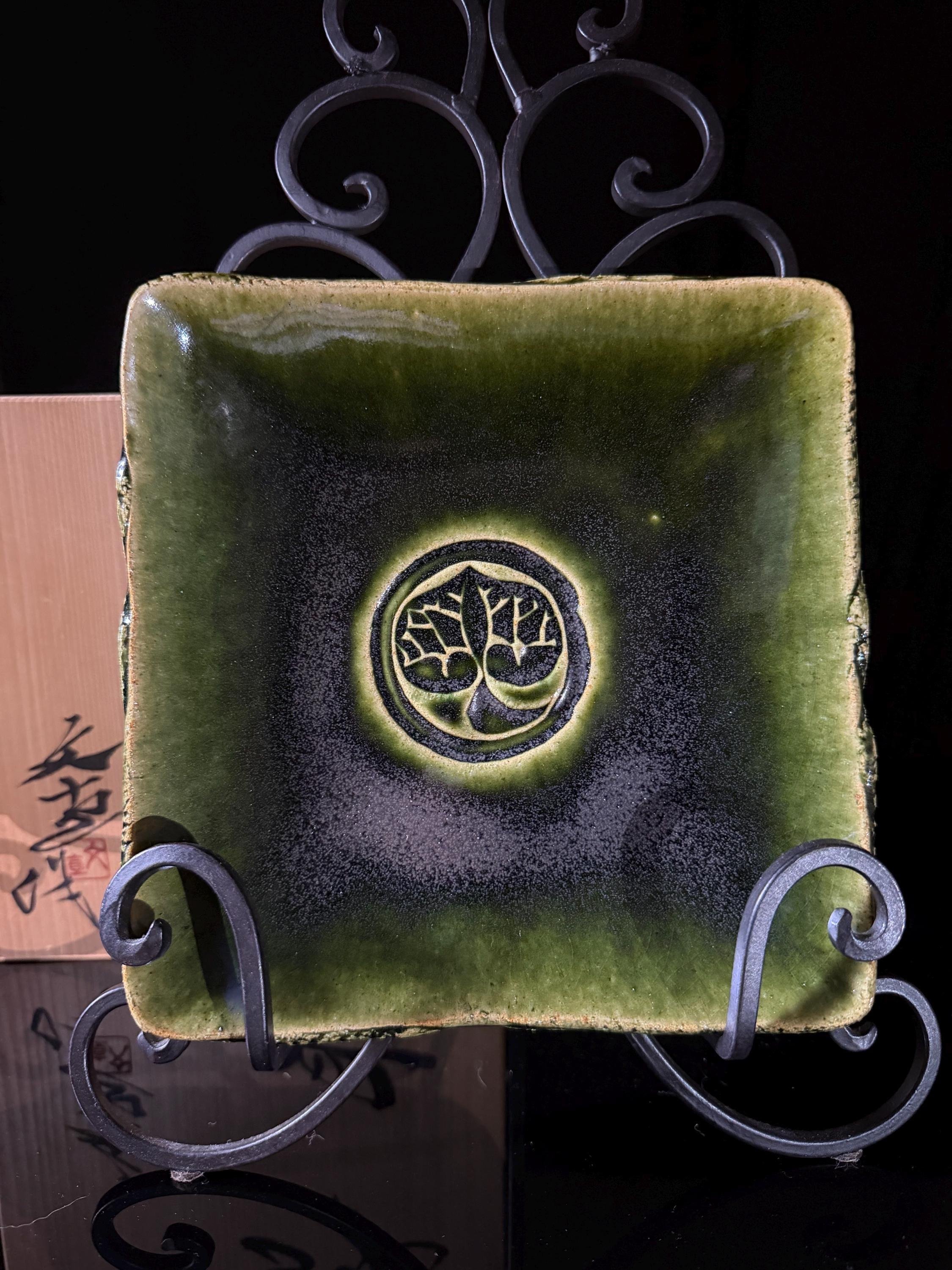 Image 1 of 9
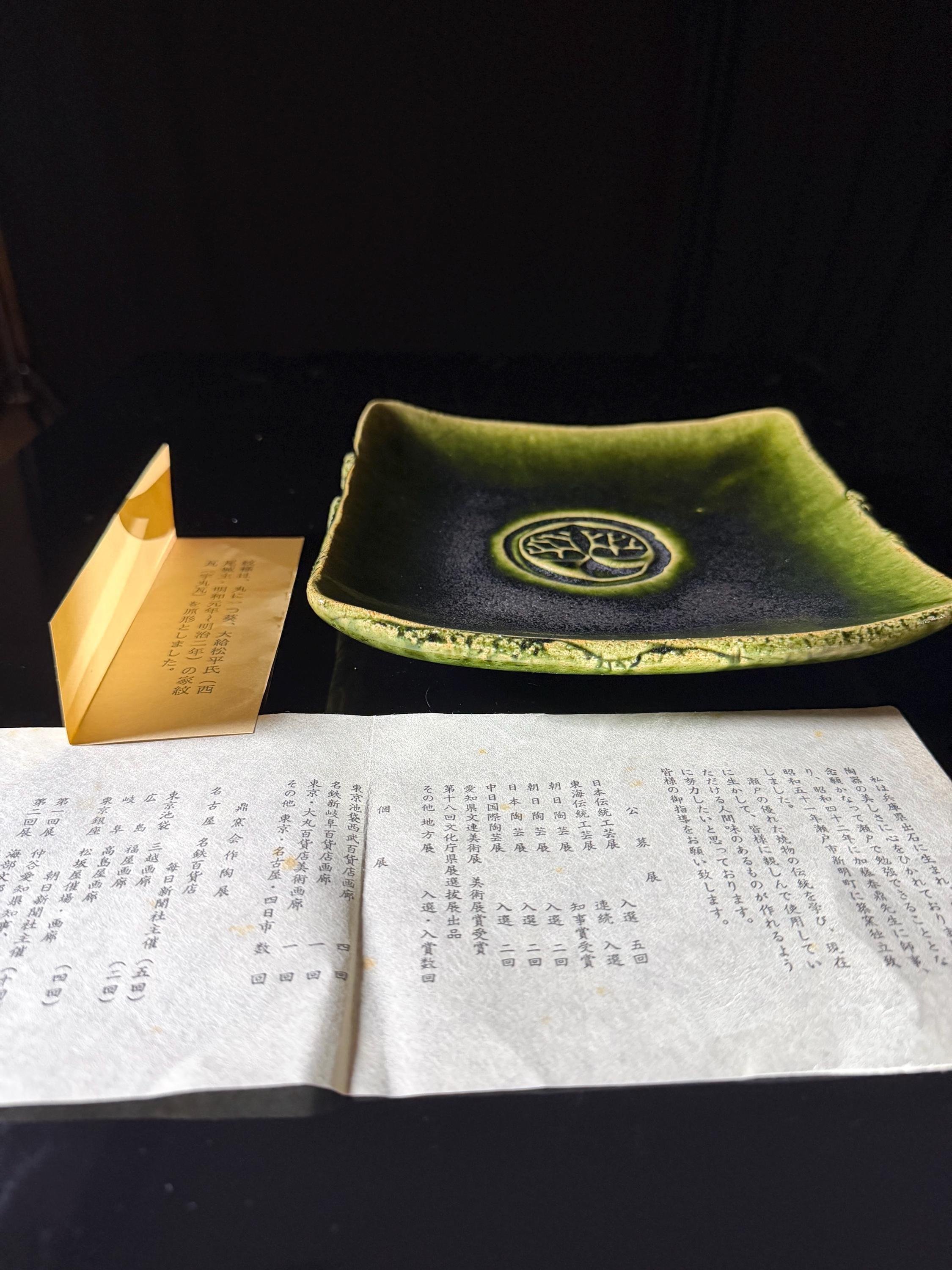 Image 2 of 9
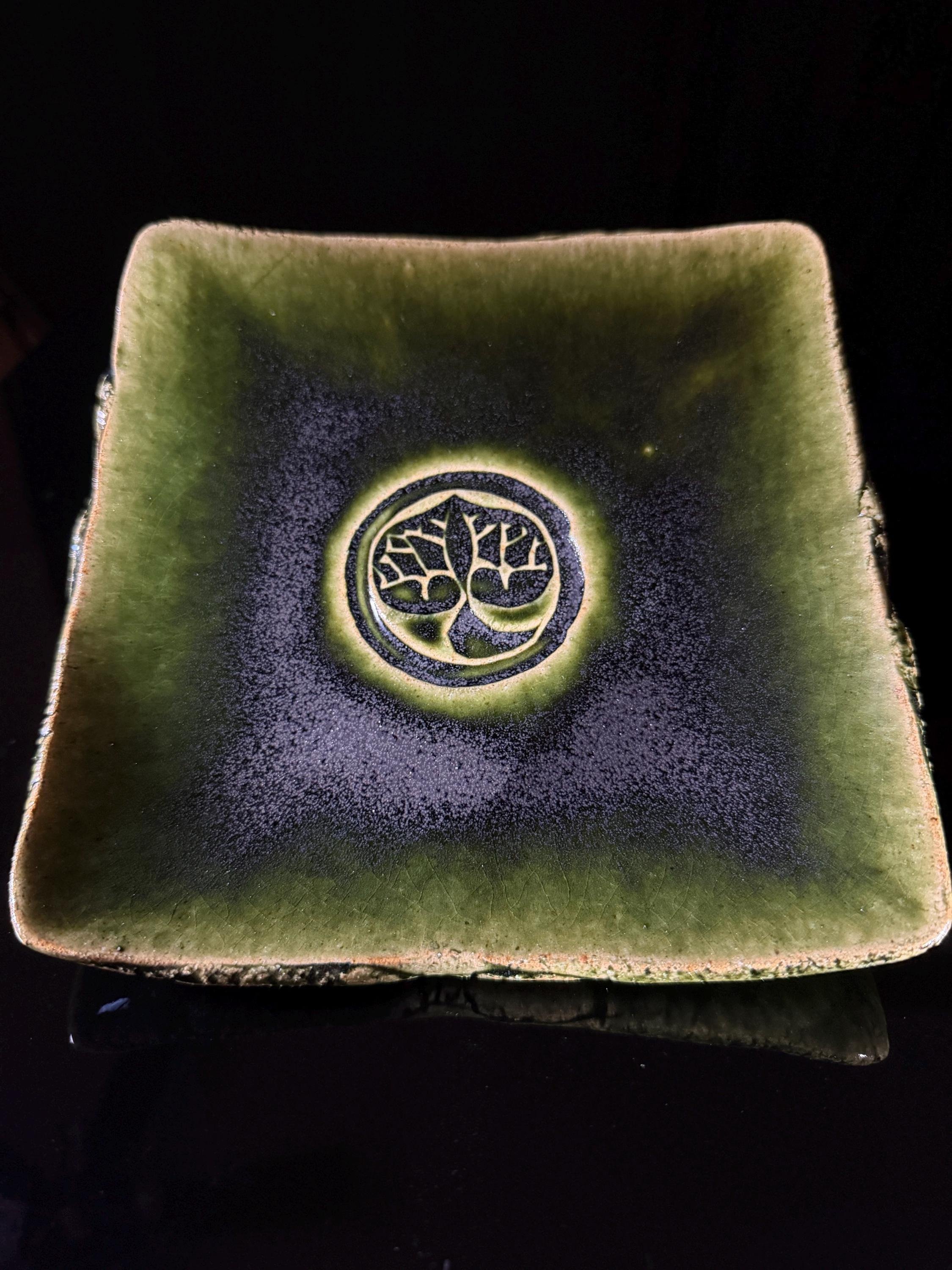 Image 3 of 9
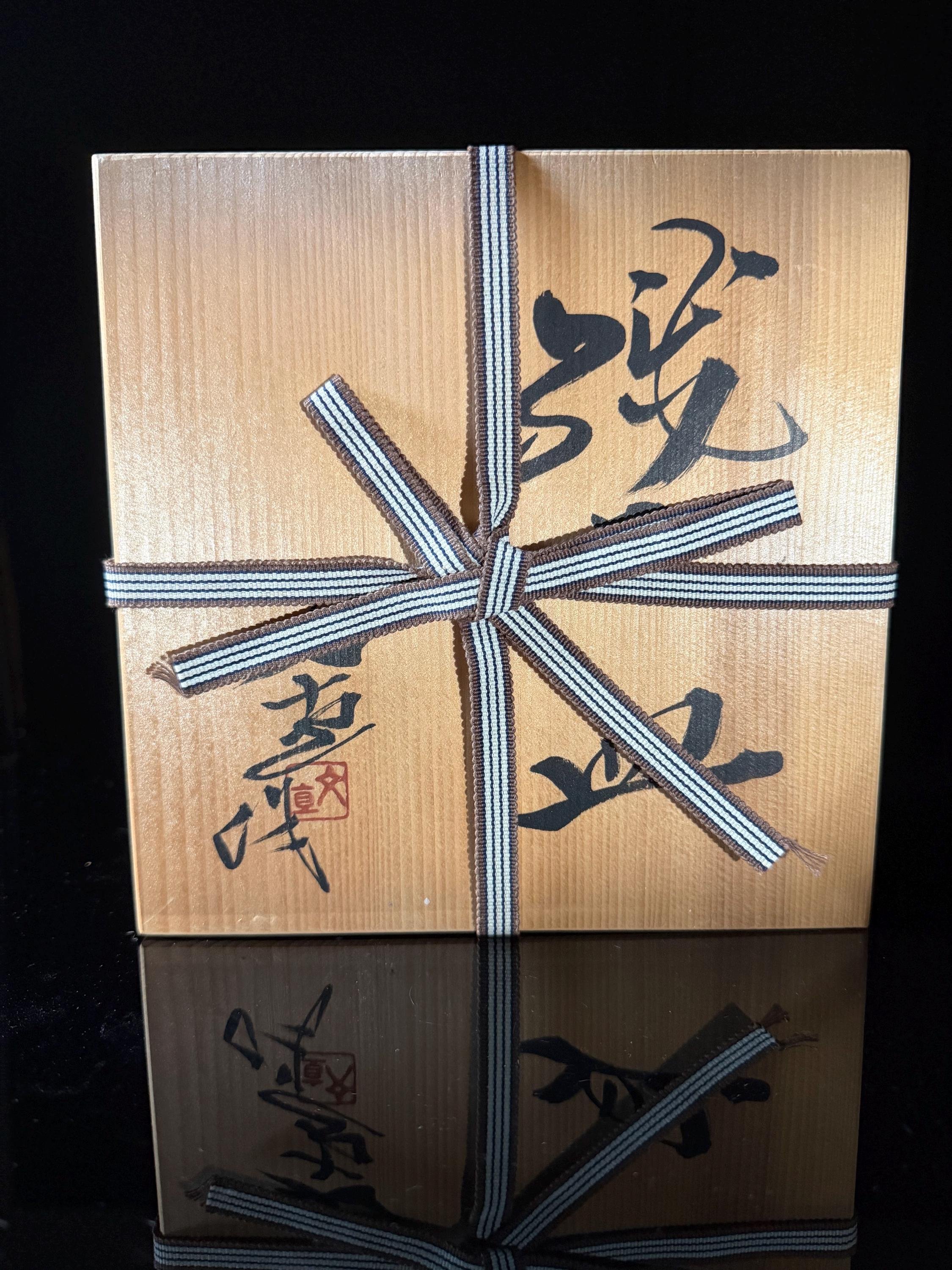 Image 4 of 9
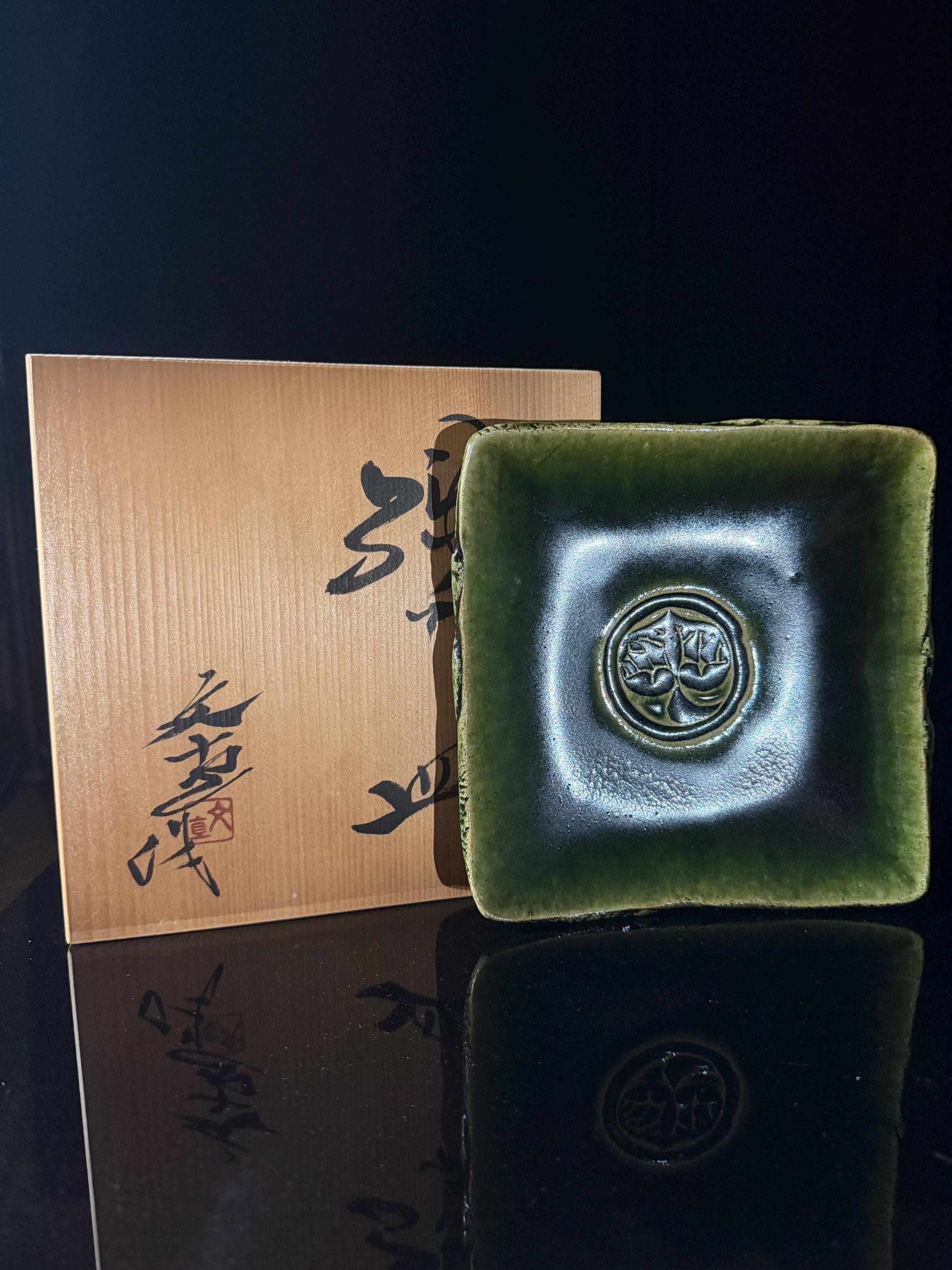 Image 5 of 9
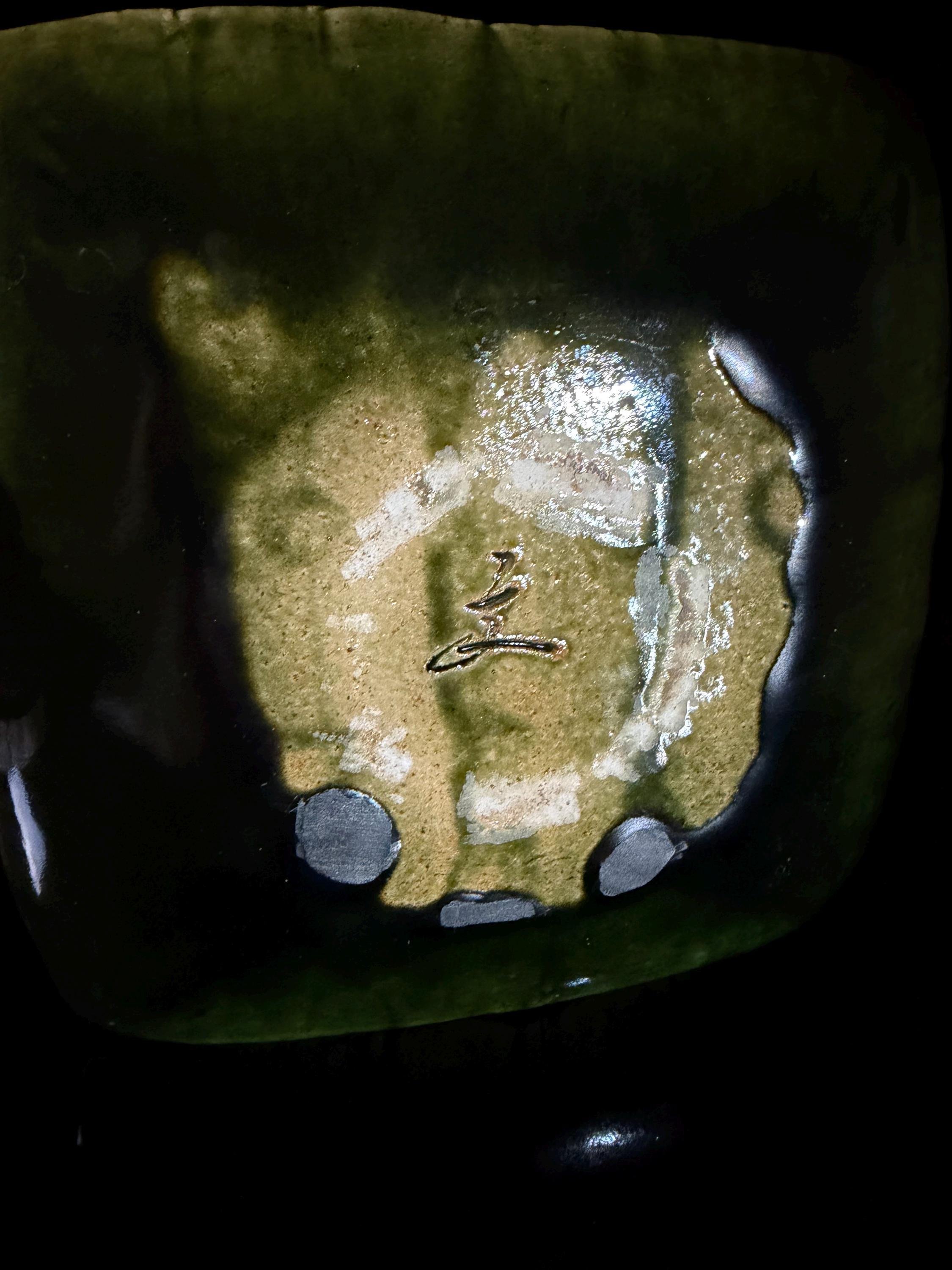 Image 6 of 9
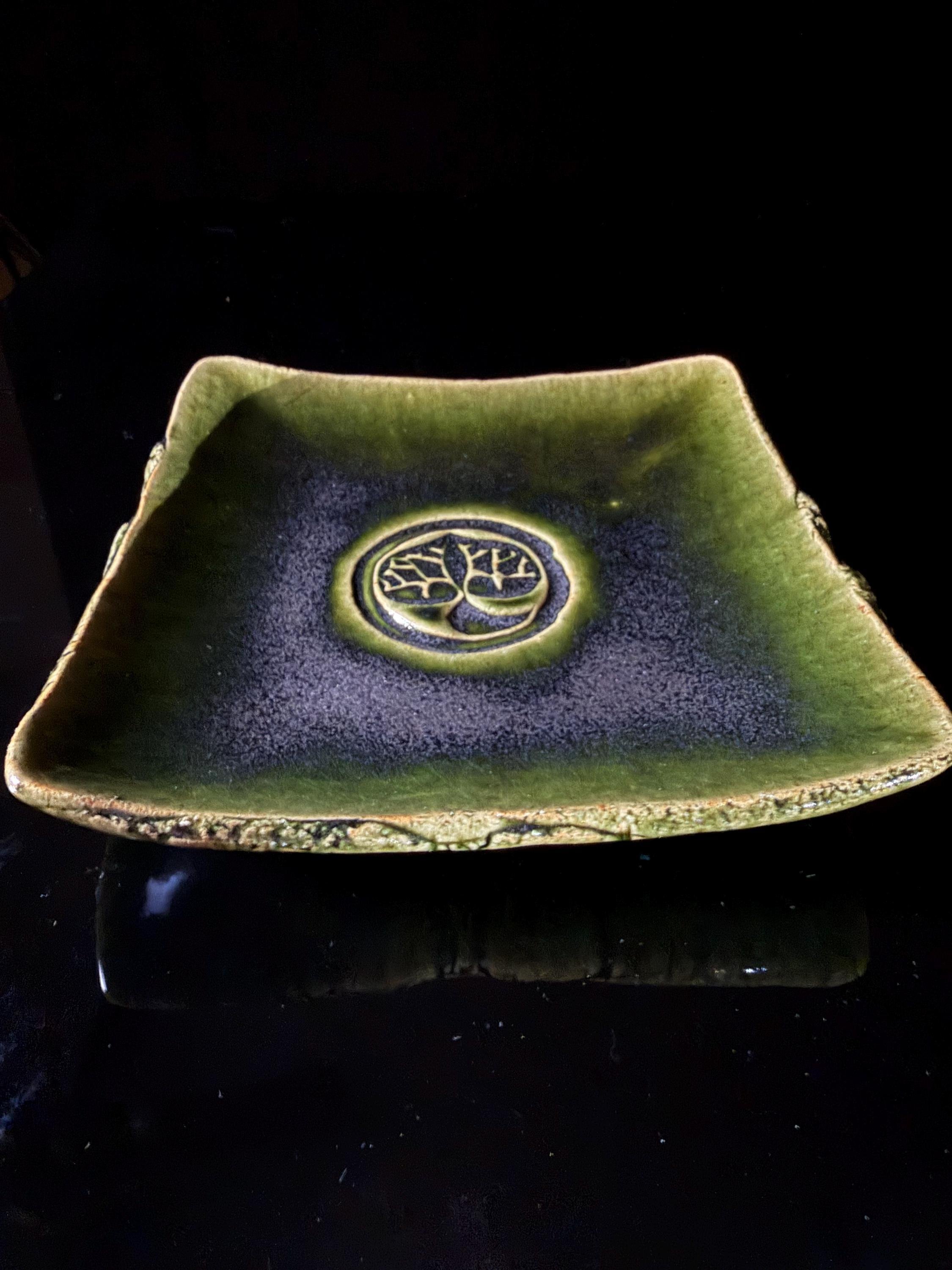 Image 7 of 9
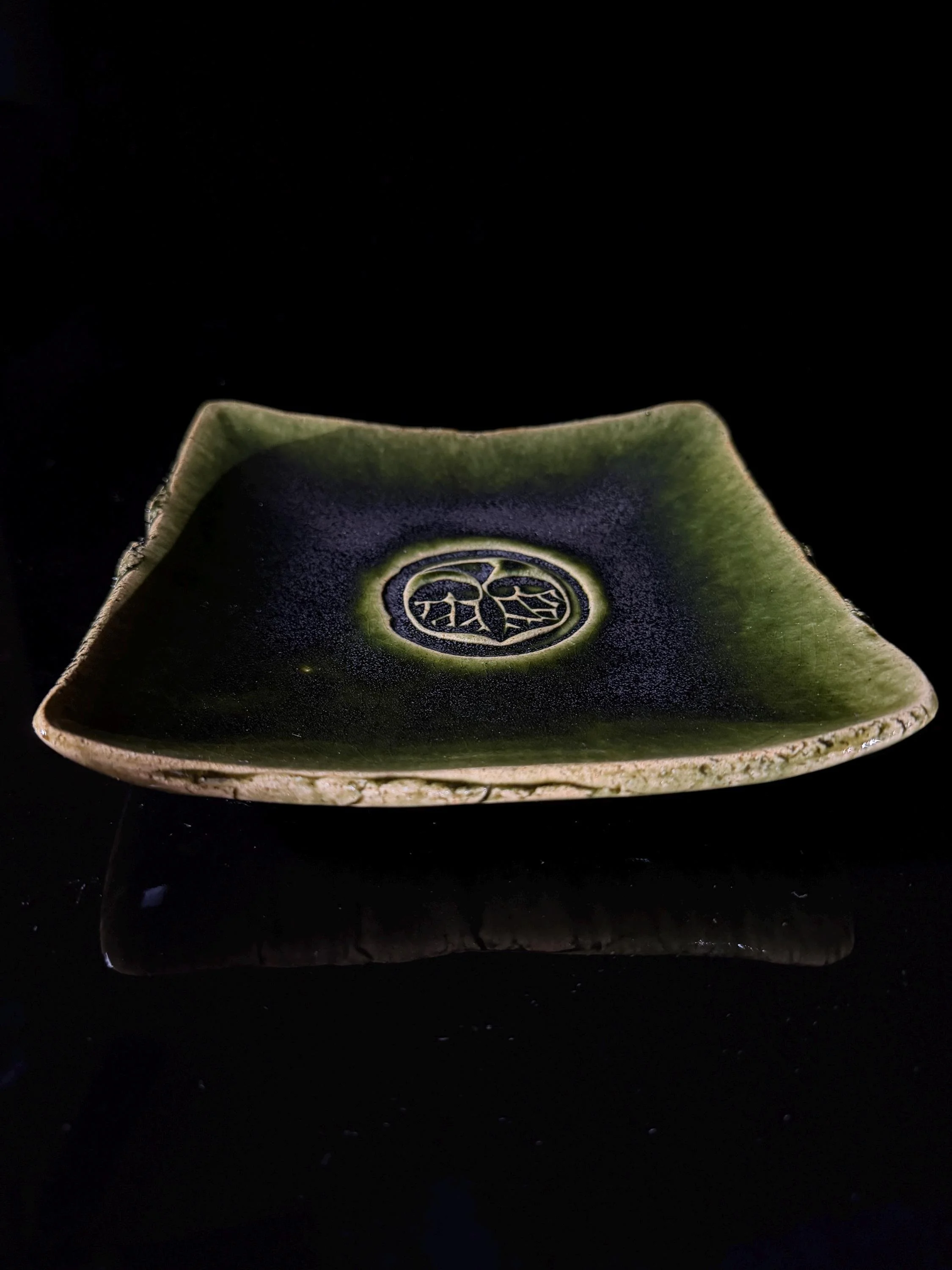 Image 8 of 9
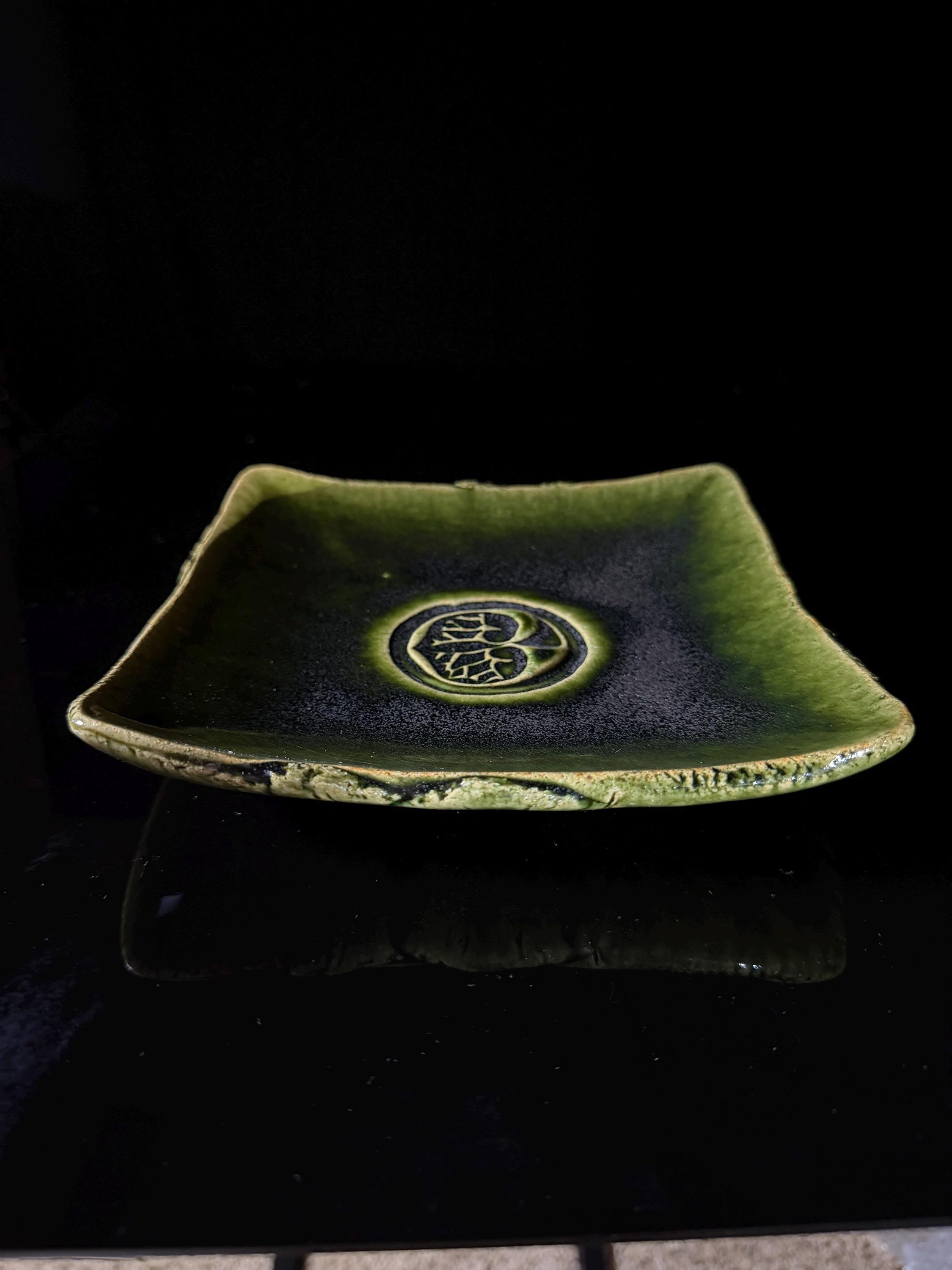 Image 9 of 9