Matsuyama Gaei I (初代 松山雅英) | Vintage "Peacock" Tenmoku Glaze Porcelain Vase (Kabin)
Gallery Overview
This is a museum-quality porcelain vase by Matsuyama Gaei I, a master ceramicist whose historical significance is underscored by a prestigious record of imperial and international diplomacy. The piece features a dramatic, oxblood-to-violet "Peacock" glaze (kujaku-yu). The surface is a mesmerizing, vitreous landscape where deep, saturated purples bleed into vibrant, electric-blue streaks and teal highlights, shimmering with an iridescent, starry-night quality. The long, elegant neck and bulbous, stable base create a classic, refined silhouette that makes this an undeniable anchor piece for any serious fine art collection.
Curatorial Notes
Matsuyama Gaei I (1916–1963) was a highly influential figure in mid-20th-century Japanese ceramics, celebrated for his unparalleled technical mastery over high-fire, volatile transmutation glazes. During his time serving as a consul in mainland China in the 1930s and 40s, Matsuyama was profoundly inspired by ancient Chinese ceramics. Upon his return to Japan in 1947, he dedicated his life to the craft, studying under the tutelage of the renowned Kyoto master Kiyomizu Rokubei.
By 1951, Matsuyama had successfully revived and modernized the legendary copper transmutation glazes inspired by 12th-century Song Dynasty Jian ware, culminating in his signature Yohen Kujaku Tenmoku (Peacock Glaze). This extremely challenging technique requires metallic minerals to be meticulously layered and fired at exact, extreme temperatures to achieve a flawless, mirror-like gradient. His reputation for absolute perfection quickly garnered elite recognition; his masterworks were selected as official diplomatic gifts for some of the world's most powerful figures, including Emperor Hirohito in 1953, Indian Prime Minister Jawaharlal Nehru in 1956, and U.S. President Dwight D. Eisenhower in 1960.
Before his untimely passing in 1963, Matsuyama passed the closely guarded secrets of the Peacock kiln to his wife, Tsutako, who succeeded him as the second-generation master. Pieces from the first-generation founder are exceedingly rare and represent a brilliant convergence of ancient glazing techniques and mid-century modernist refinement.
Condition & Provenance
This work is preserved in pristine, museum-grade vintage condition, completely free from chips, cracks, or restorations. The unglazed base is cleanly executed and bears the artist's deeply stamped square seal.
The piece is fully authenticated and accompanied by its original, custom-fitted wooden presentation box (tomobako). The box lid is inscribed with the calligraphic brushwork "孔雀釉花瓶" (Peacock Glaze Vase), signed by the artist, and stamped with his personal red seal. The inclusion of the original biographical insert (shiori), which documents the historical record of his imperial and diplomatic commissions up until that point, provides definitive provenance and solidifies its status as a high-value collector's item.
Specifications
Artist: Matsuyama Gaei I (初代 松山雅英, 1916–1963)
Style / Ware: Porcelain with Peacock Glaze (Yohen Kujaku Tenmoku)
Form: Vase (Kabin)
Dimensions: Height 9.4" (24.0 cm) × Diameter 3.7" (9.5 cm)
Origin: Hyogo Prefecture, Japan
Period: Mid-Shōwa Era (circa 1950s–1963)
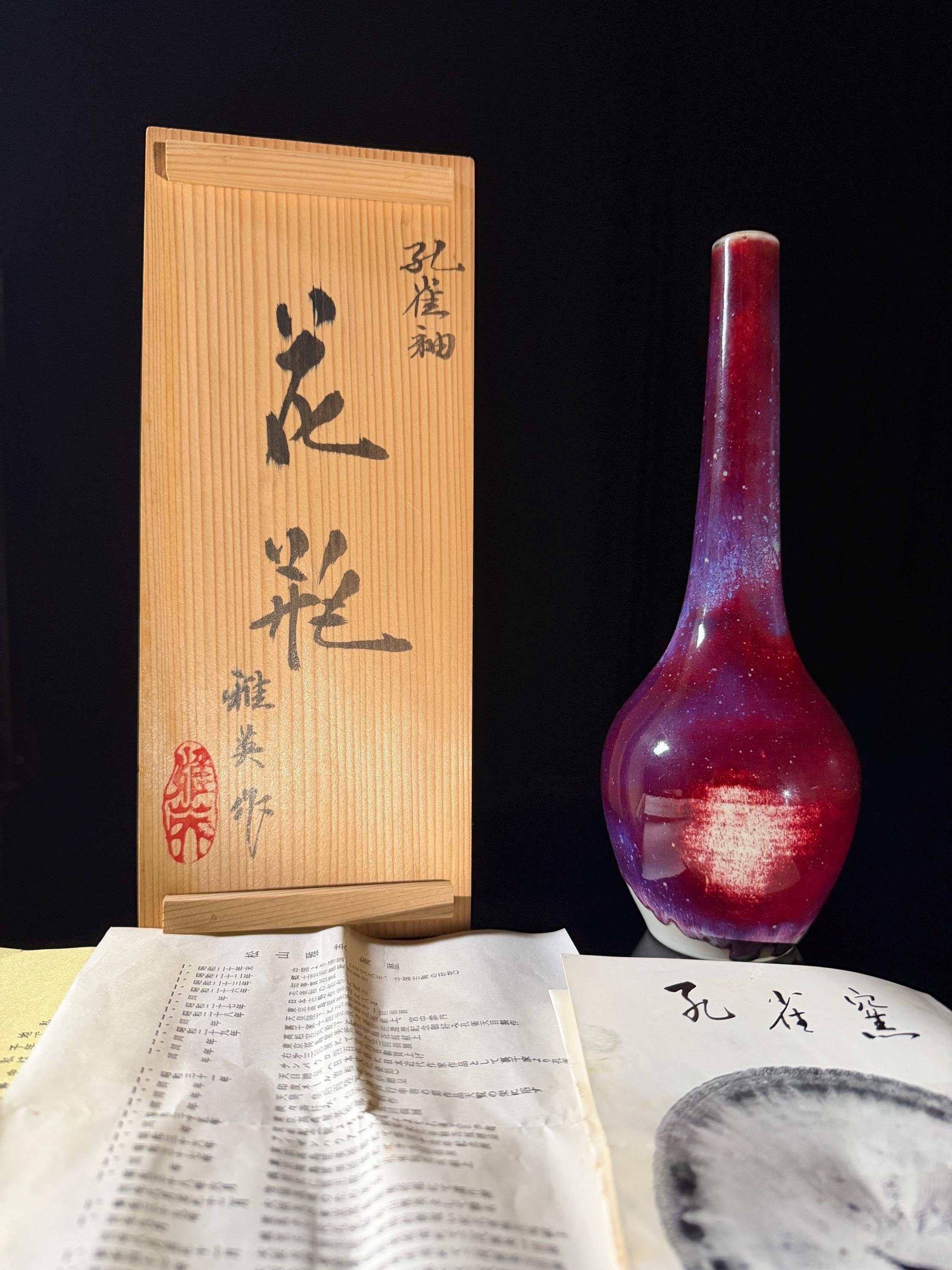 Image 1 of 13
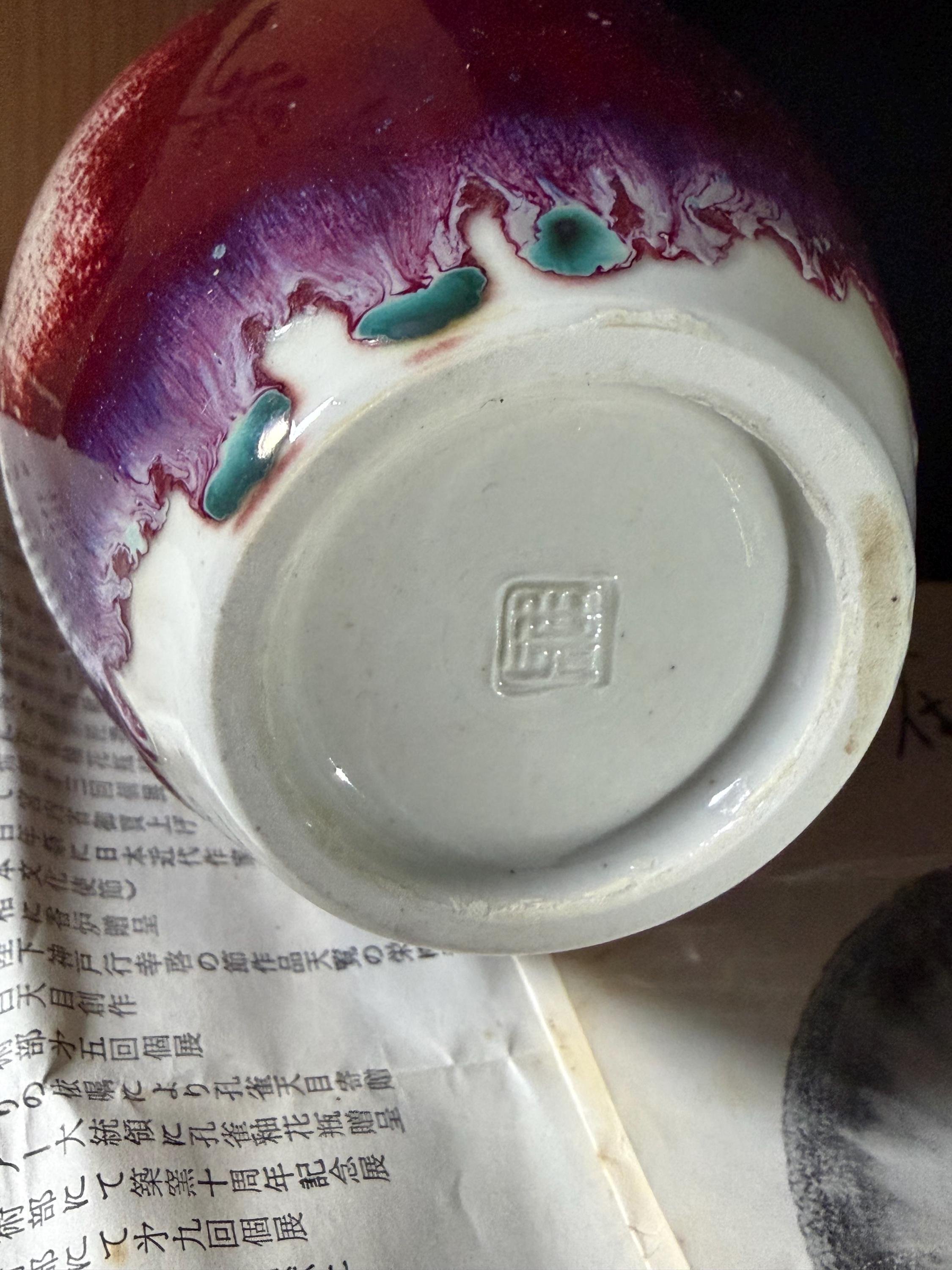 Image 2 of 13
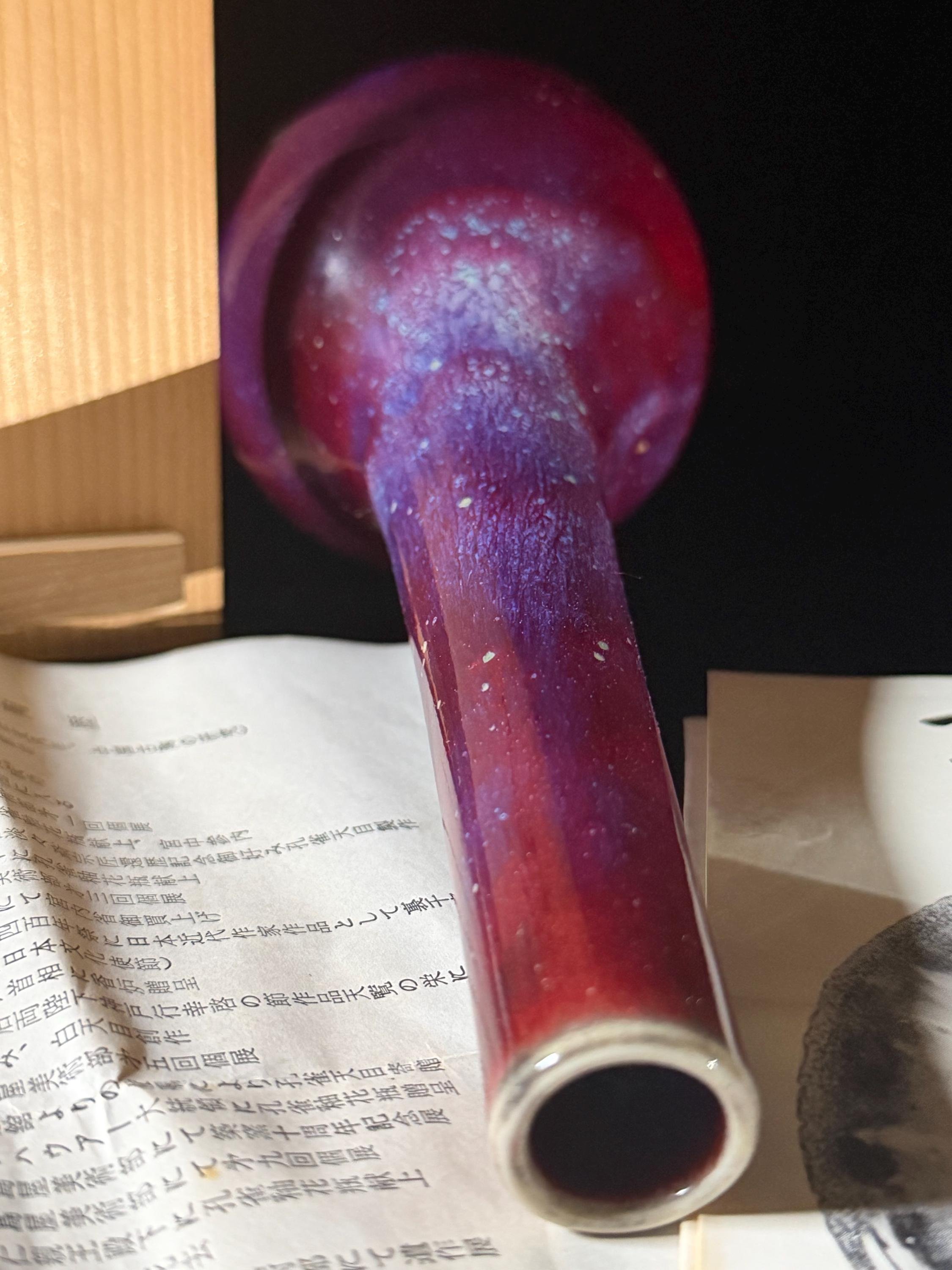 Image 3 of 13
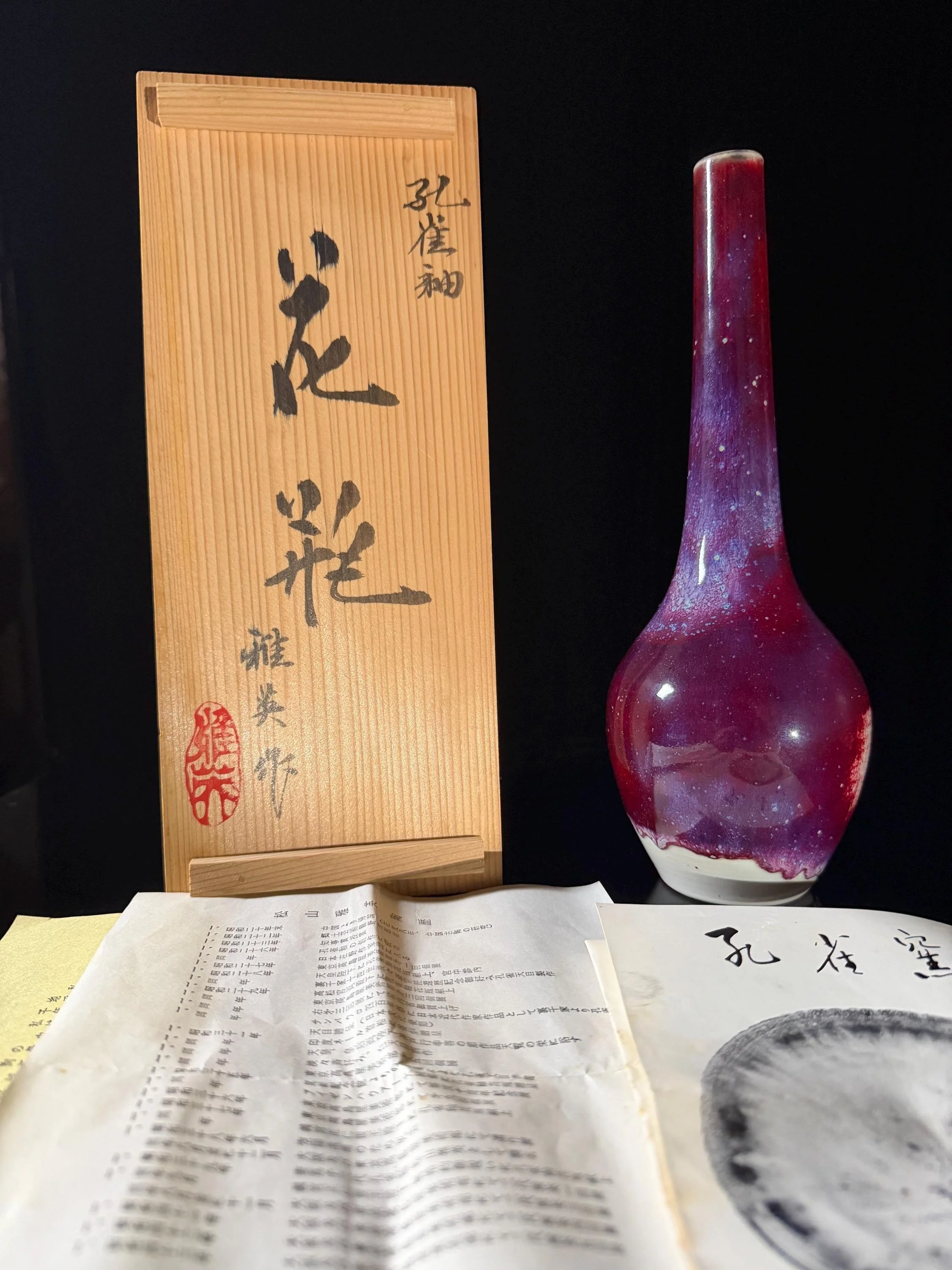 Image 4 of 13
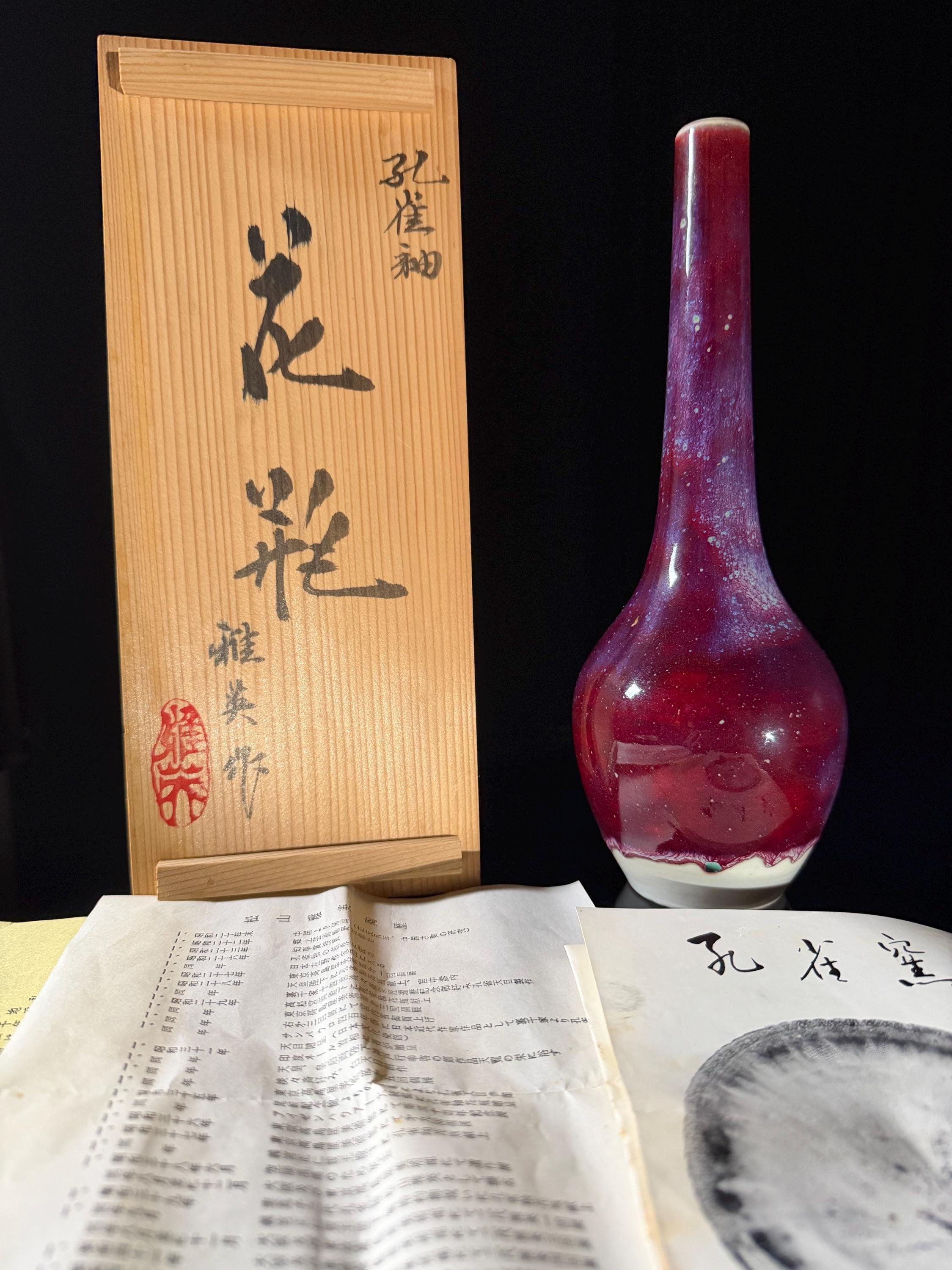 Image 5 of 13
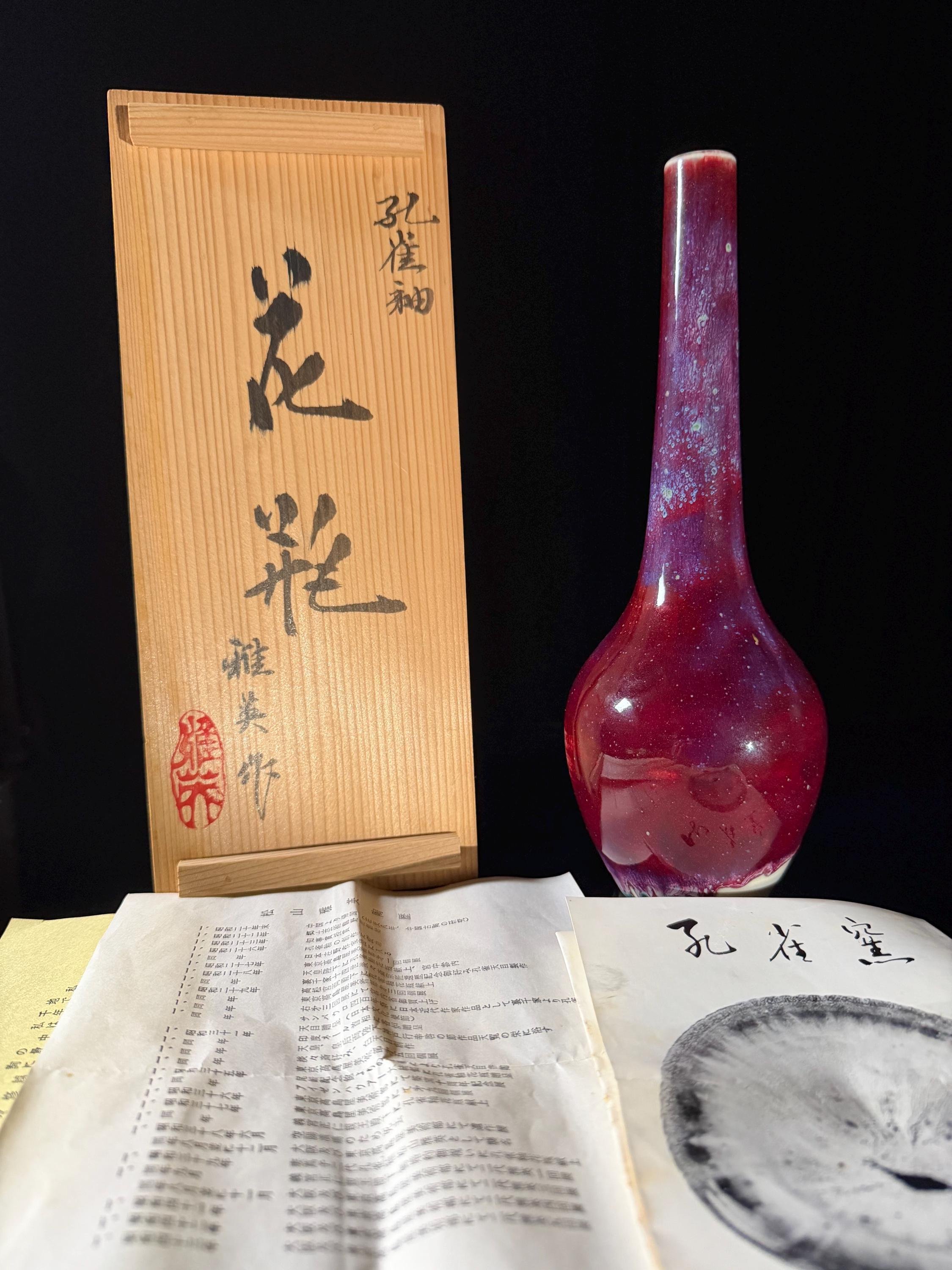 Image 6 of 13
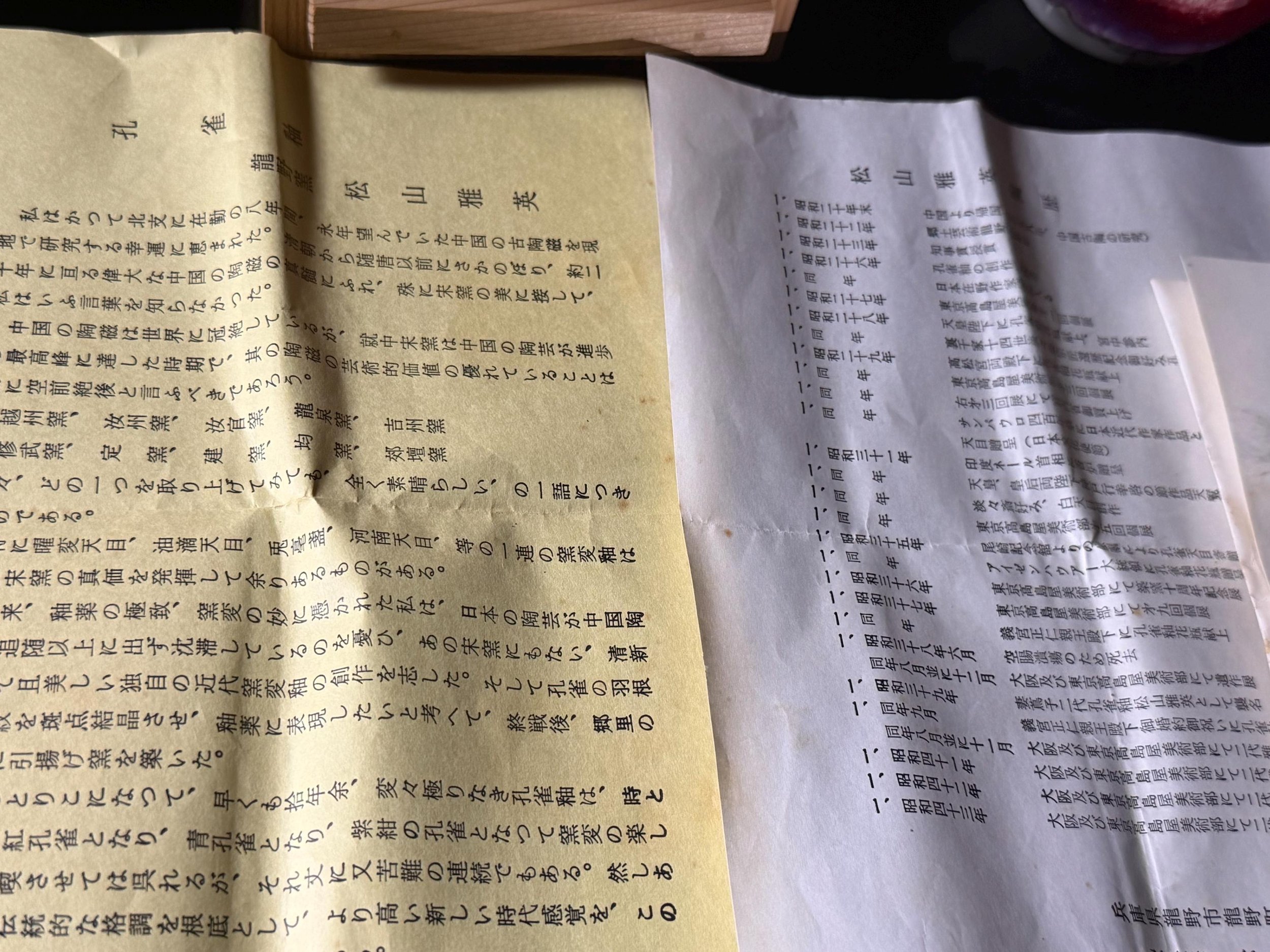 Image 7 of 13
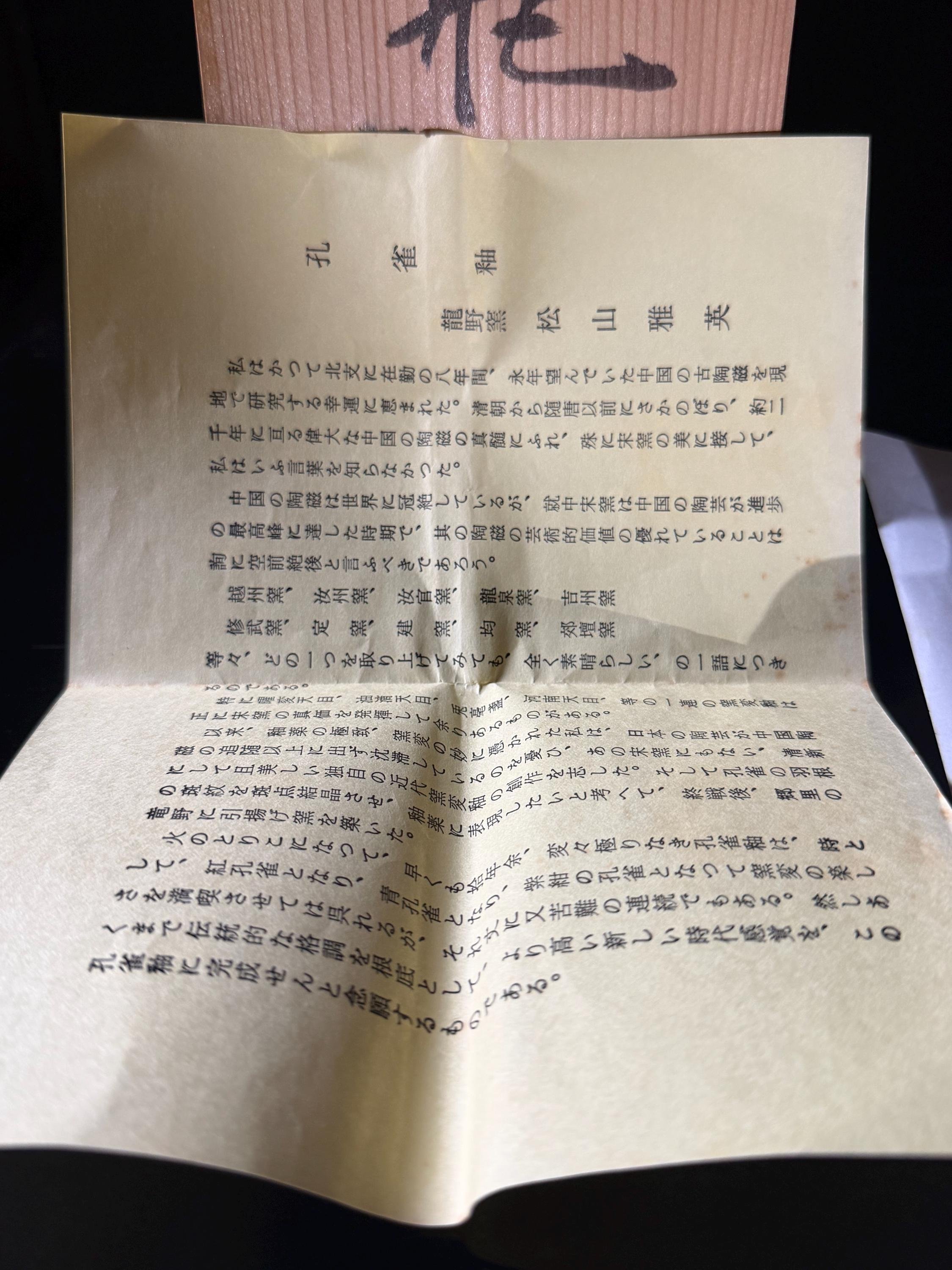 Image 8 of 13
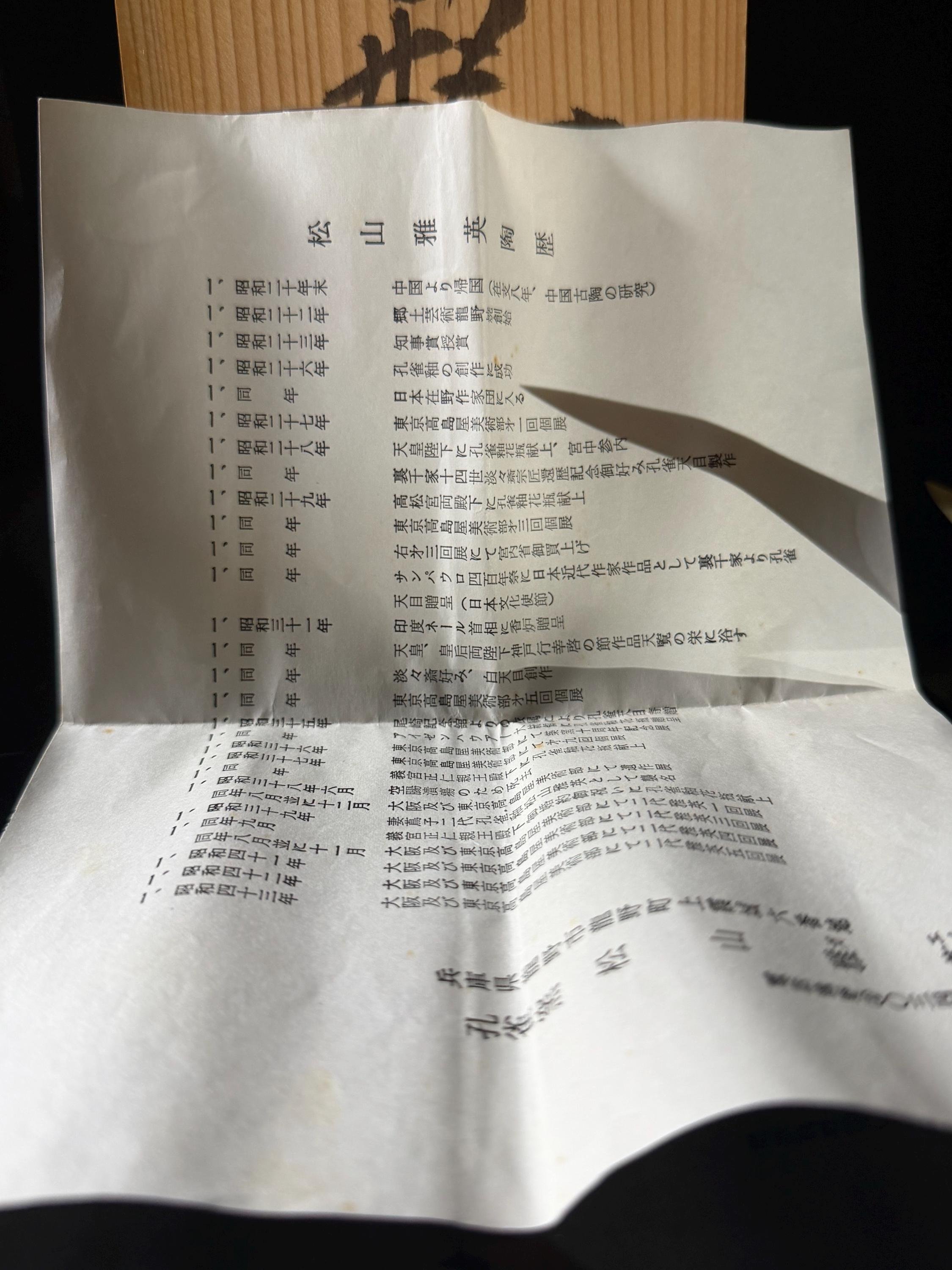 Image 9 of 13
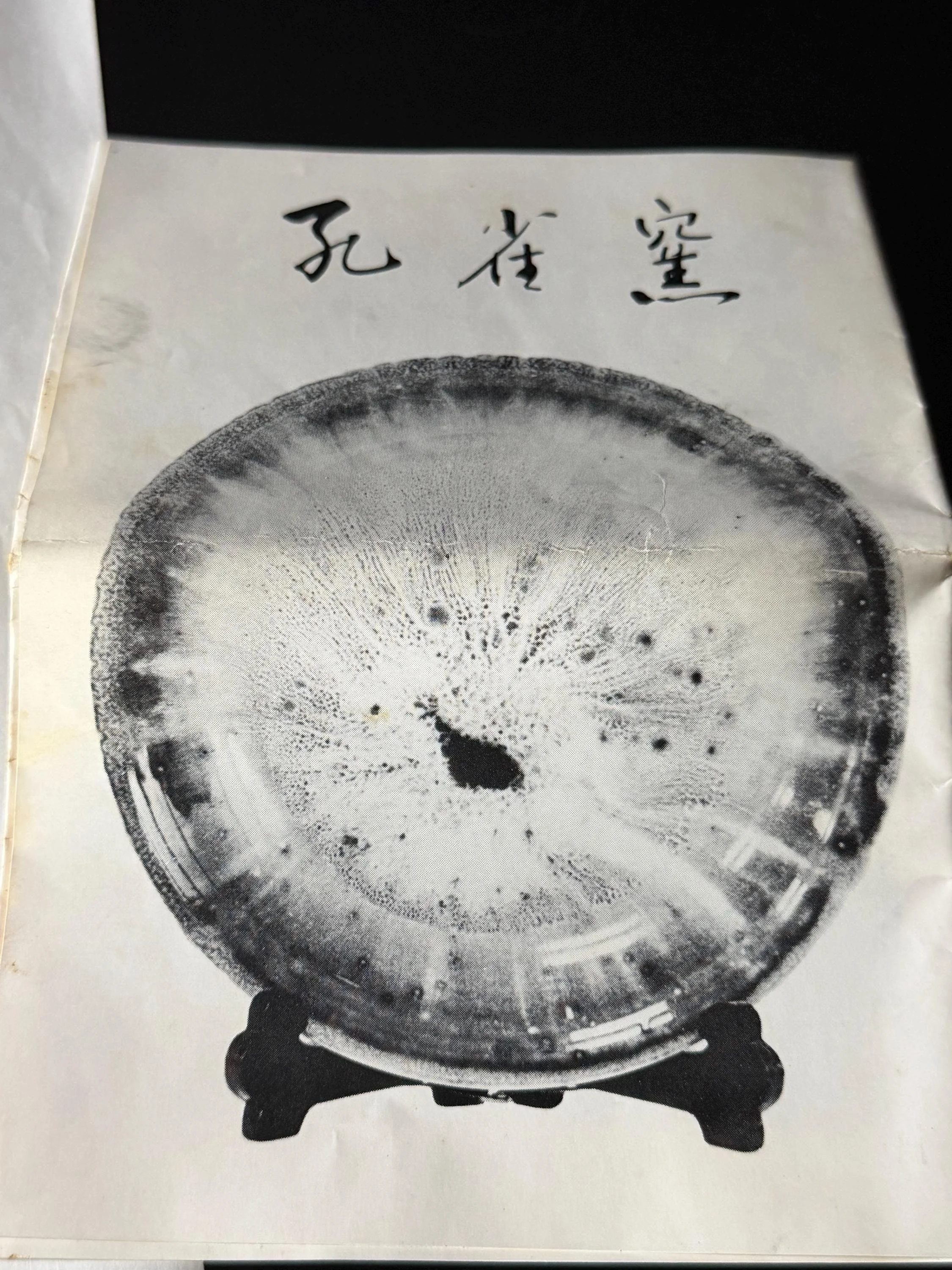 Image 10 of 13
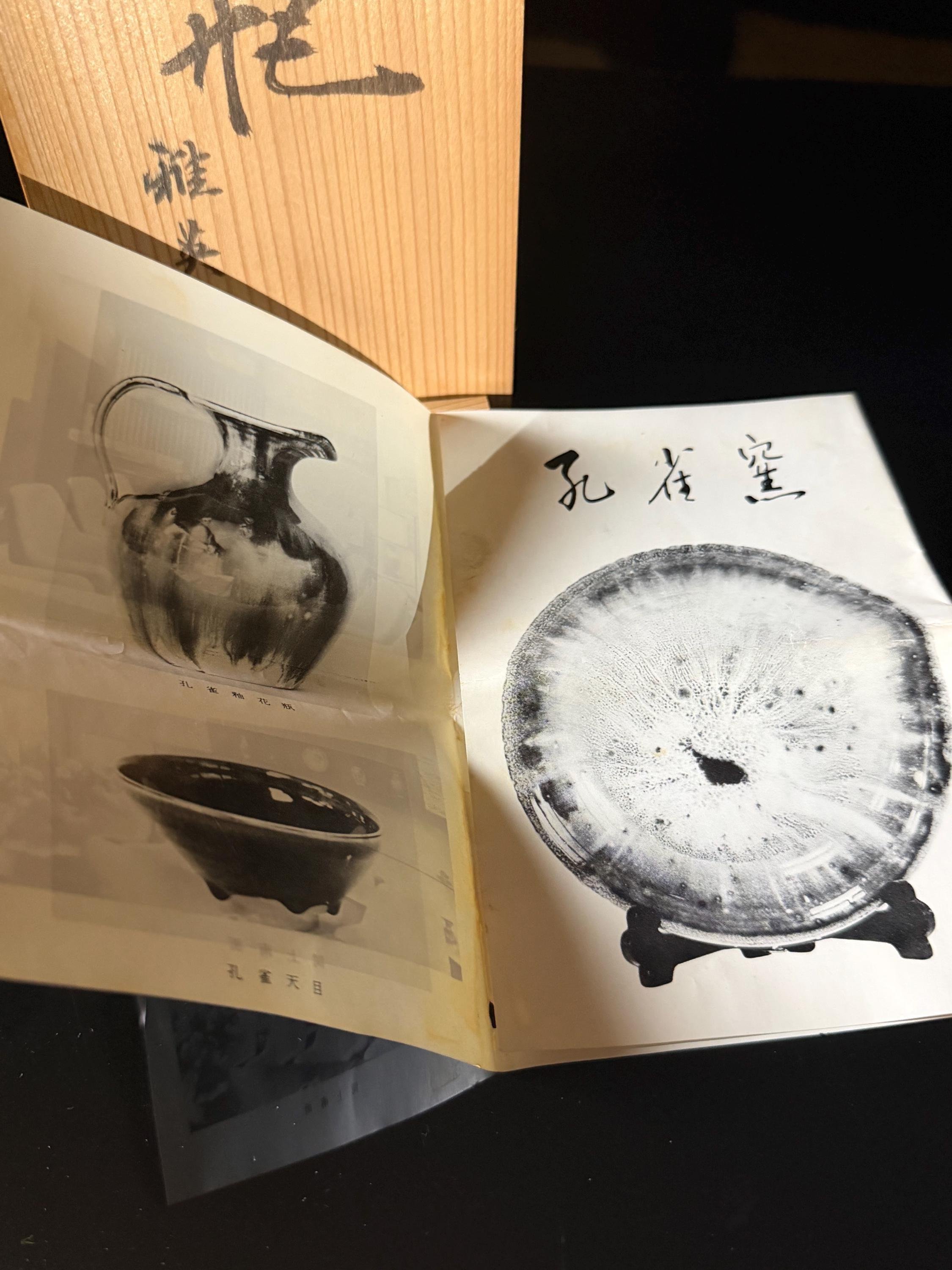 Image 11 of 13
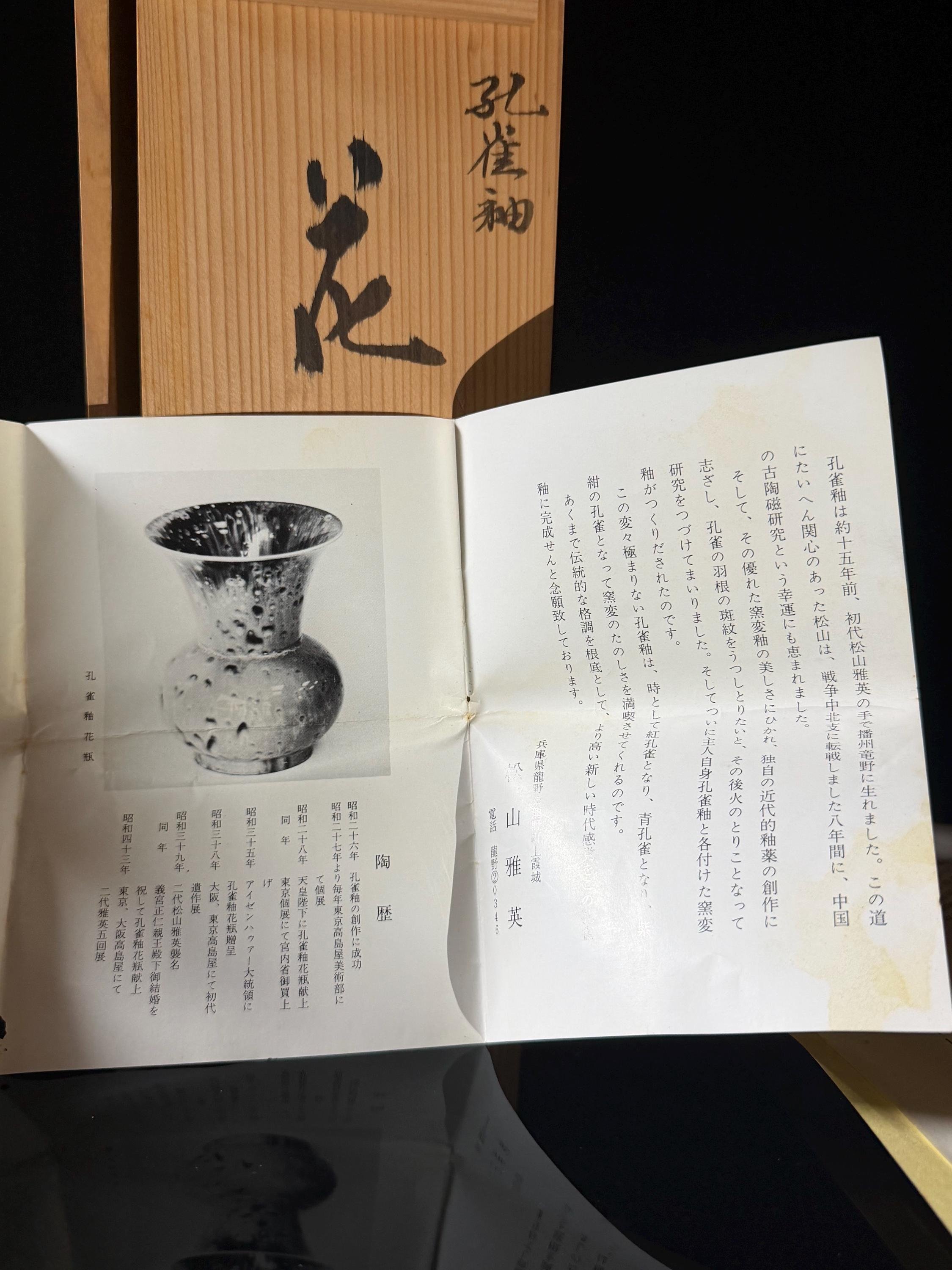 Image 12 of 13
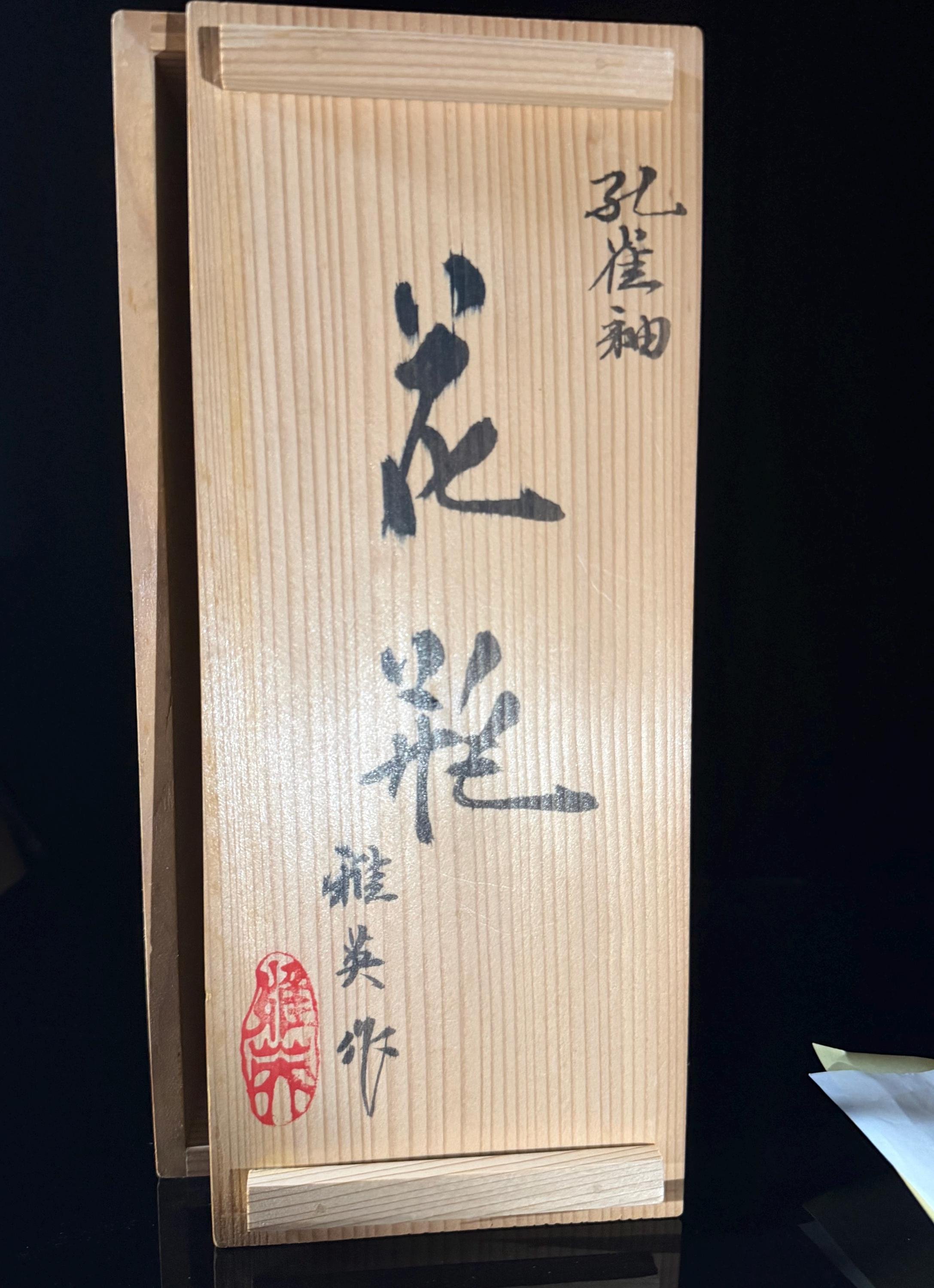 Image 13 of 13