Nakano Kōtsugu | Kasama Ware Soubun Ichirin-zashi (Grass Motif Bud Vase)

$145.00
Gallery Overview

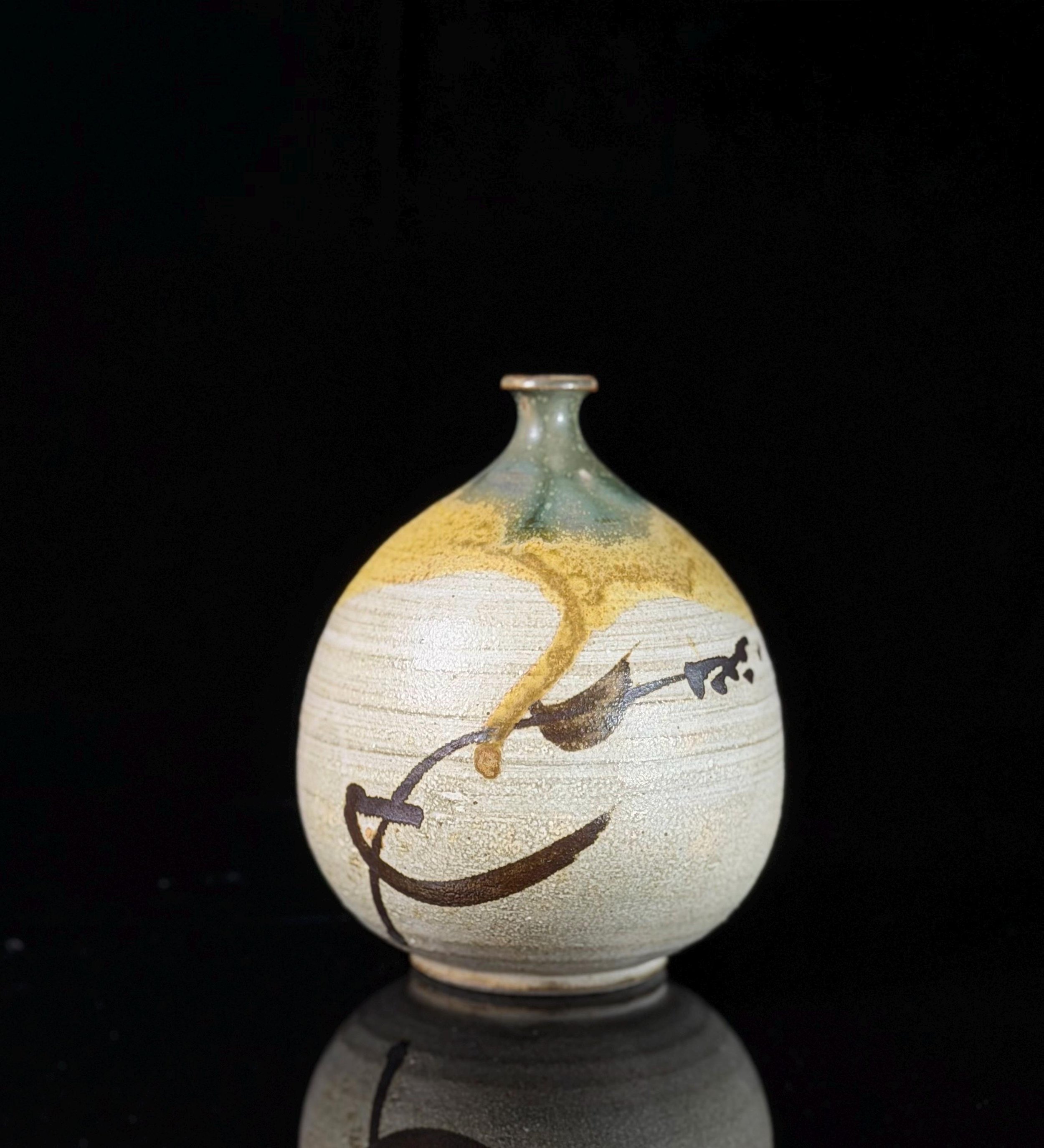
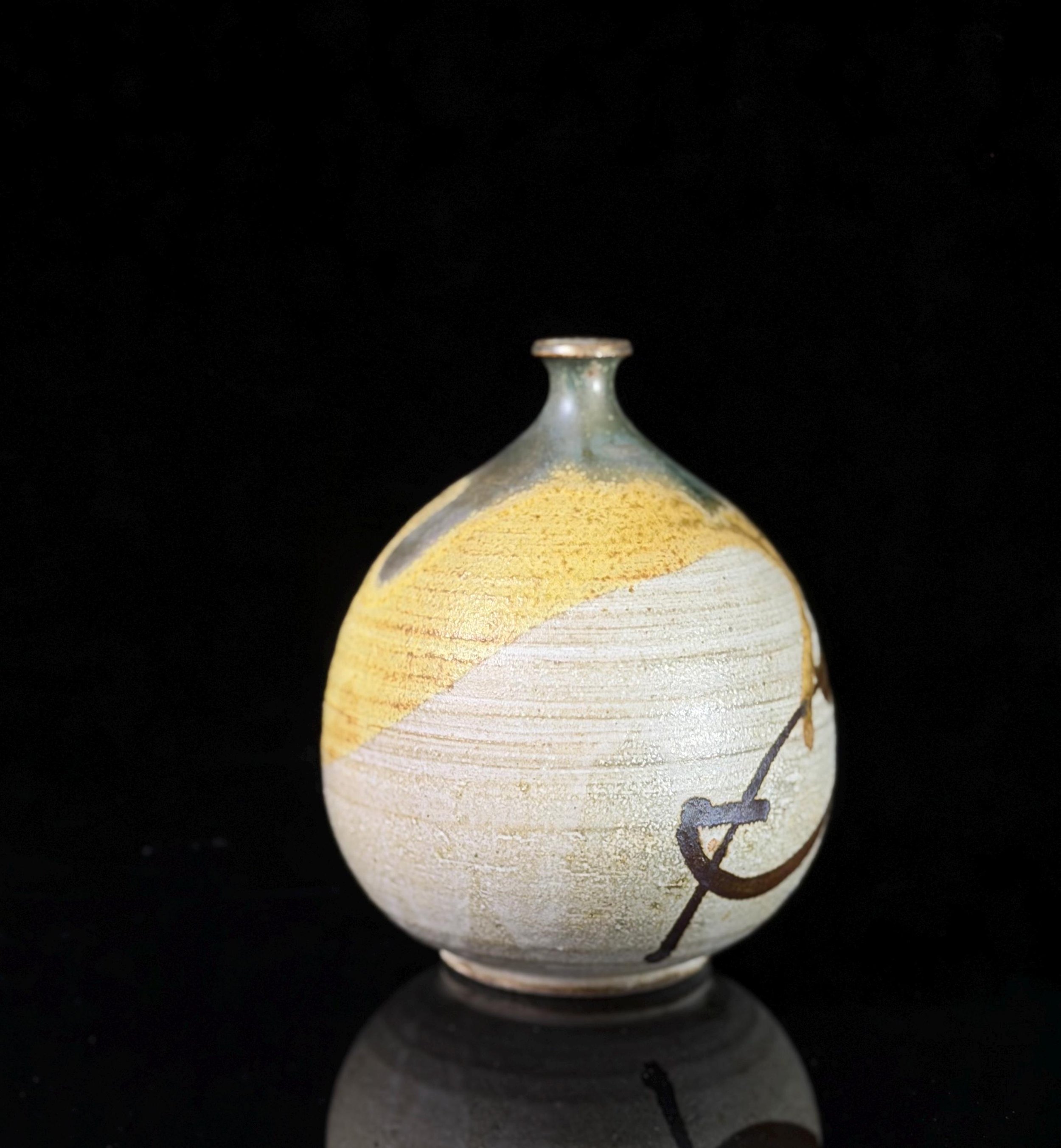
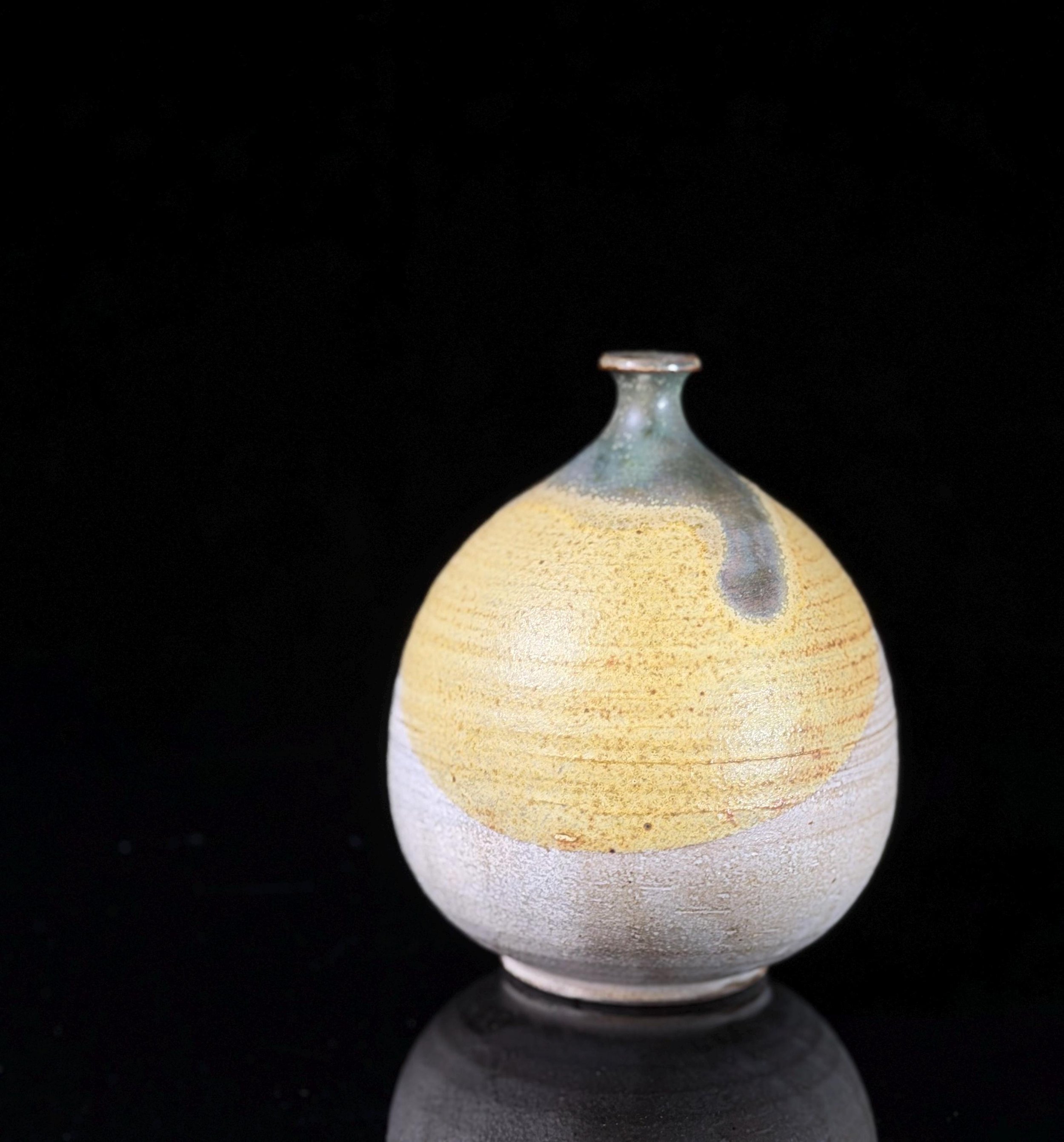
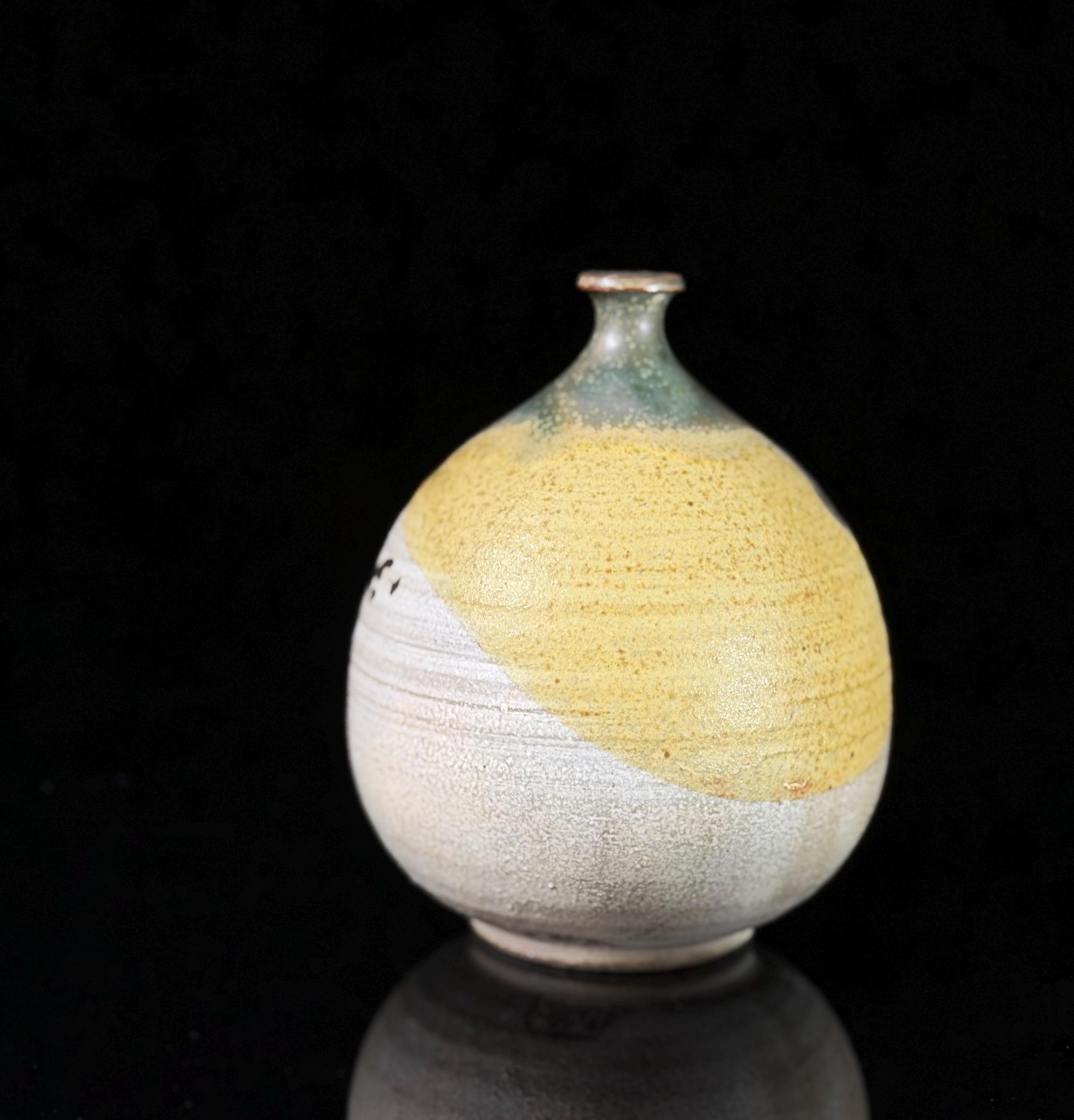
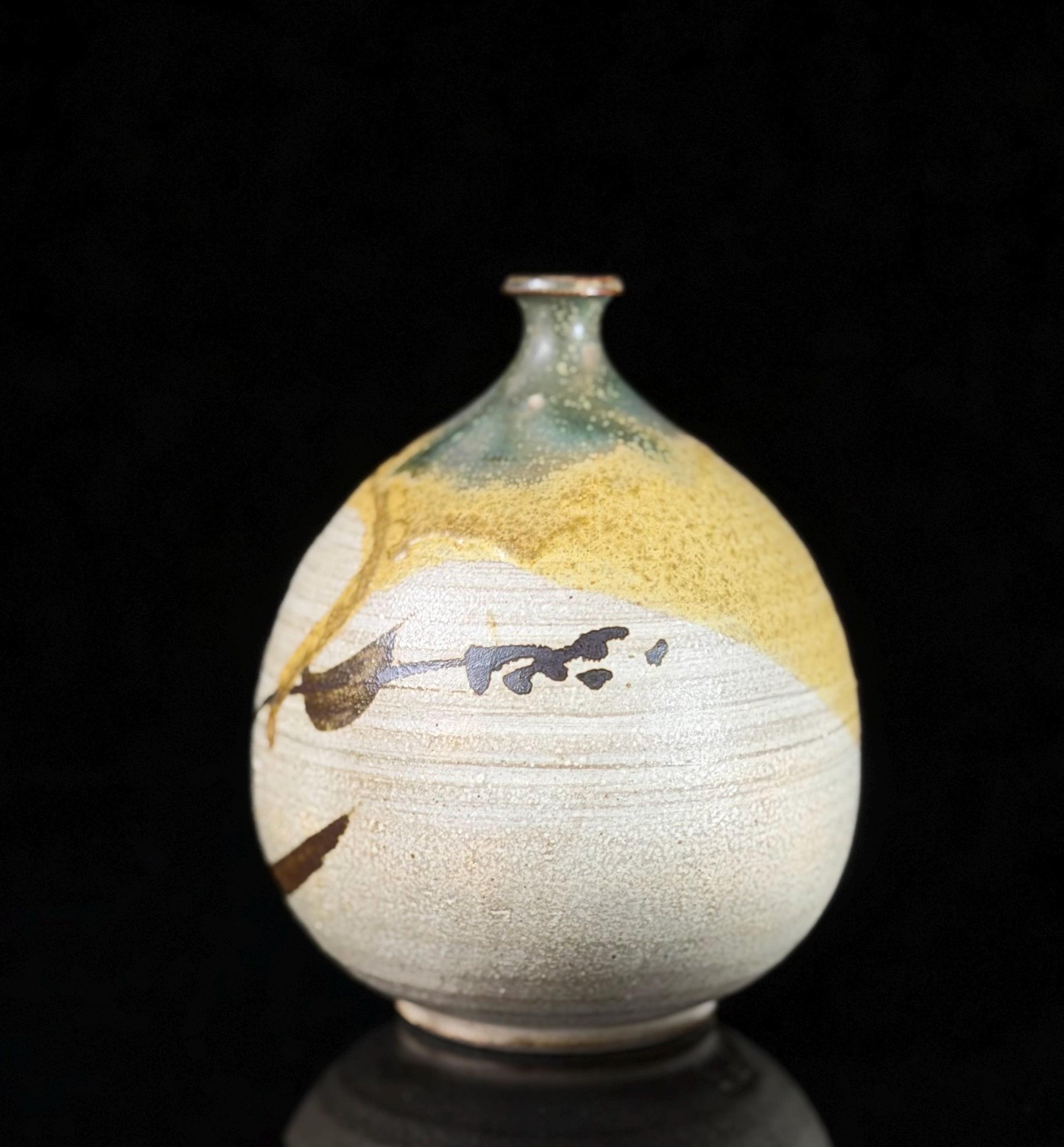
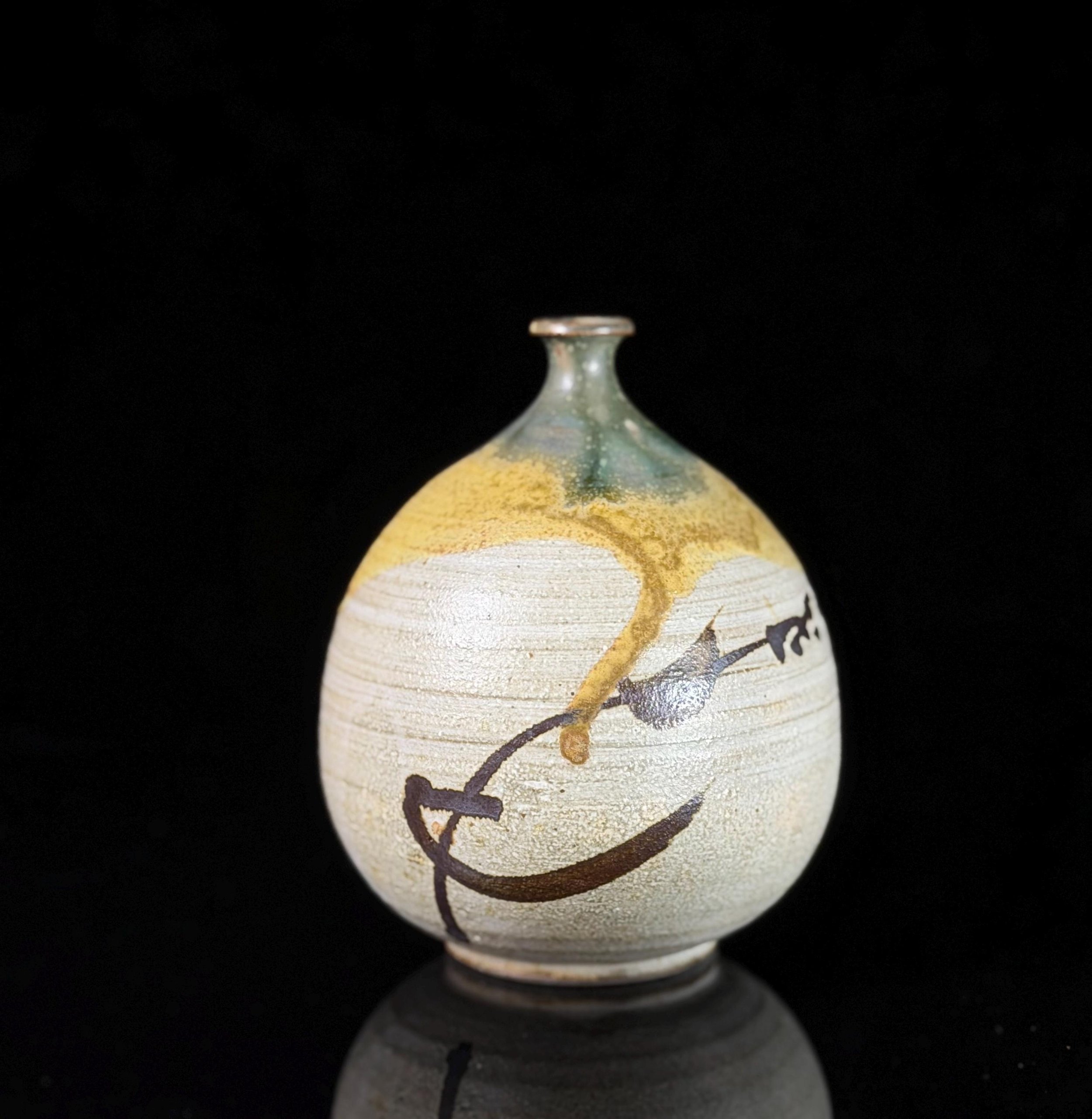
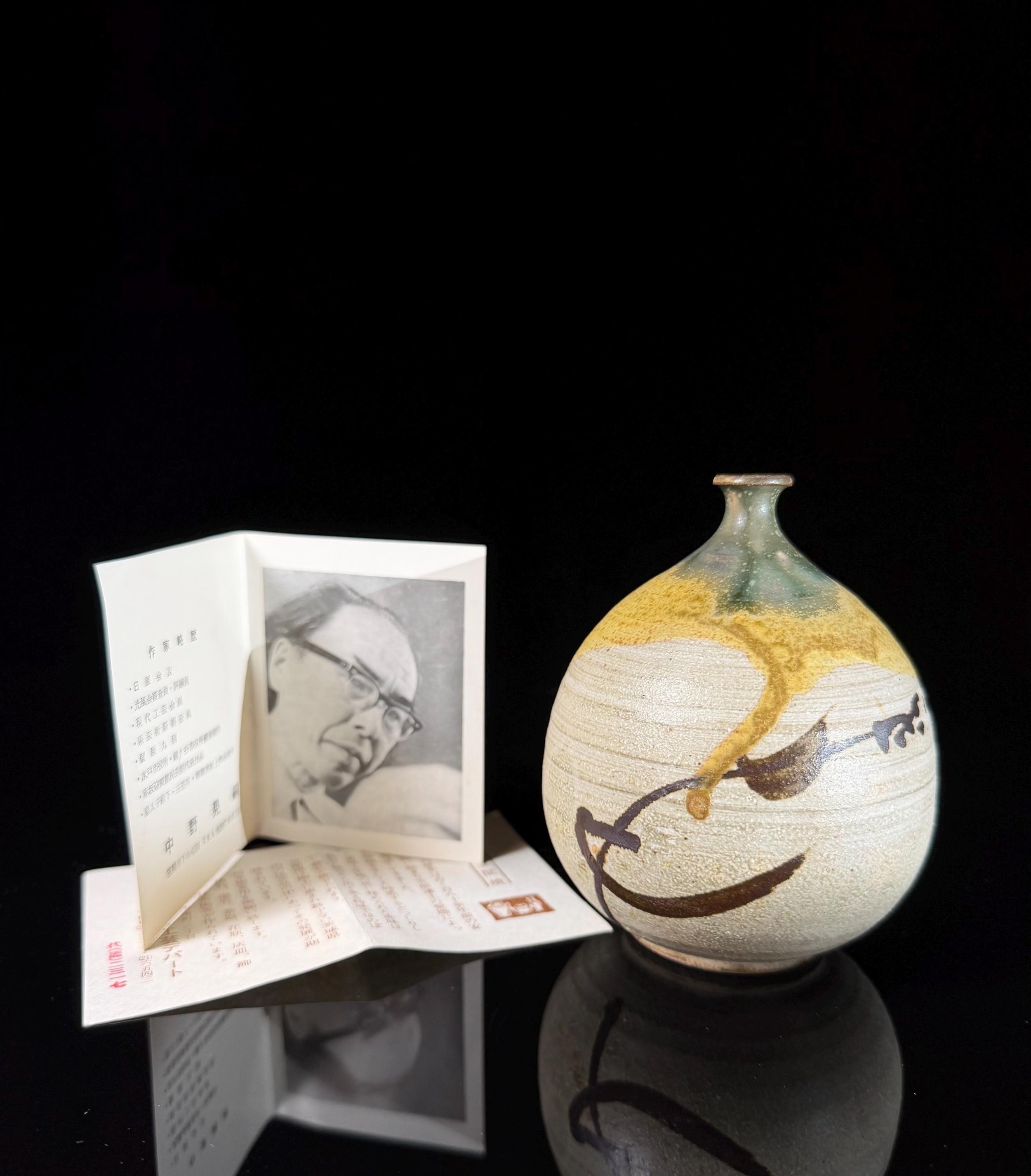
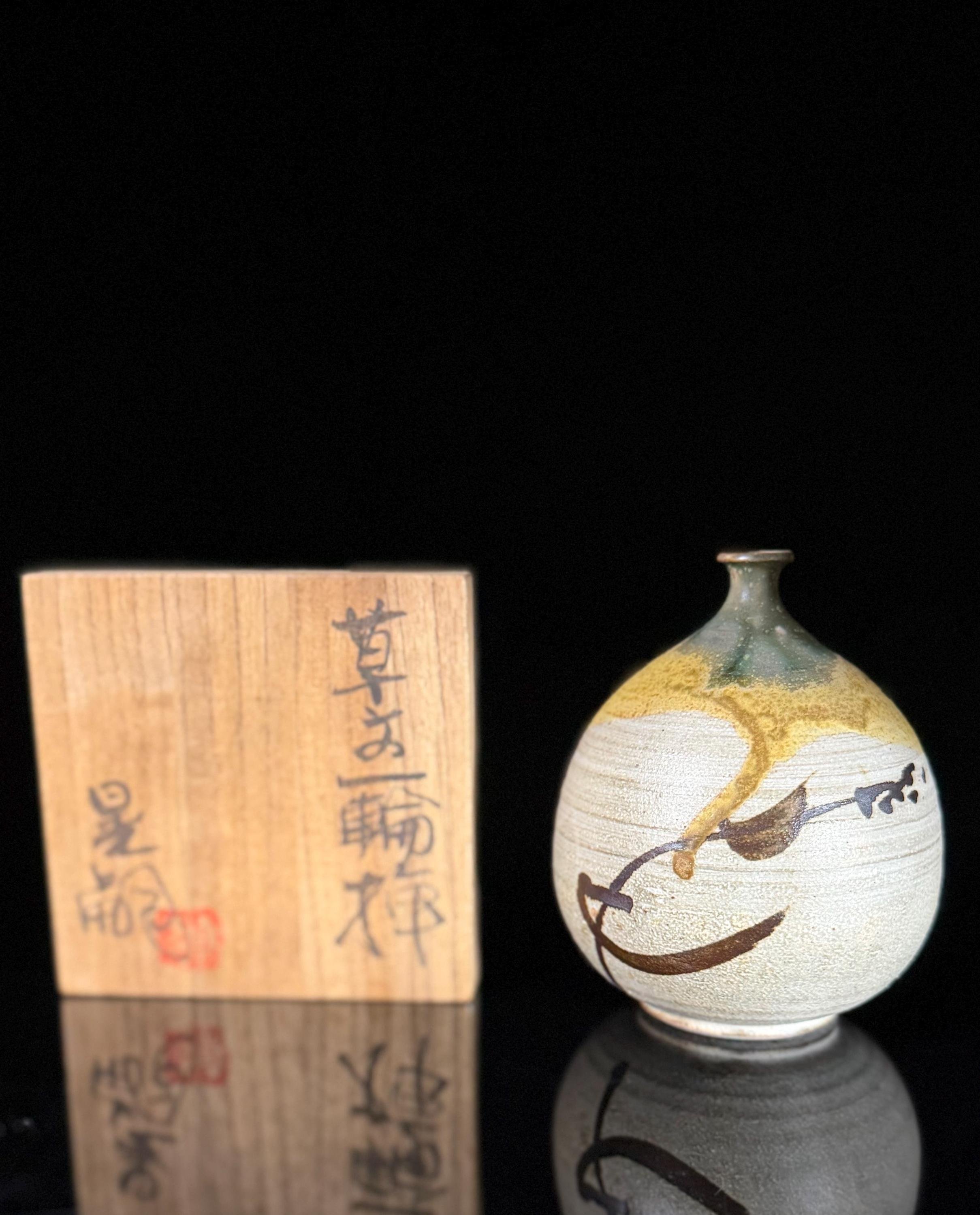
This charming ichirin-zashi (single flower vase) is a classic example of traditional Kasama ware by the skilled potter Nakano Kōtsugu. The vessel features a perfectly balanced, spherical body that tapers into a narrow neck, designed to highlight the quiet beauty of a solitary floral stem. The surface boasts a dynamic, two-toned aesthetic: a warm, earthy ash glaze drapes over the shoulder, interacting organically with the pale, textured slip below. The face of the vase is accented with swift, calligraphic iron-oxide brushwork depicting a stylized grass motif (soubun), adding a touch of spontaneous, organic movement to the piece. 

Curatorial Notes

Originating in Ibaraki Prefecture, Kasama ware (Kasama-yaki) has a rich history rooted in the Japanese Mingei (Folk Art) movement. Known for its robust, utilitarian charm and the use of iron-rich local clays, Kasama ceramics celebrate the beauty of everyday functional objects. This bud vase embodies that philosophy perfectly, offering a warm, tactile presence that grounds any interior space with a sense of rustic elegance. 

Condition & Provenance

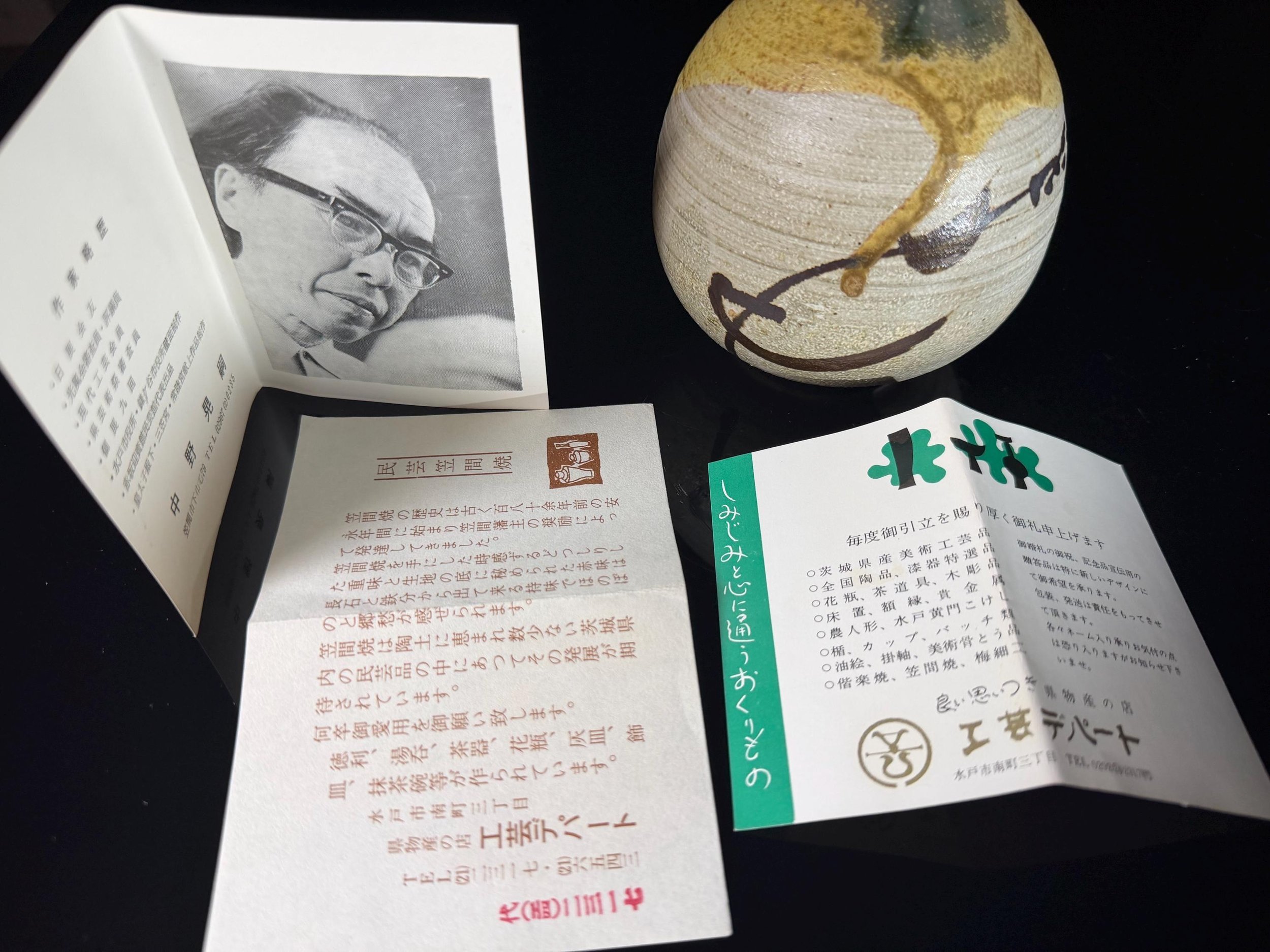
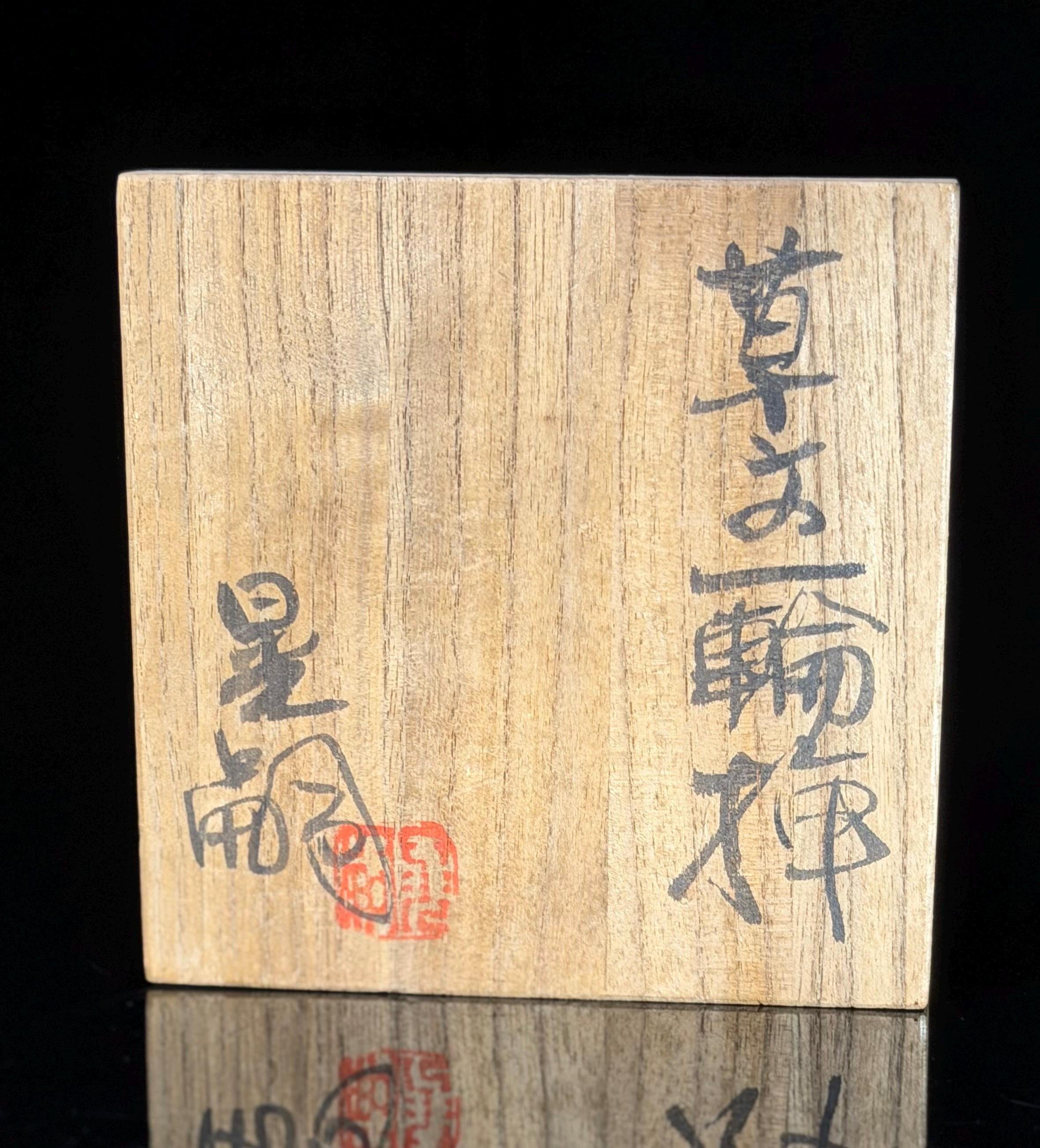
The vase itself is preserved in excellent, undamaged vintage condition. The piece is fully authenticated and accompanied by its original Paulownia wood presentation box (tomobako). The box lid is inscribed with the title "Soubun Ichirin-zashi" and signed by Nakano Kōtsugu with his artist seal. The set also includes the artist's original biographical profile and kiln insert (shiori). Please note: The exterior of the wooden box exhibits some light staining/wear from vintage storage, which does not affect the ceramic vessel. 

Specifications

Artist: Nakano Kōtsugu (中野晃嗣) 

Style: Kasama Ware / Mingei 

Technique: High-Fired Stoneware with Ash Glaze and Iron Brushwork

Form: Ichirin-zashi (Single Flower Vase / Bud Vase) 

Dimensions: Height 4.8" (12.2 cm) × Width 3.8" (9.8 cm) 

Condition Note: Vase is excellent; minor vintage wear/staining to the exterior of the wooden box. 

Origin: Ibaraki Prefecture, Japan