Shinsaku Hamada (濱田晋作) | Mashiko Ware Faceted Vase (益子焼 扁壺) | Signed Tomobako (共箱)
Gallery overview
To understand the prestige of Shinsaku Hamada (1929–2023), one must understand the very foundation of modern Japanese ceramics. As the second son of Shoji Hamada—the legendary Living National Treasure who co-founded the Mingei (Folk Art) movement alongside Soetsu Yanagi and Bernard Leach—Shinsaku was immersed in pottery from birth. He spent decades working side-by-side with his father in Mashiko, absorbing the philosophy that true beauty is found in utilitarian, unpretentious objects crafted from local earth. While he inherited the monumental weight and robust glazes of his father's kiln, Shinsaku established his own highly respected legacy, characterized by cleaner, sharper geometric forms and a remarkably confident, disciplined approach to traditional brushwork.
Curatorial notes
A Monument of the Mingei Tradition: Crafted approximately 40 to 50 years ago, this massive, heavy-walled vessel (weighing over 4.5 lbs) is a breathtaking example of Mashiko ware.
Architectural Silhouette: Moving away from standard wheel-thrown curves, Hamada constructed a striking faceted, flat-sided form. The sharp, geometric planes of the body demand exact precision, providing a structured canvas that beautifully contrasts with the organic fluidity of the glaze.
Glaze and Contrast: The body is enveloped in a thick, textured, stone-colored glaze, likely a traditional nuka (rice husk ash) formulation, which exhibits a highly desirable, pitted surface. This is dramatically juxtaposed by the rich, dark tenmoku (iron glaze) poured over the neck and shoulder, a hallmark of the Hamada kiln.
The Iron Brushwork (Tetsue): The flat planes of the vase are decorated with abstract, iron-rust (tetsue) brush strokes. Applied with swift, unhesitating movement, these minimalist motifs capture the essence of the folk art philosophy—bold, functional, and deeply tied to the natural world.
Condition & Provenance
This monumental ceramic is in flawless vintage condition, retaining its structural integrity with no chips or cracks. The vase is accompanied by its original wooden tomobako (presentation box). The box lid features Hamada's fluid, formal calligraphy and his registered seal, serving as undeniable proof of origin and elevating the vessel to a documented work of art.
Specifications
Artisan: Shinsaku Hamada (濱田晋作) (1929 - 2023)
Lineage: Son of Living National Treasure, Shoji Hamada
Kiln / Style: Mashiko Ware (益子焼)
Vessel Type: Faceted Vase / Bottle (扁壺)
Dimensions: Height 8.1" (20.5cm) x Width 6.3" (16.0cm) x Depth 4.2" (10.7cm)
Weight: 2,040 grams (4.5 lbs)
Inclusions: Signed Tomobako (共箱) & Original Profile Pamphlet
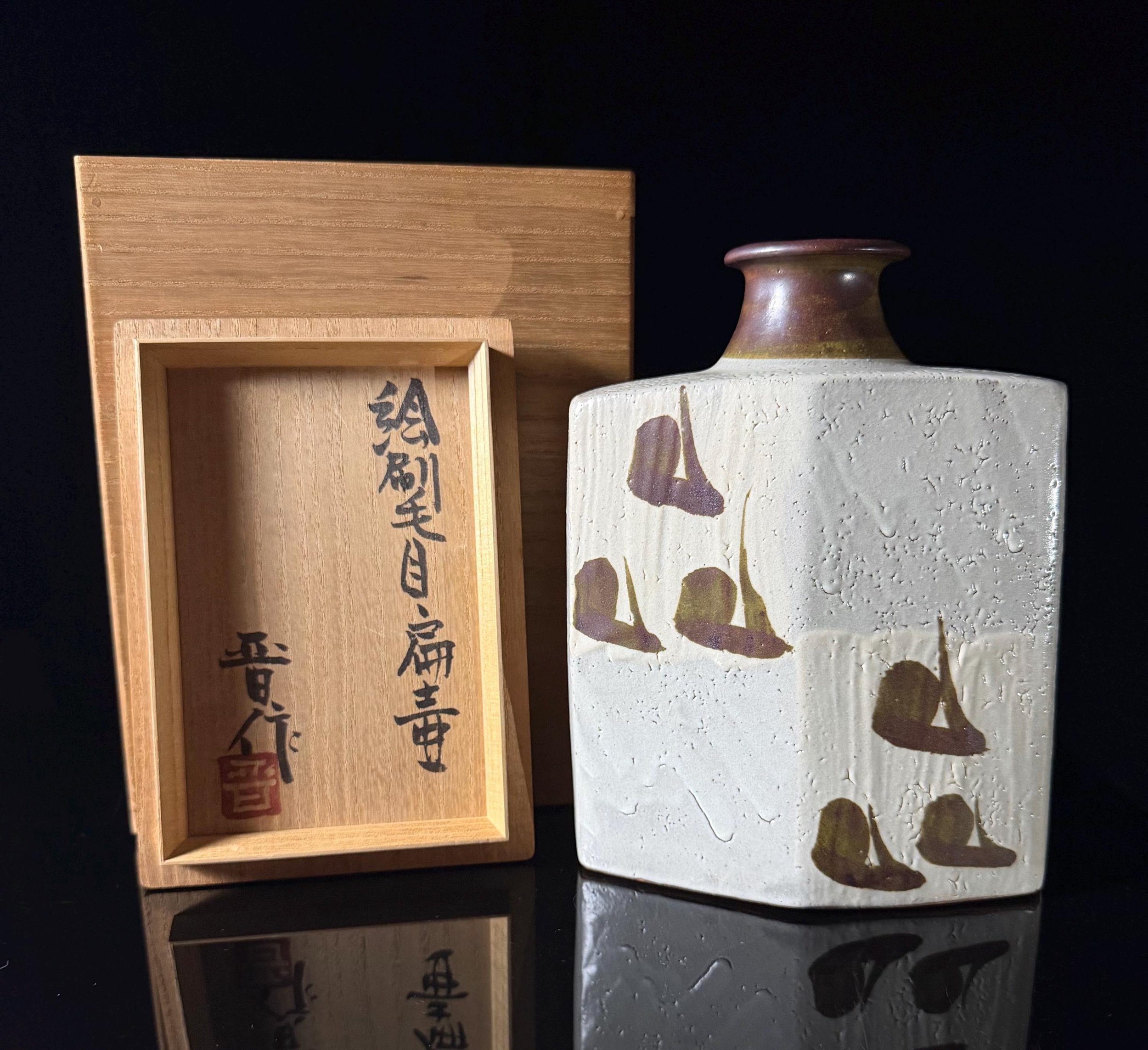 Image 1 of 7
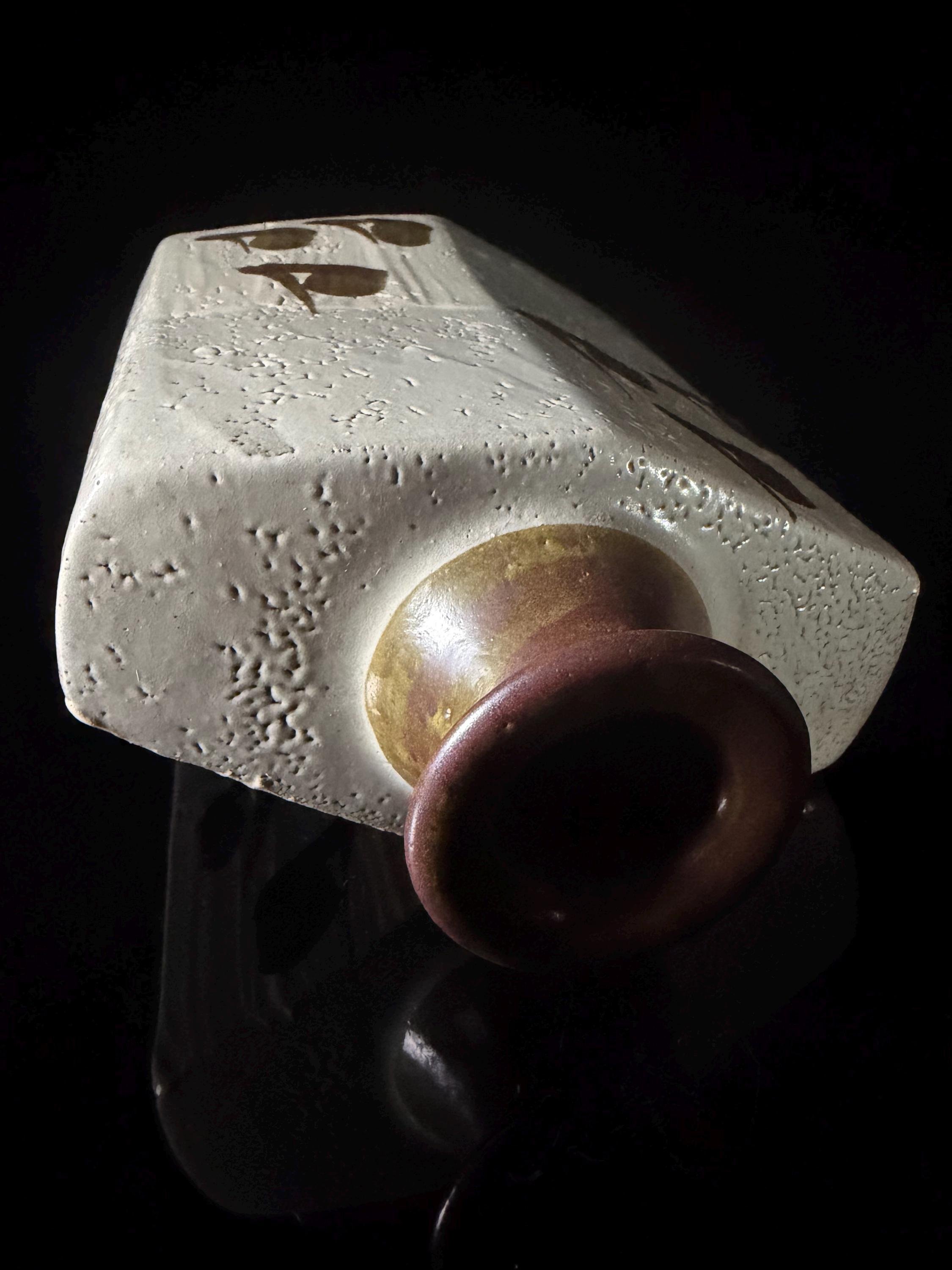 Image 2 of 7
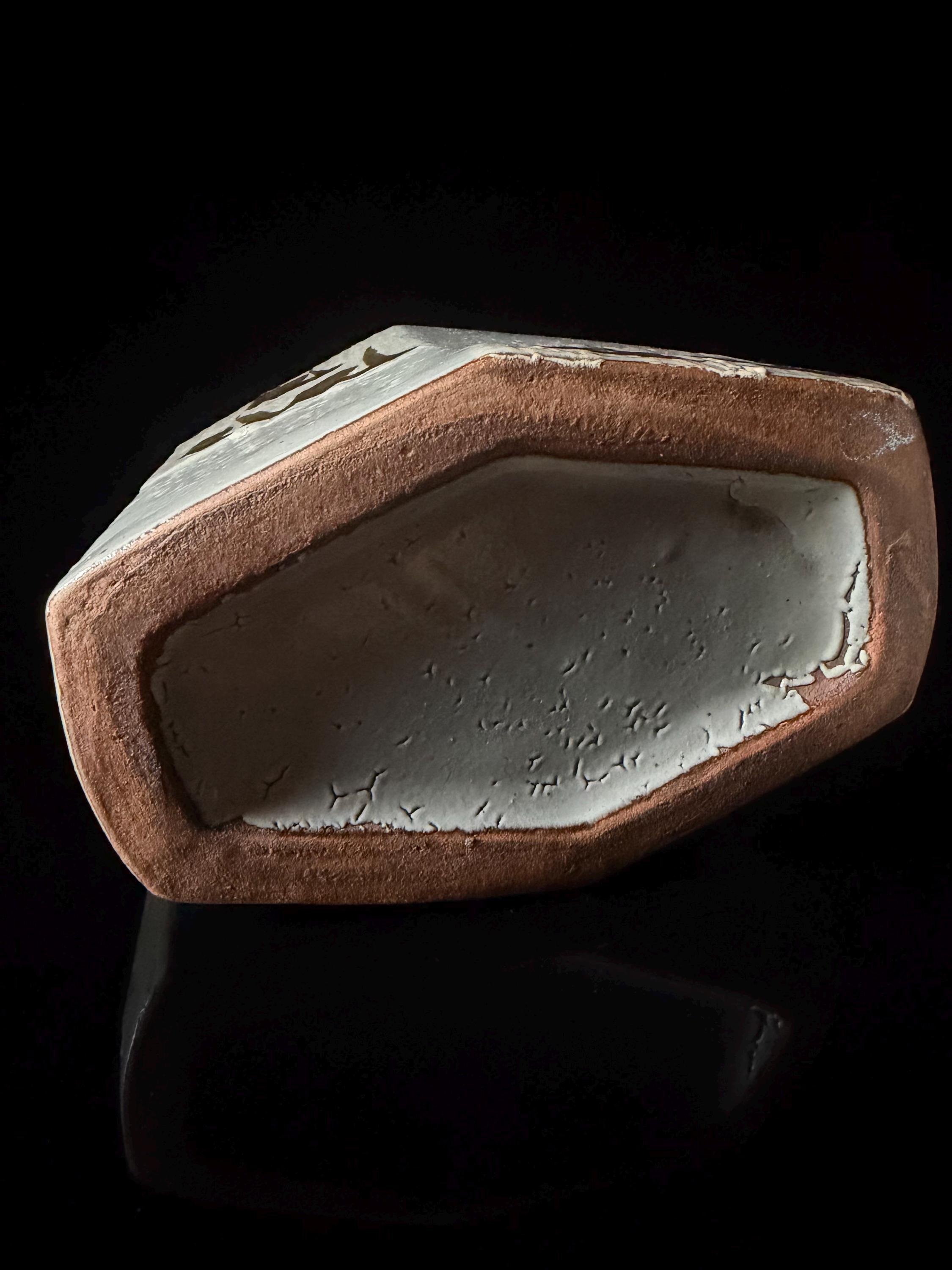 Image 3 of 7
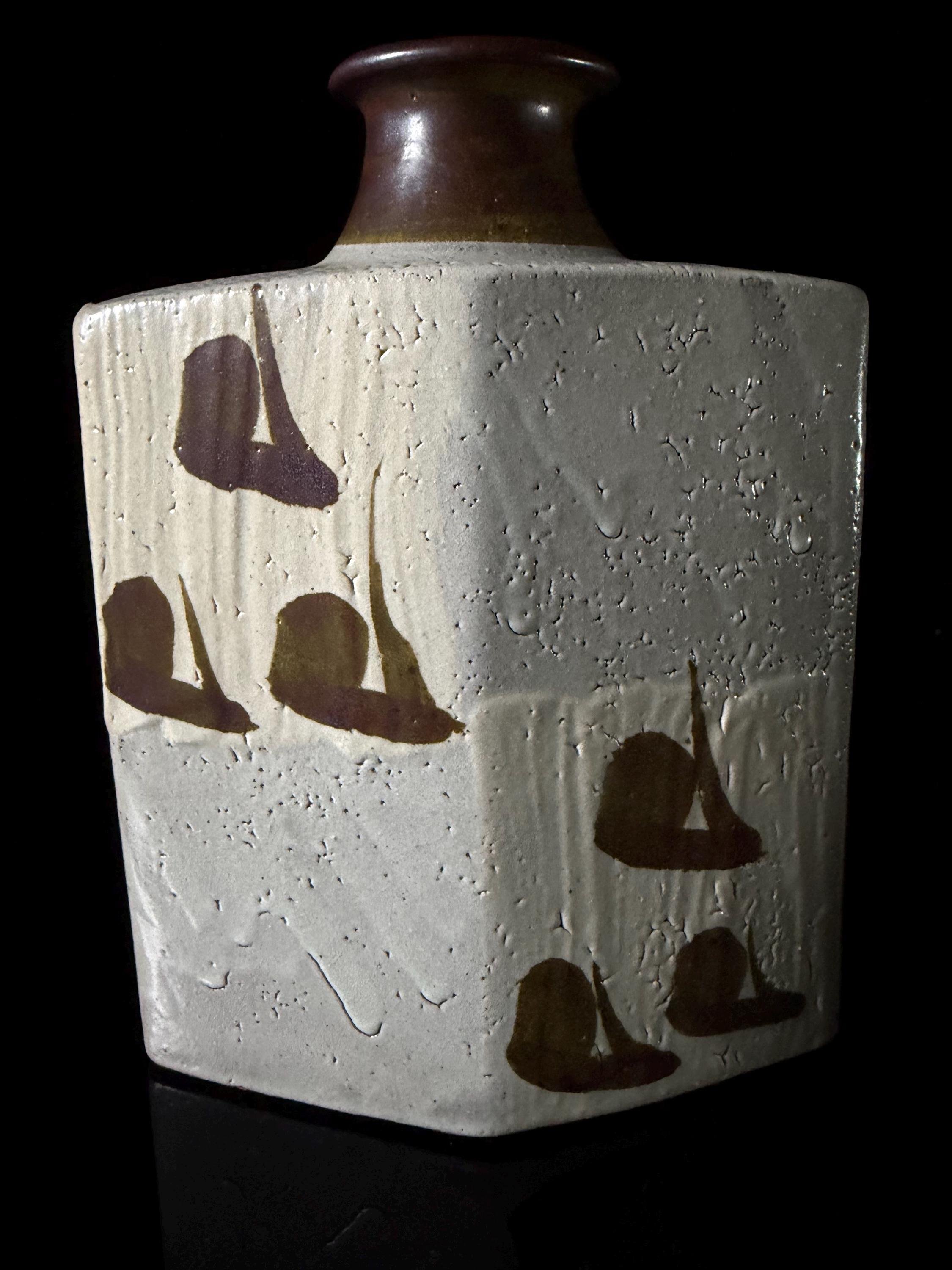 Image 4 of 7
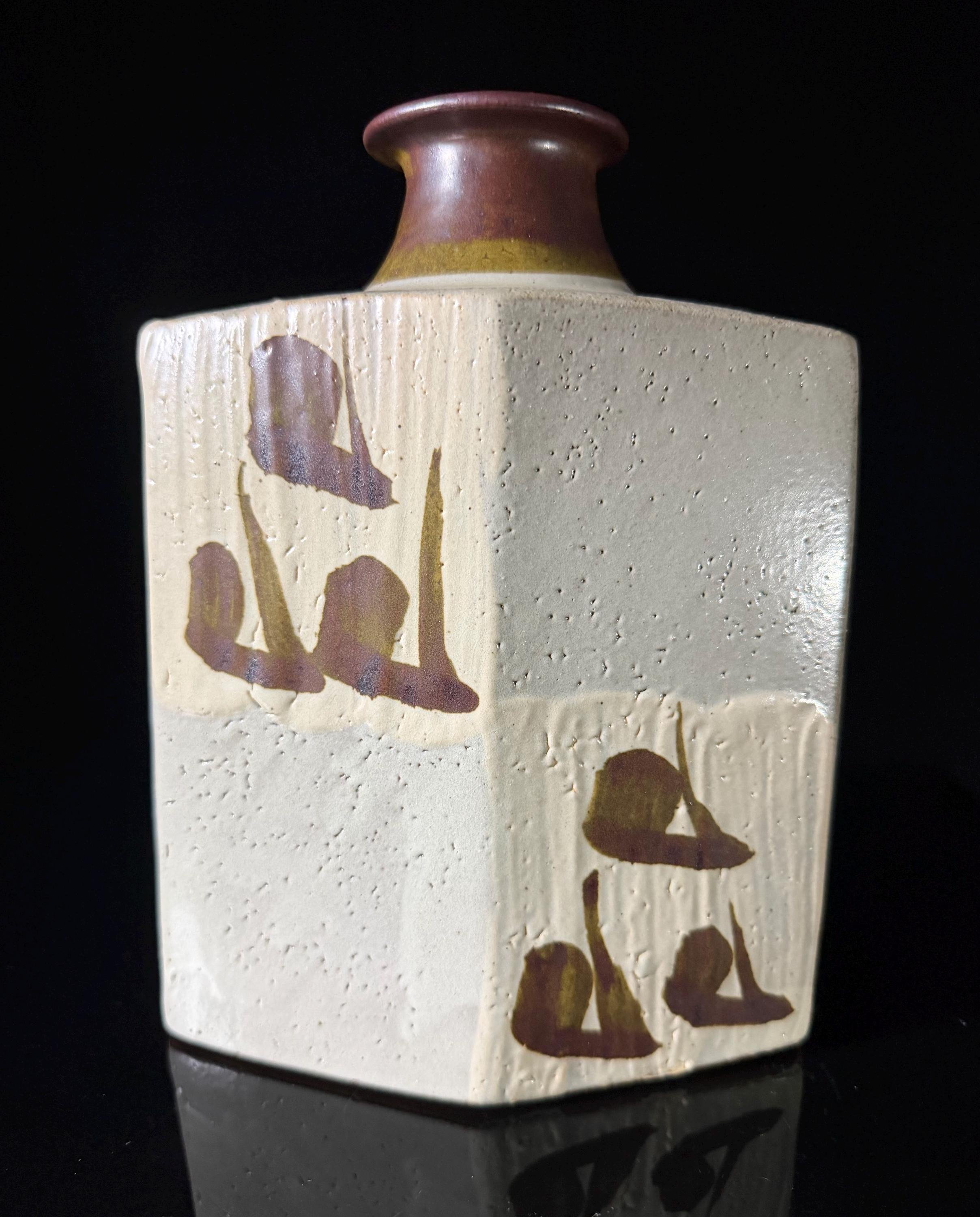 Image 5 of 7
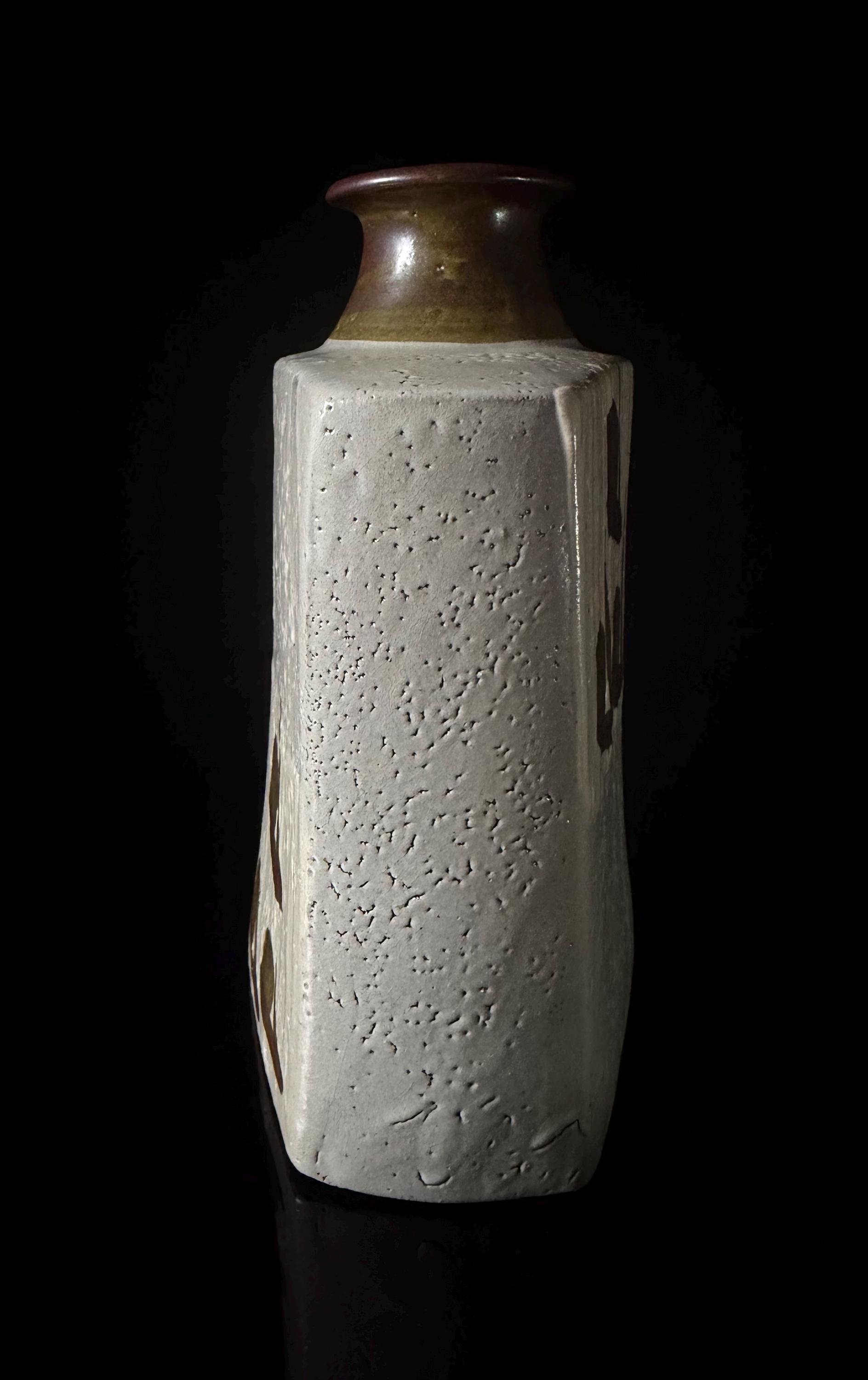 Image 6 of 7
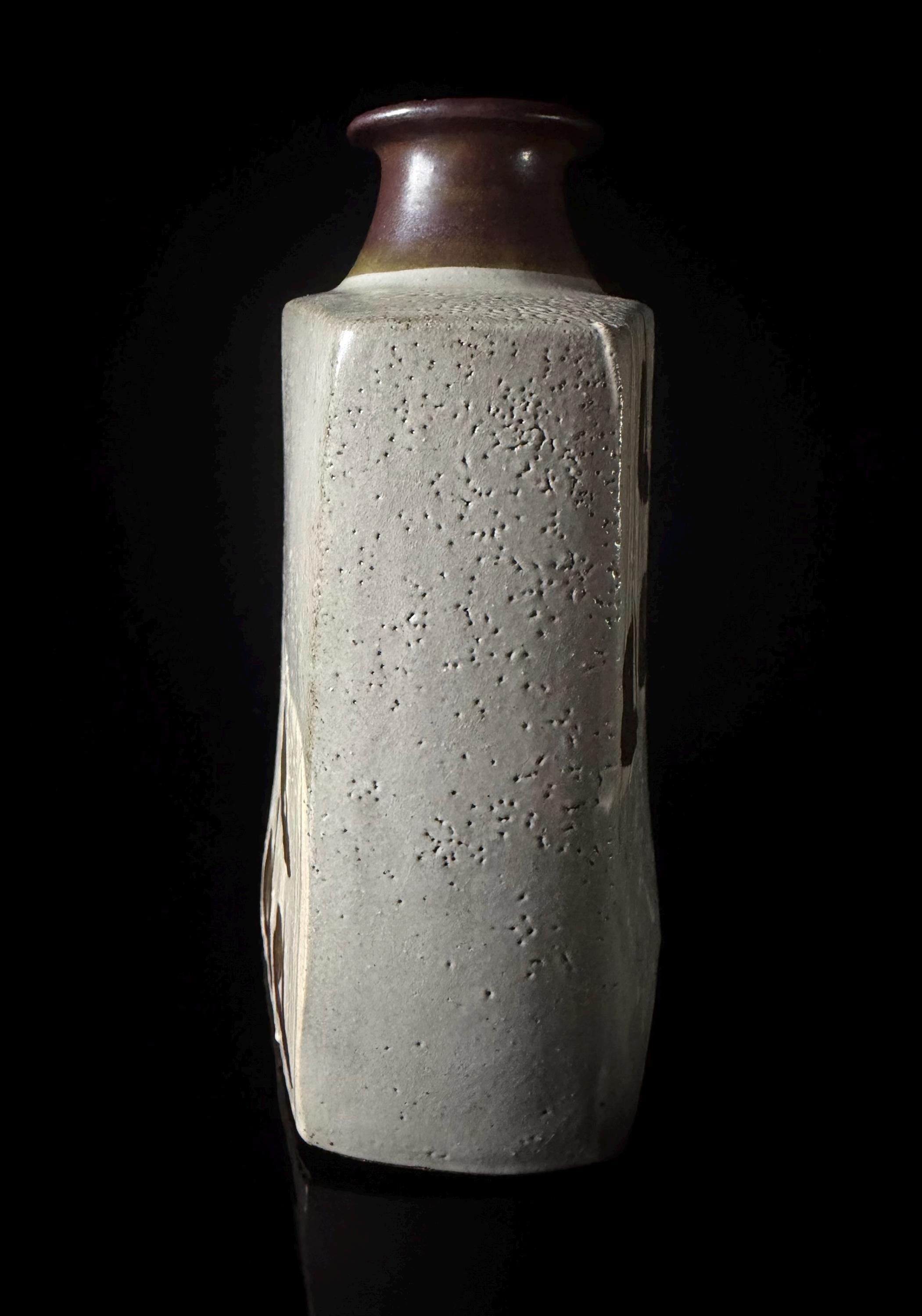 Image 7 of 7