Tatsuzo Shimaoka (1919-2007) | *First-Fire* Hatsugama Neriage and Jomon Zogan Henko (First-Firing Marbled & Inlaid Square Vase)
Gallery Overview
This rare, faceted square vase (henko) is a historically significant work by Living National Treasure Tatsuzo Shimaoka (1919-2007). In a spectacular display of his technical mastery, Shimaoka combined the demanding Neriage (marbled clay) technique with his signature Jomon Zogan (rope-impressed slip inlay). The architectural, four-sided body features dynamic, diagonal strata of rope impressions meticulously filled with contrasting slip. The foundational marbling of the different clay bodies is brilliantly exposed on the unglazed foot, revealing a beautiful checkered pattern where the clays were kneaded together. The organic, pinched neck is finished with a warm, transparent glaze that highlights the intricate, dual-technique stoneware.
Curatorial Notes
A student of the legendary Shoji Hamada, Tatsuzo Shimaoka became a central pillar of the Mingei (Folk Art) movement and was designated a Living National Treasure in 1996. What elevates this specific vessel to the highest echelon of museum-grade collecting is the bold inscription on the presentation box. The lid is titled "初窯" (Hatsugama), meaning this vase was created during the inaugural, first-ever firing of a newly constructed kiln.
In Japanese ceramic tradition, the Hatsugama firing is a highly auspicious, almost sacred event. The finest pieces to emerge from an inaugural batch are believed to be imbued with the vital energy and protective spirit of the new kiln. Consequently, Hatsugama works are almost never sold commercially; they are traditionally retained for the artist's private estate or gifted only to their most vital patrons. To acquire a documented Hatsugama vessel by a Living National Treasure—one that also seamlessly merges two of his most difficult techniques—is a profound and exceedingly rare opportunity on the Western market.
Condition & Provenance
The vessel is in very good vintage condition, with a traditional Japanese urushi (lacquer) repair noted on the rim. A historic chip on the inner lip of the neck has been meticulously filled and sealed using dark, natural lacquer (urushi-naoshi), a testament to the piece being cherished and preserved by a previous owner. The unglazed foot is stamped with Shimaoka's signature "Ta" (タ) seal. The piece is fully authenticated and accompanied by its original presentation box (tomobako). The lid is inscribed by the artist as Hatsugama Neriage Hoko (Inaugural Kiln Marbled Square Vase) and signed "Tatsuzo" with his red artist seal.
Specifications
Artist: Tatsuzo Shimaoka (島岡達三, 1919-2007)
Style: Mashiko Ware / Mingei
Technique: Neriage (Marbled Clay) and Jomon Zogan (Rope-Impressed Inlay)
Form: Henko / Hoko (Square Vase / Flat Vase)
Dimensions: Height 4.72" (12.0 cm)
Weight: 578g
Origin: Mashiko, Tochigi Prefecture, Japan
Period: Showa Era
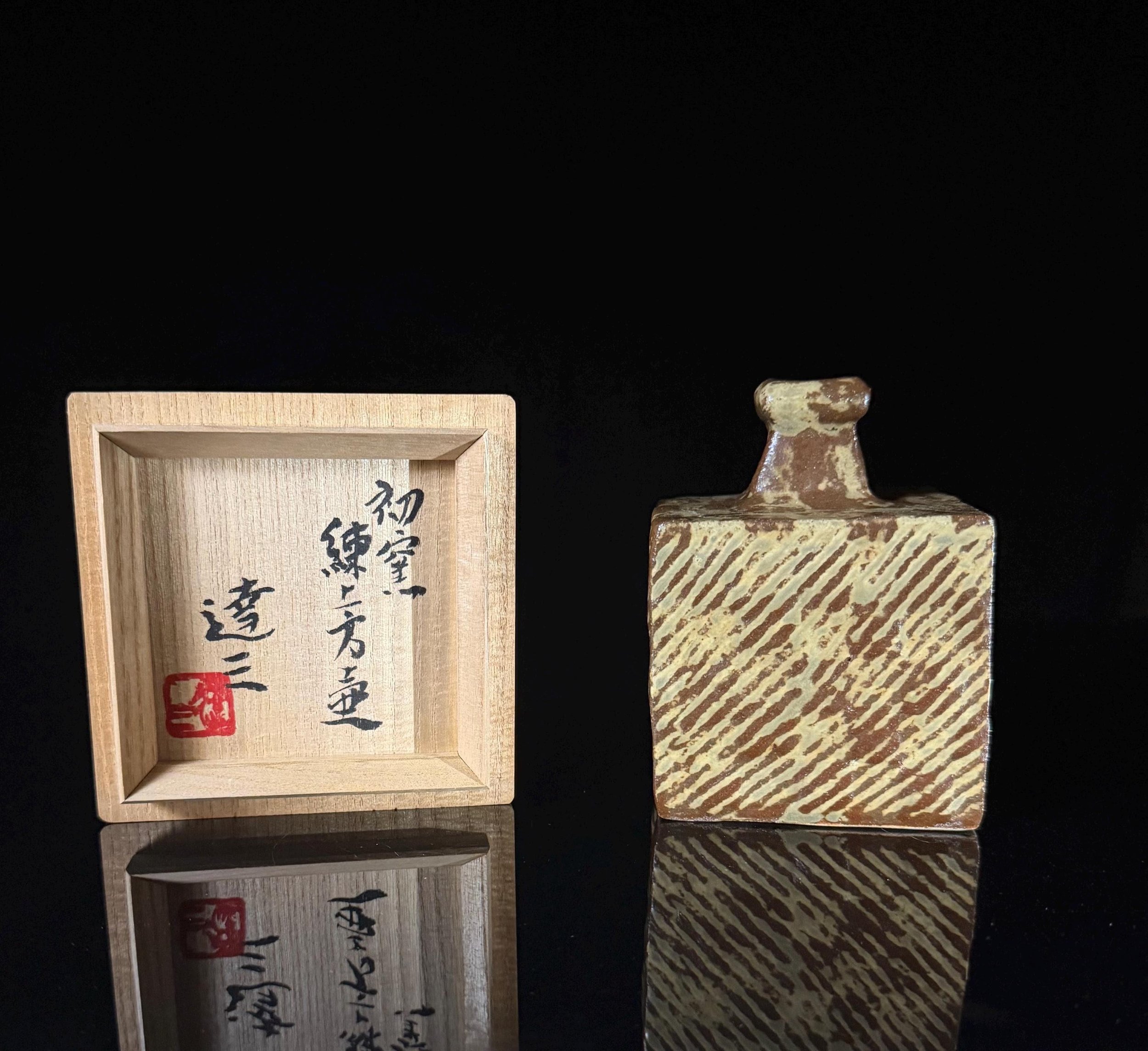 Image 1 of 7
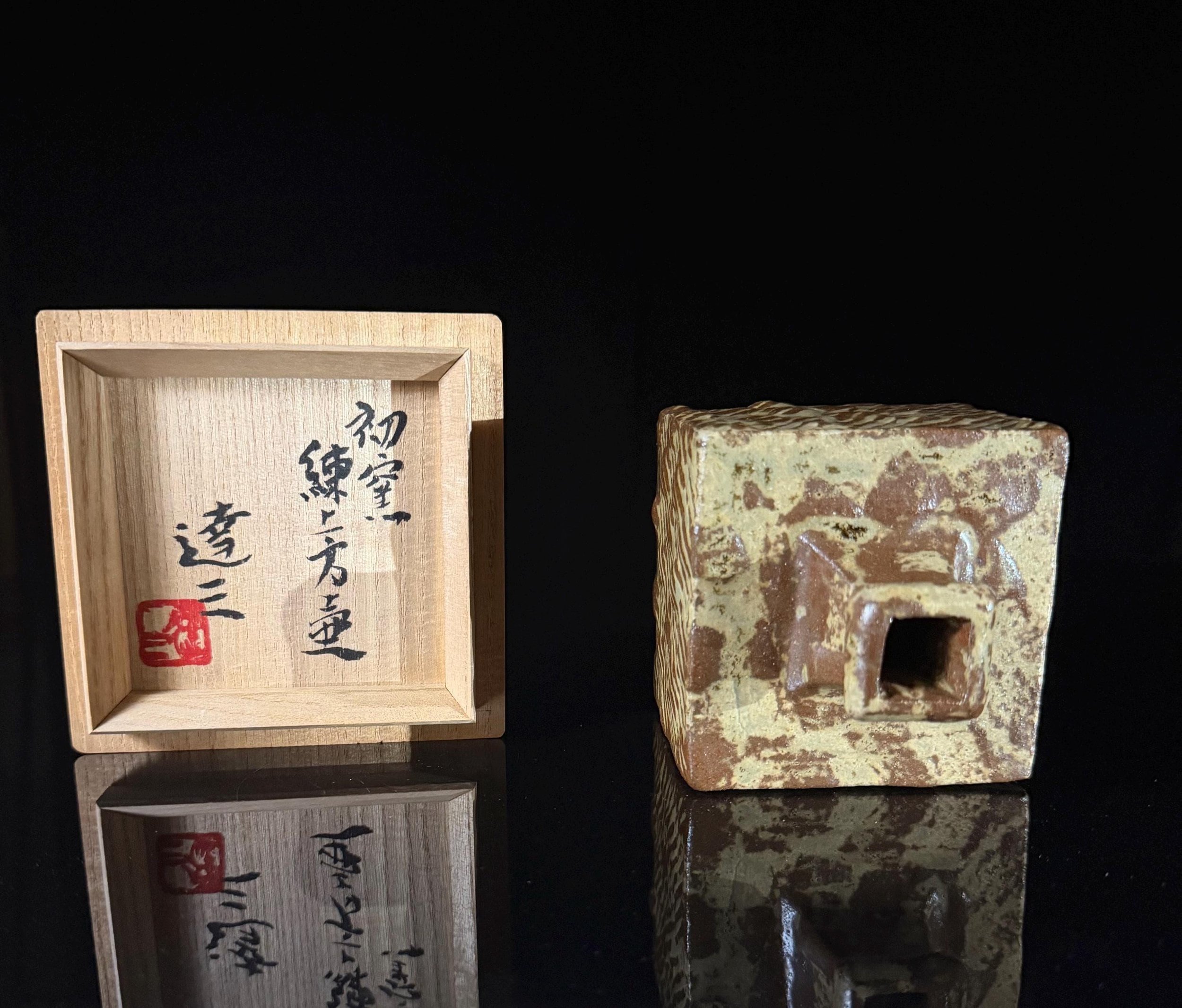 Image 2 of 7
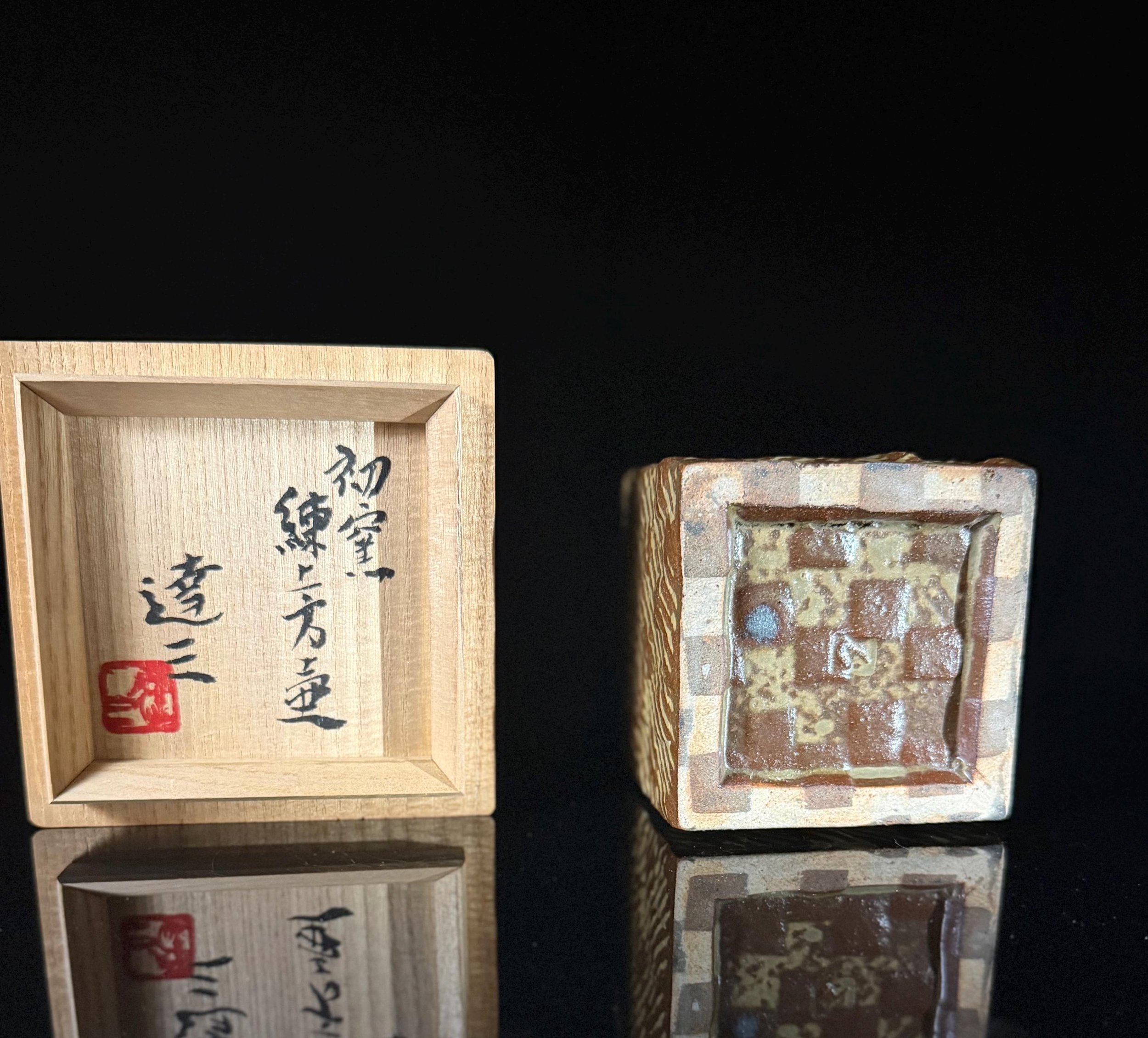 Image 3 of 7
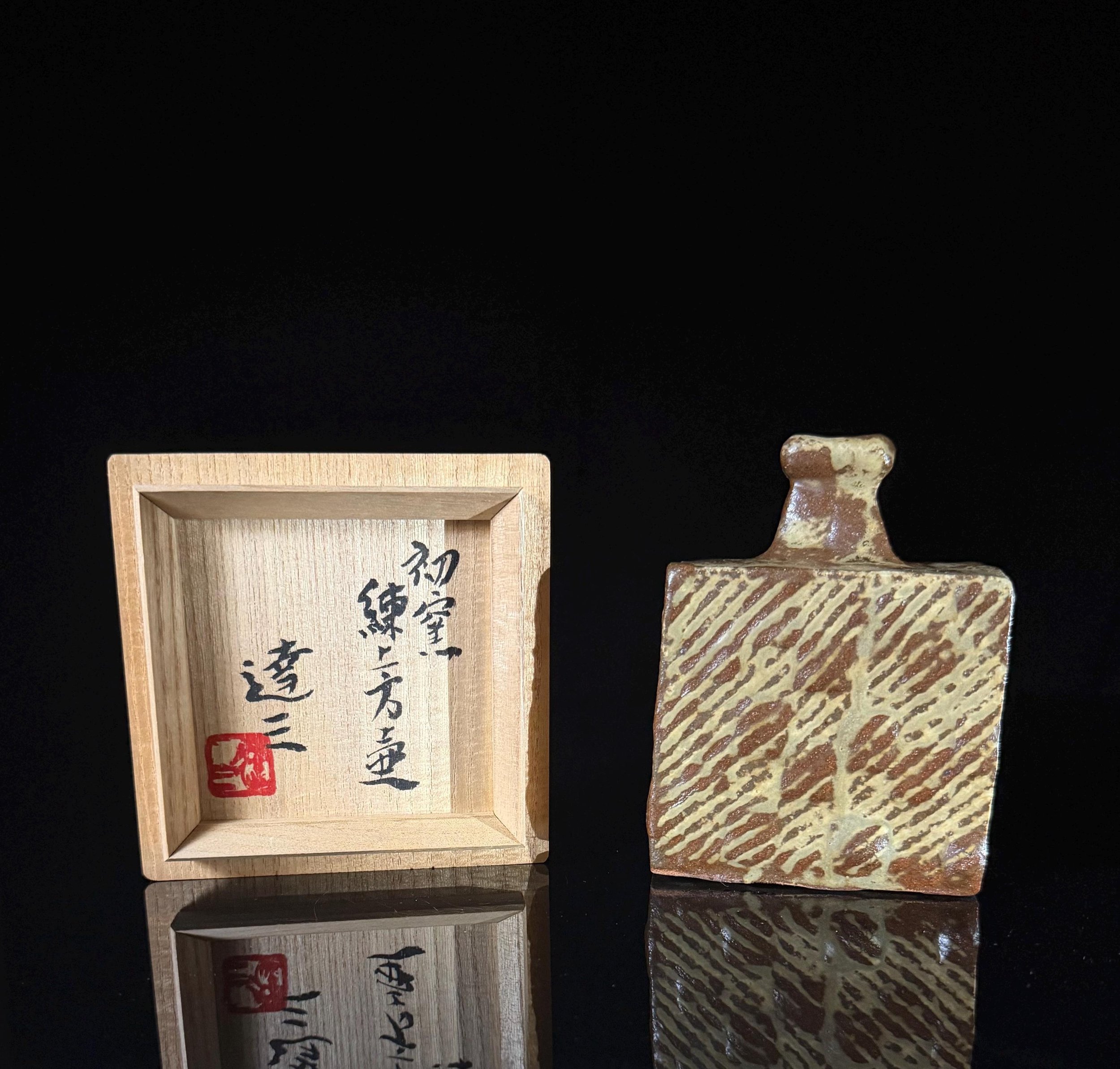 Image 4 of 7
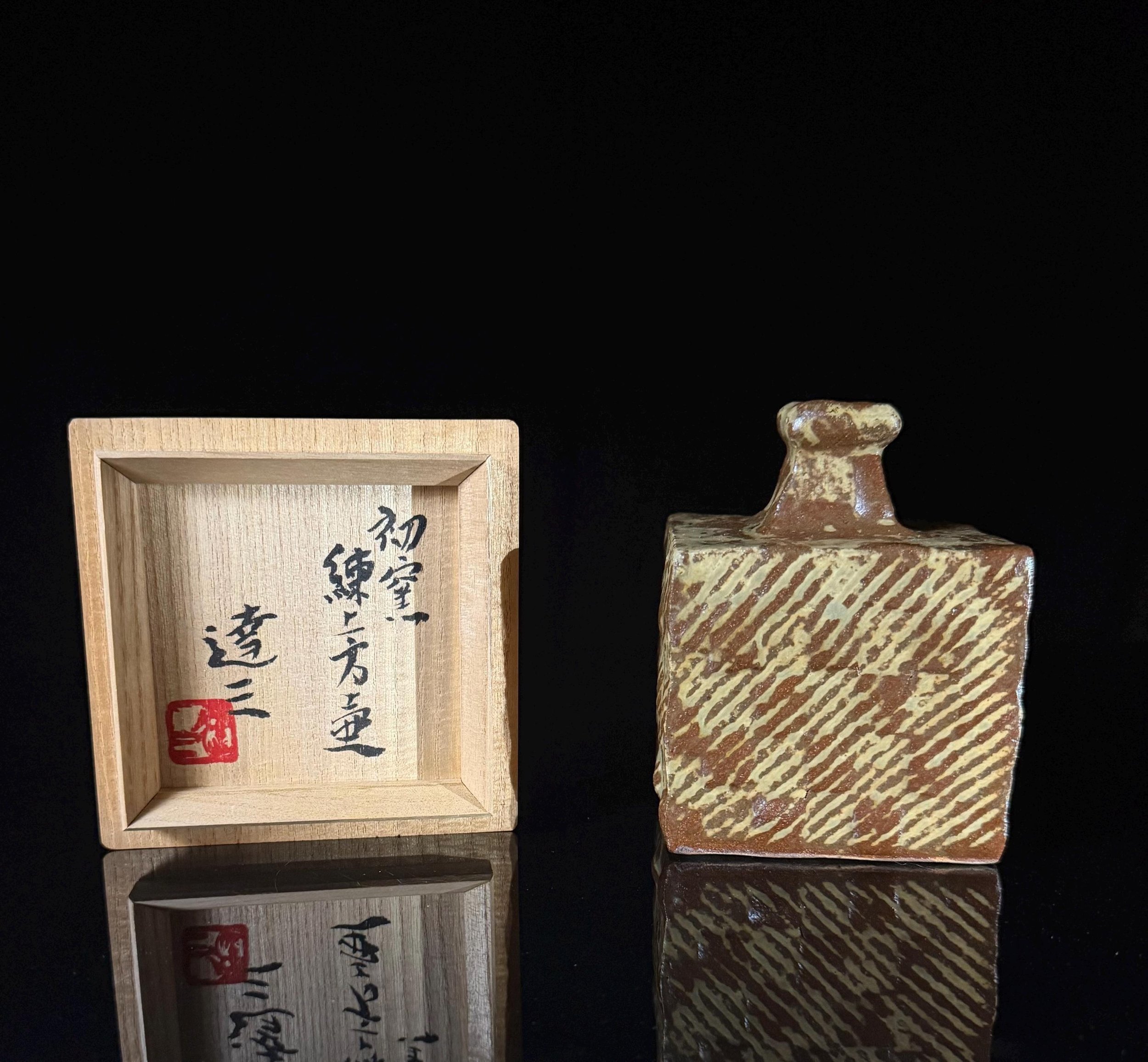 Image 5 of 7
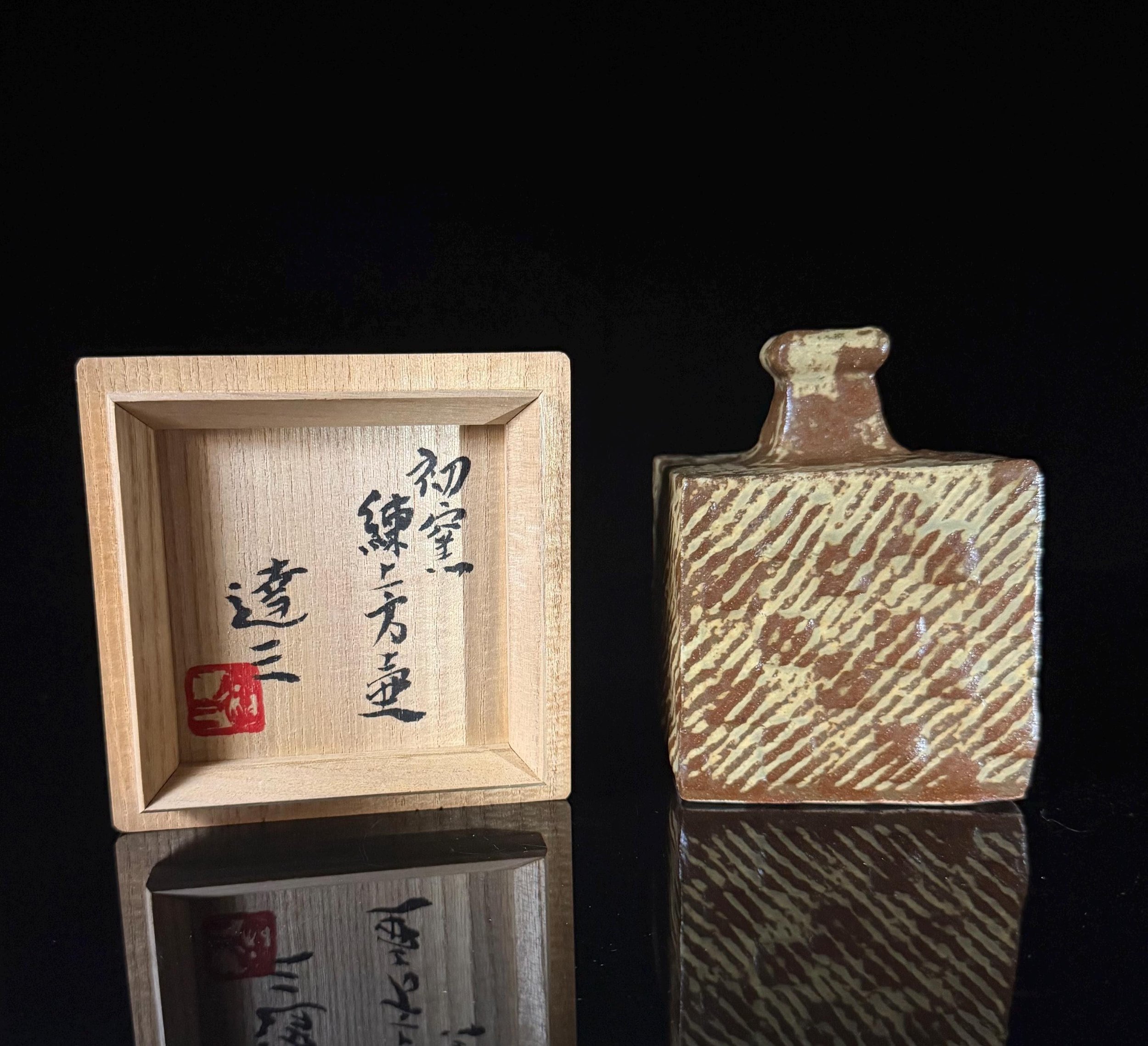 Image 6 of 7
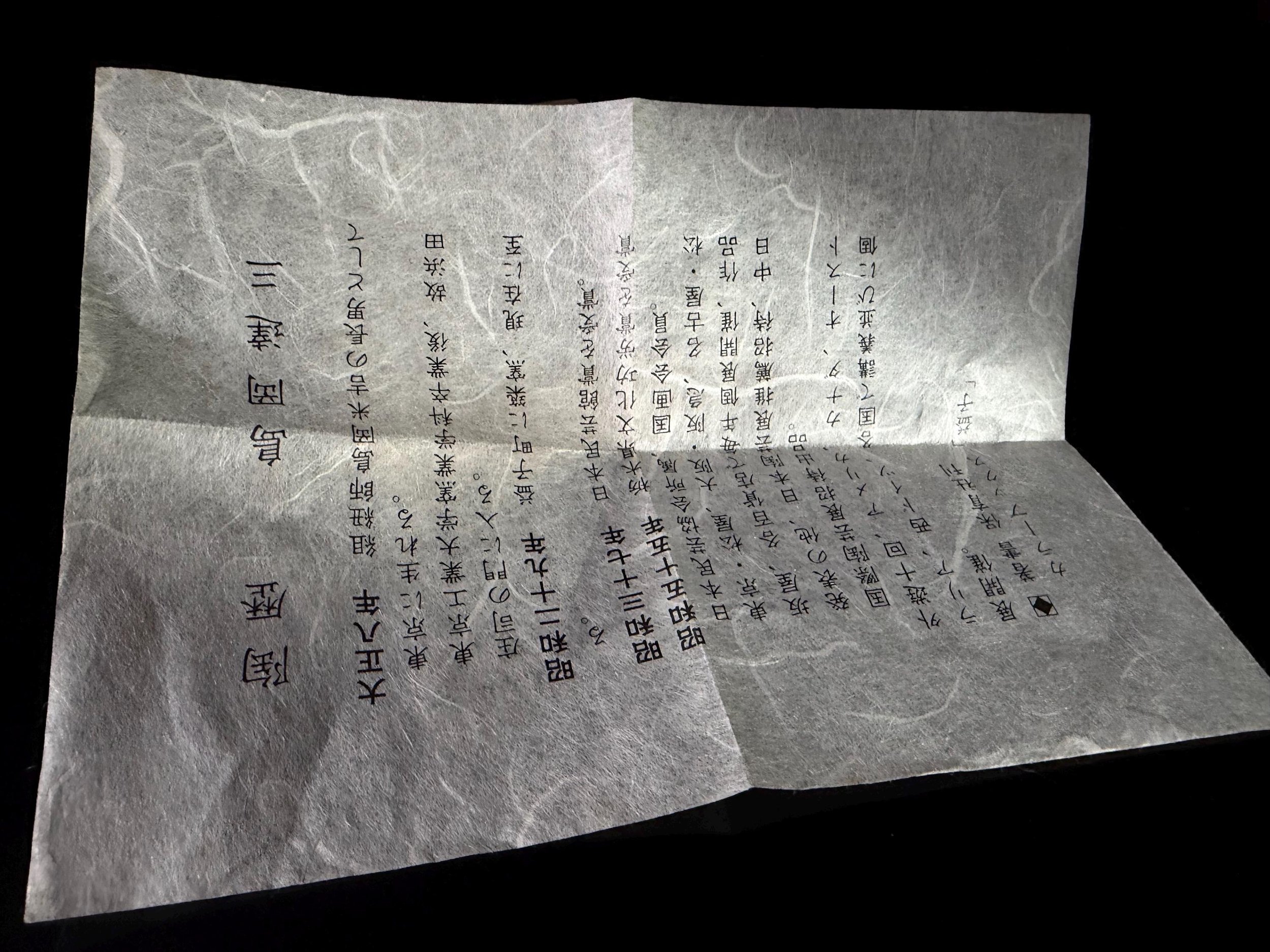 Image 7 of 7