Tosai Sawamura (澤村陶哉) | Vintage Kyoto Clay Lobster Incense Case (Kogo)
Gallery Overview
This is a highly charming and vivid vintage incense case (kogo) sculpted by the celebrated Kyoto ceramicist Tosai Sawamura (b. 1951). Crafted from low-fired, unglazed clay, the vessel takes the highly auspicious form of a Japanese spiny lobster (ise-ebi), rendered in a brilliant, saturated vermilion red. The interior cavity is beautifully contrasting, meticulously finished with a luminous gold pigment, creating a sense of hidden luxury that is central to the traditional Japanese tea ceremony.
Curatorial Notes
In traditional Japanese iconography, the lobster is a powerful symbol of longevity and good fortune. Its bent back and long antennae resemble an elder, representing the wish for a long life, making this a highly appropriate motif for New Year (Oshogatsu) tea gatherings or celebratory occasions.
A kogo is a specialized, palm-sized vessel used to hold small chips of fragrant wood or kneaded incense during the charcoal-laying procedure (sumidemae) of the tea ceremony. Tosai Sawamura, a respected figure in Kyoto ceramics, is known for his playful yet exacting approach to these diminutive, highly sculptural forms. The use of low-fired clay allows for precise, molded details—such as the textured carapace and folded tail—while the bright vermilion pigment provides a striking pop of color against the subdued, earthy tones of traditional tea room settings.
Condition & Provenance
This incense case is in pristine vintage condition, completely free of any chips, cracks, or fading to the pigment or interior gilding. The underside bears the artist's deeply stamped seal.
The piece is fully authenticated and accompanied by its original wooden presentation box (tomobako). The box lid features calligraphic brushwork confirming the artist and bears his signature and red seal. .
Specifications
Artist: Tosai Sawamura (澤村陶哉, b. 1951)
Style / Ware: Low-Fired Kyoto Clay / Pigment
Form: Incense Case (Kogo)
Motif: Spiny Lobster (Ise-Ebi)
Dimensions: Width 4.1" (10.5 cm) × Depth 2.6" (6.5 cm) × Height 2.8" (7.0 cm)
Origin: Kyoto, Japan
Period: Heisei Era (circa early 2000s)
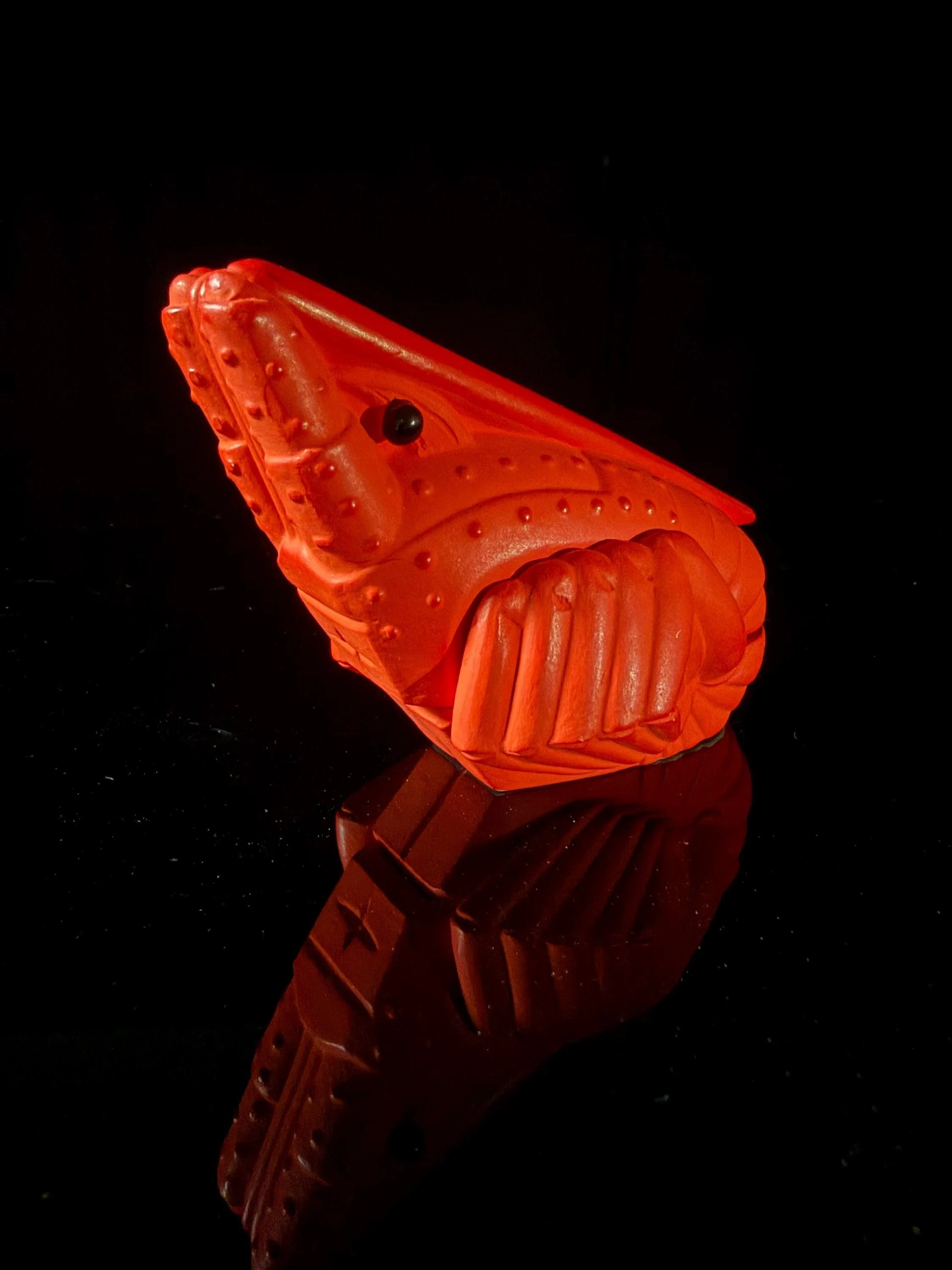 Image 1 of 15
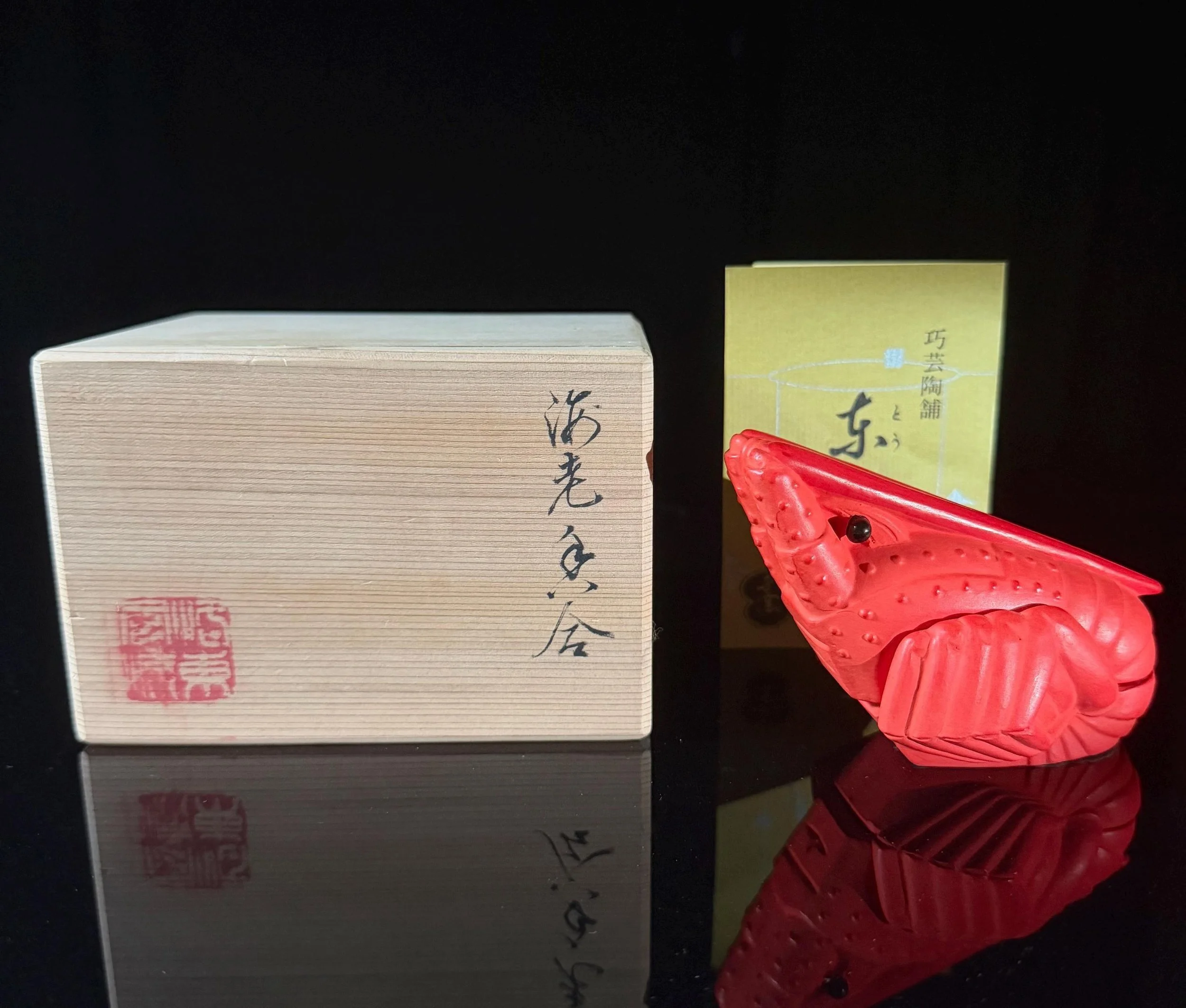 Image 2 of 15
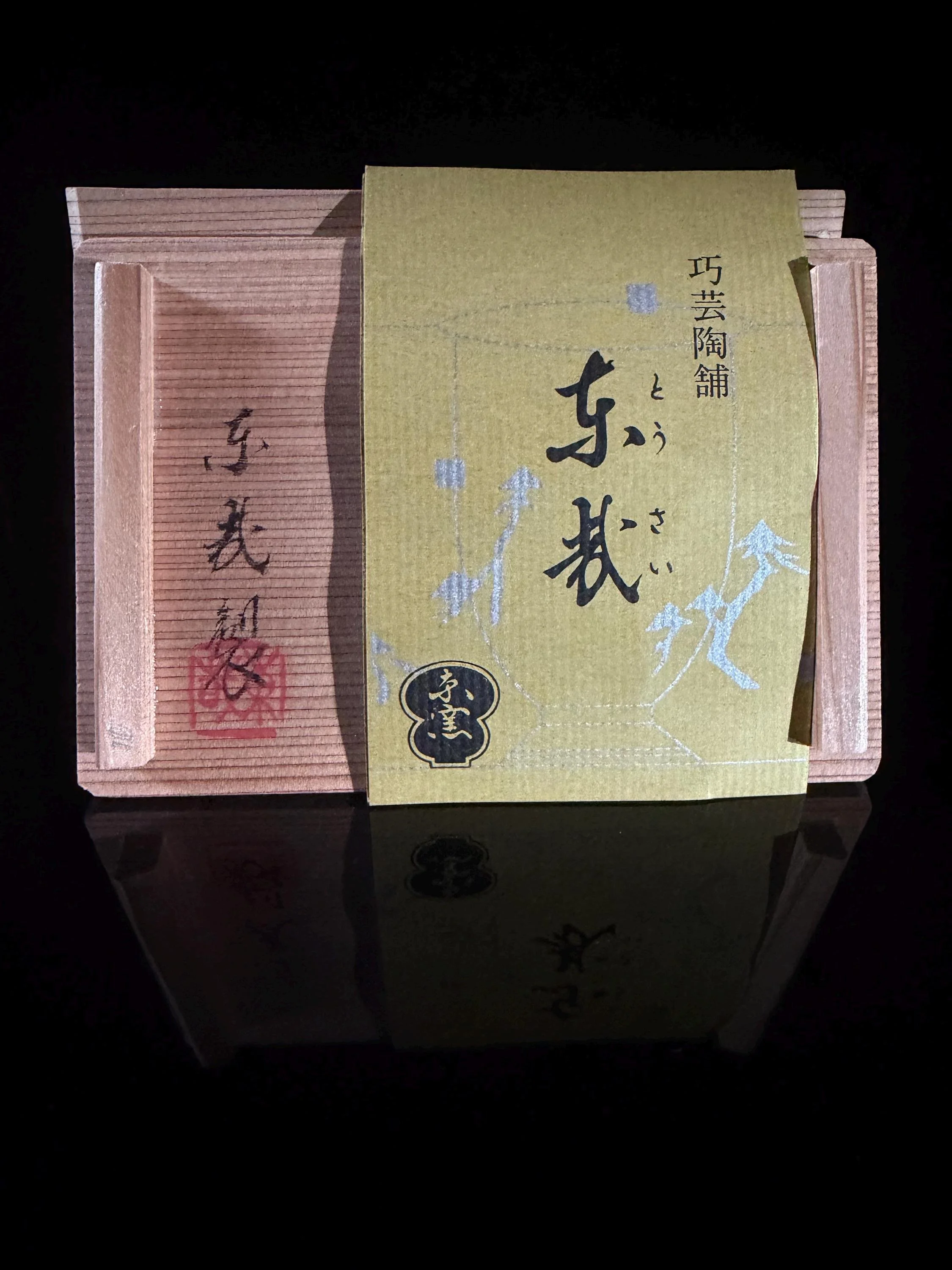 Image 3 of 15
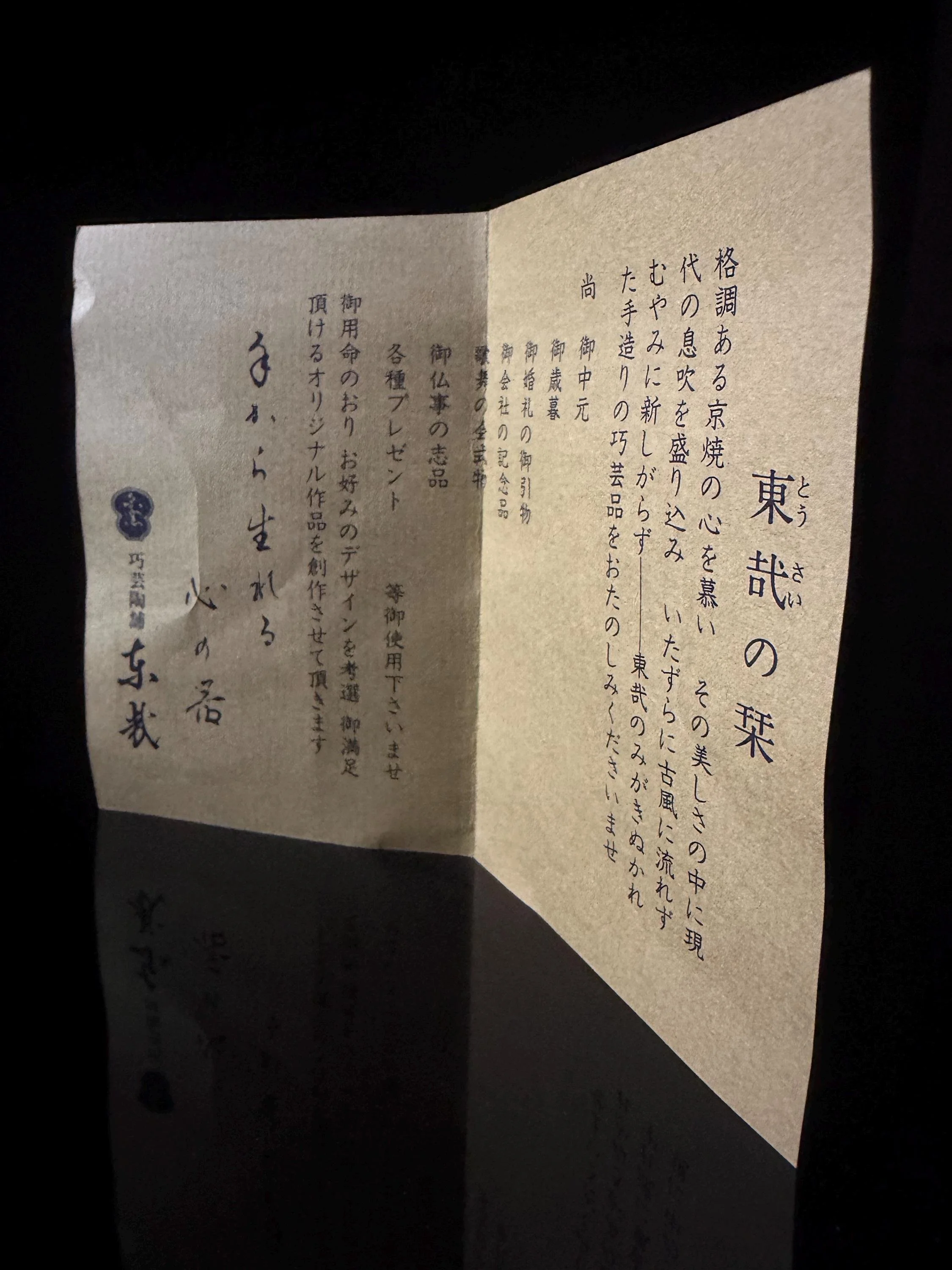 Image 4 of 15
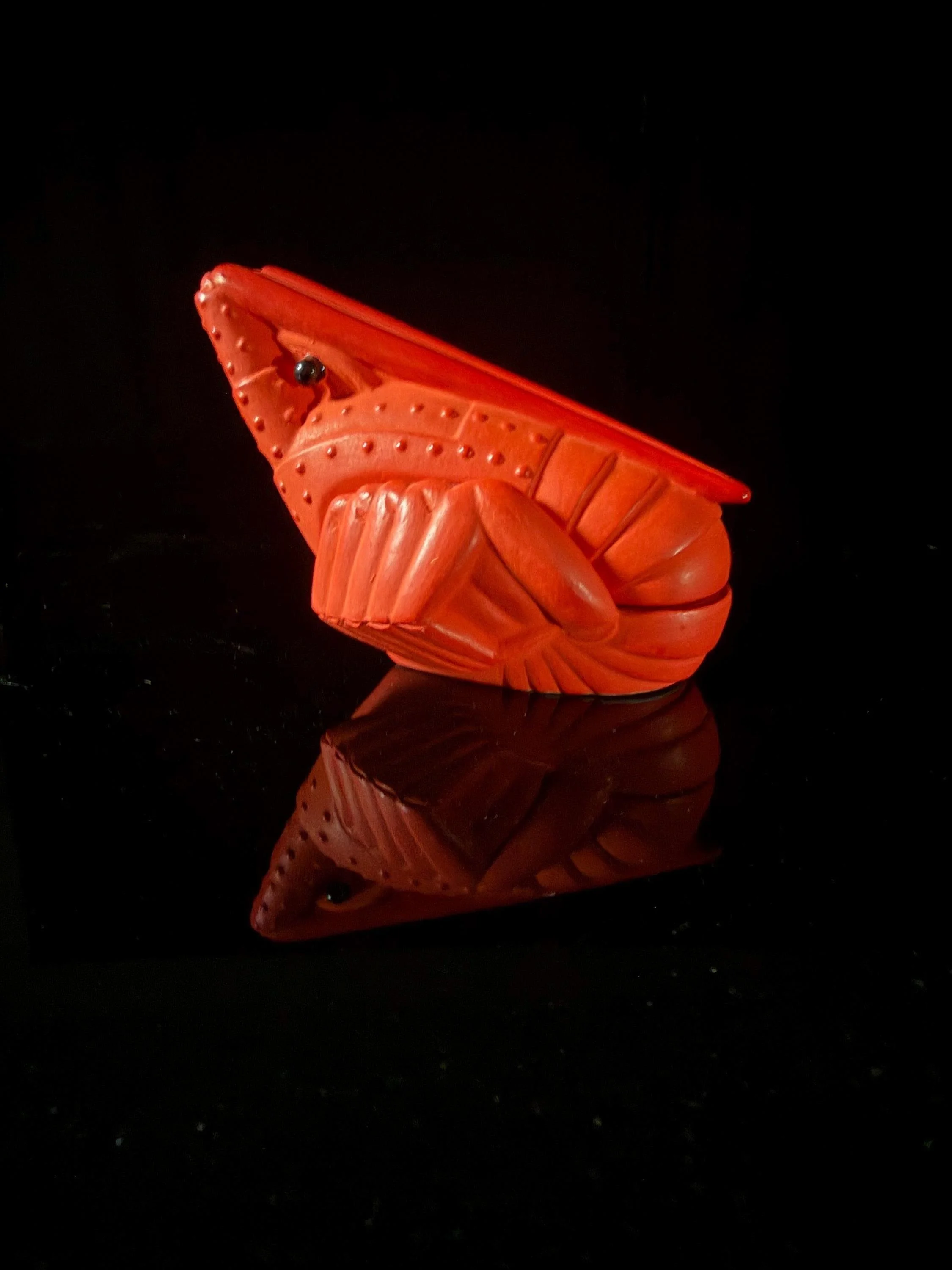 Image 5 of 15
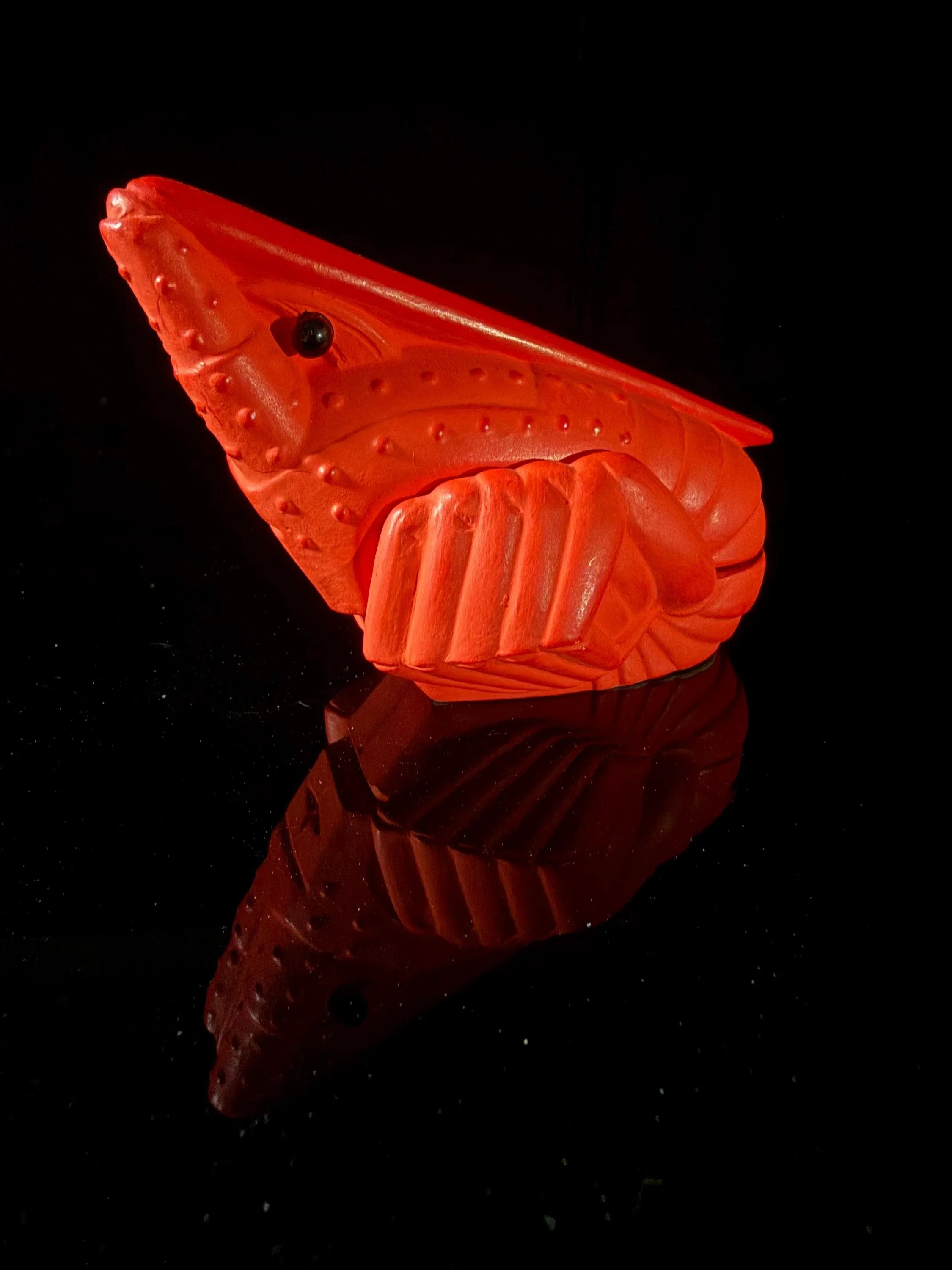 Image 6 of 15
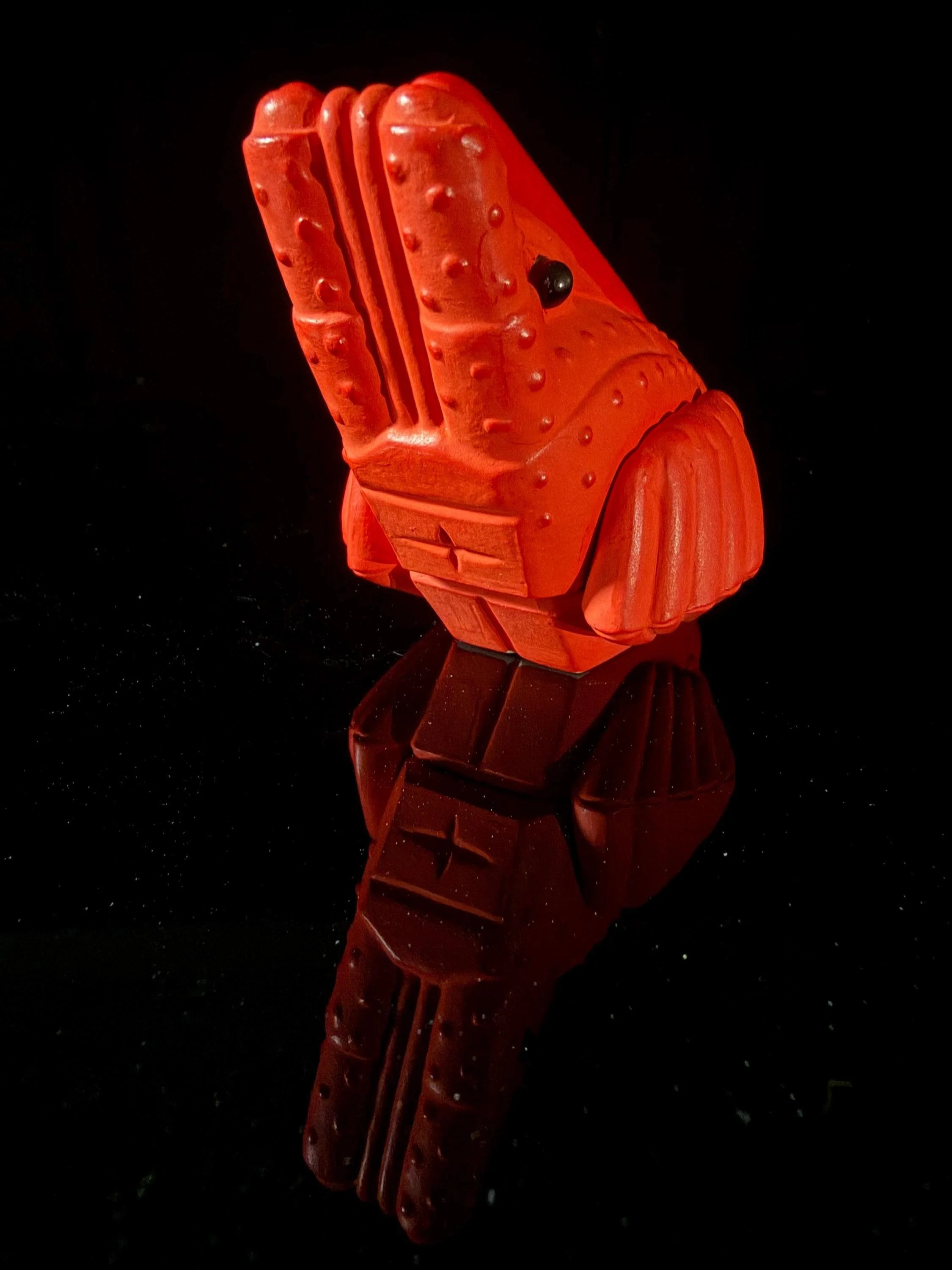 Image 7 of 15
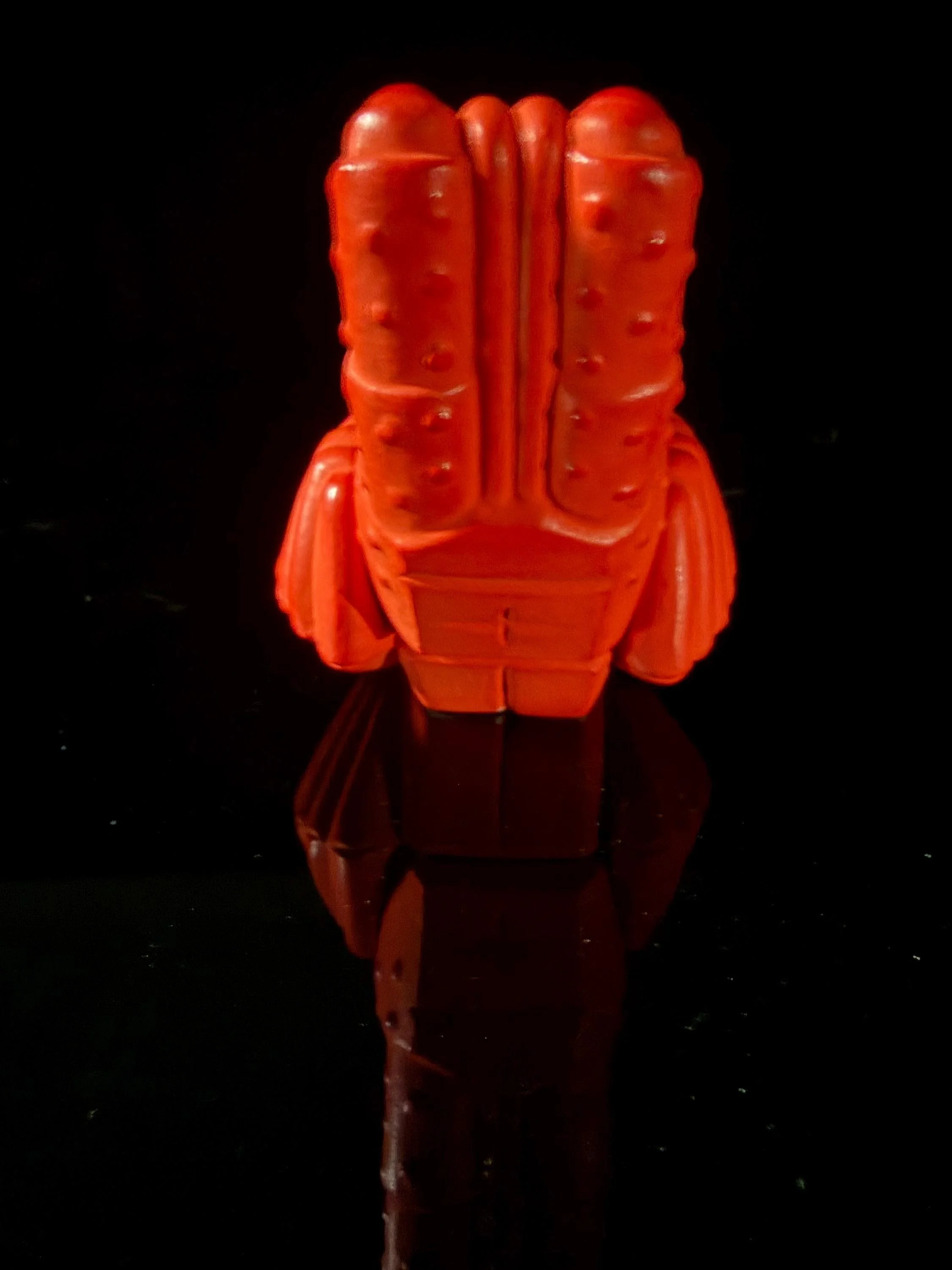 Image 8 of 15
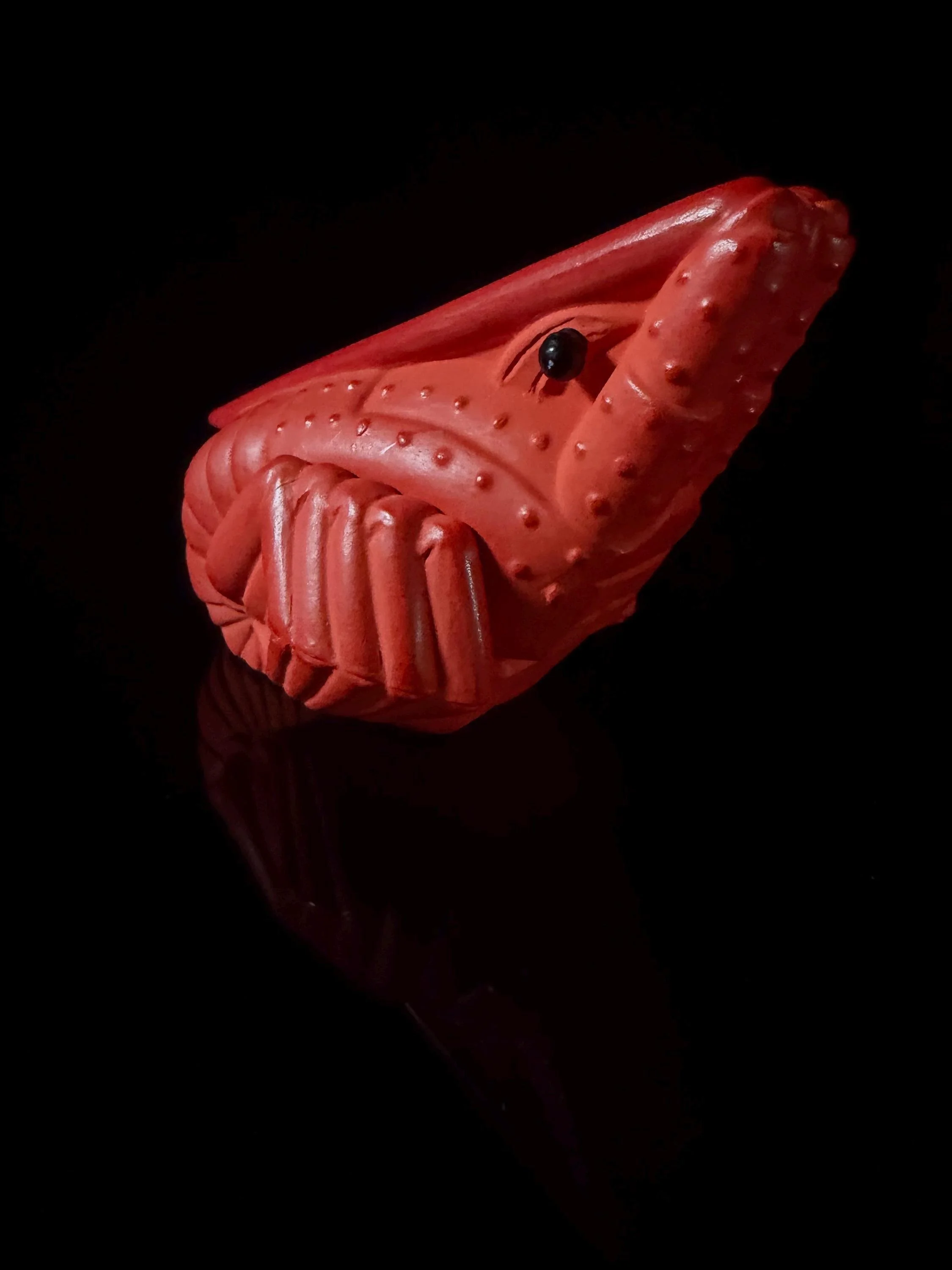 Image 9 of 15
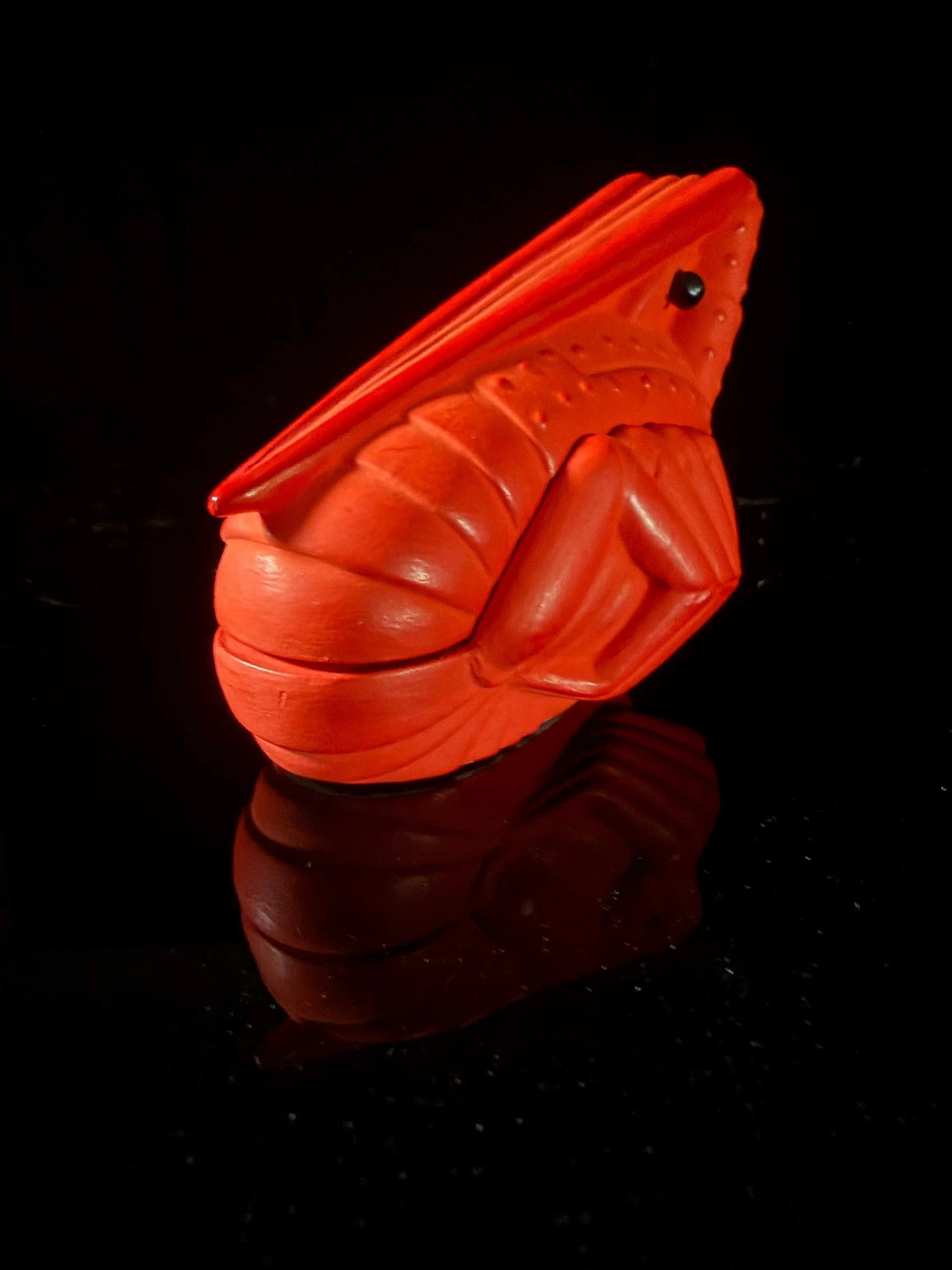 Image 10 of 15
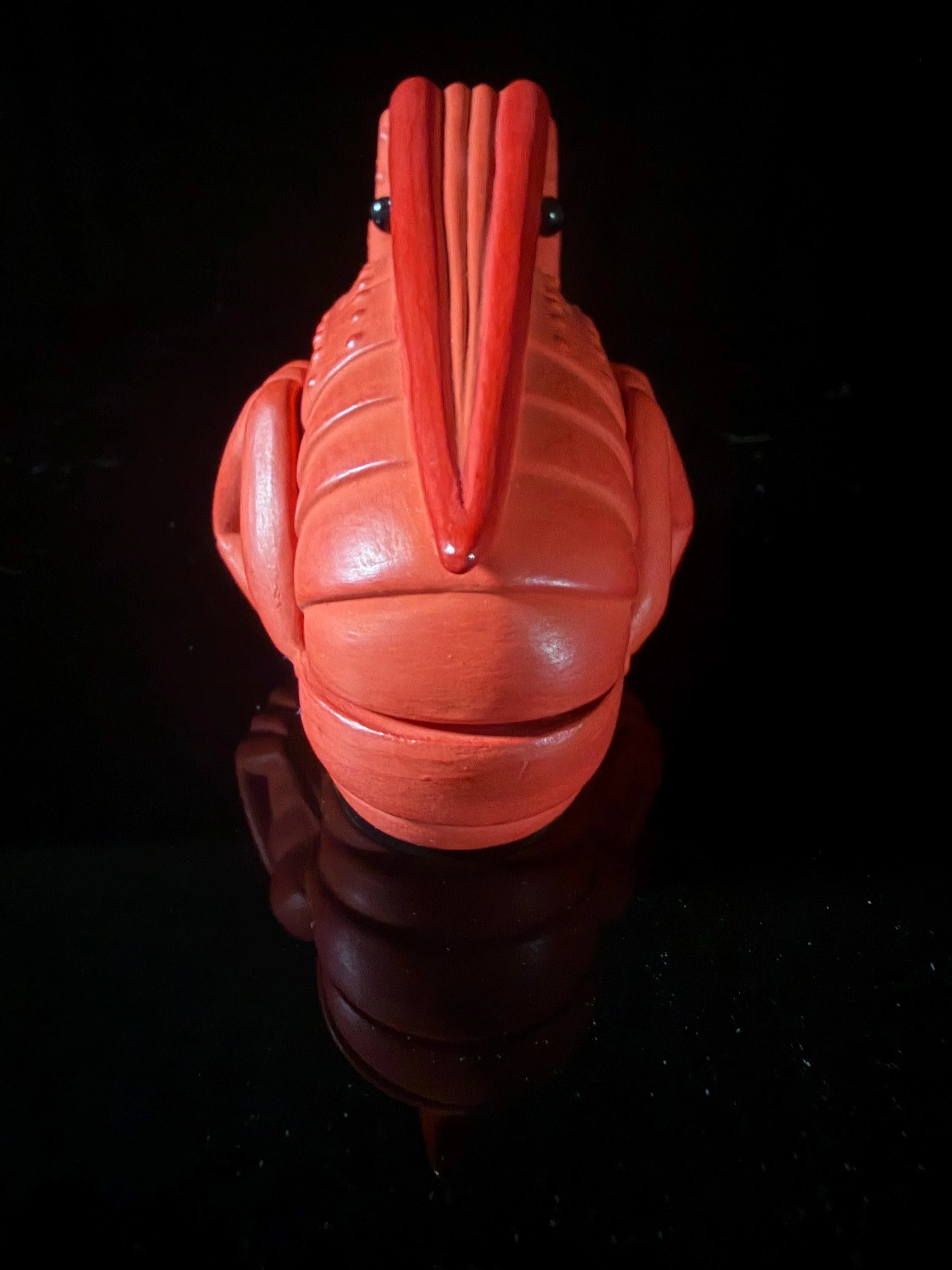 Image 11 of 15
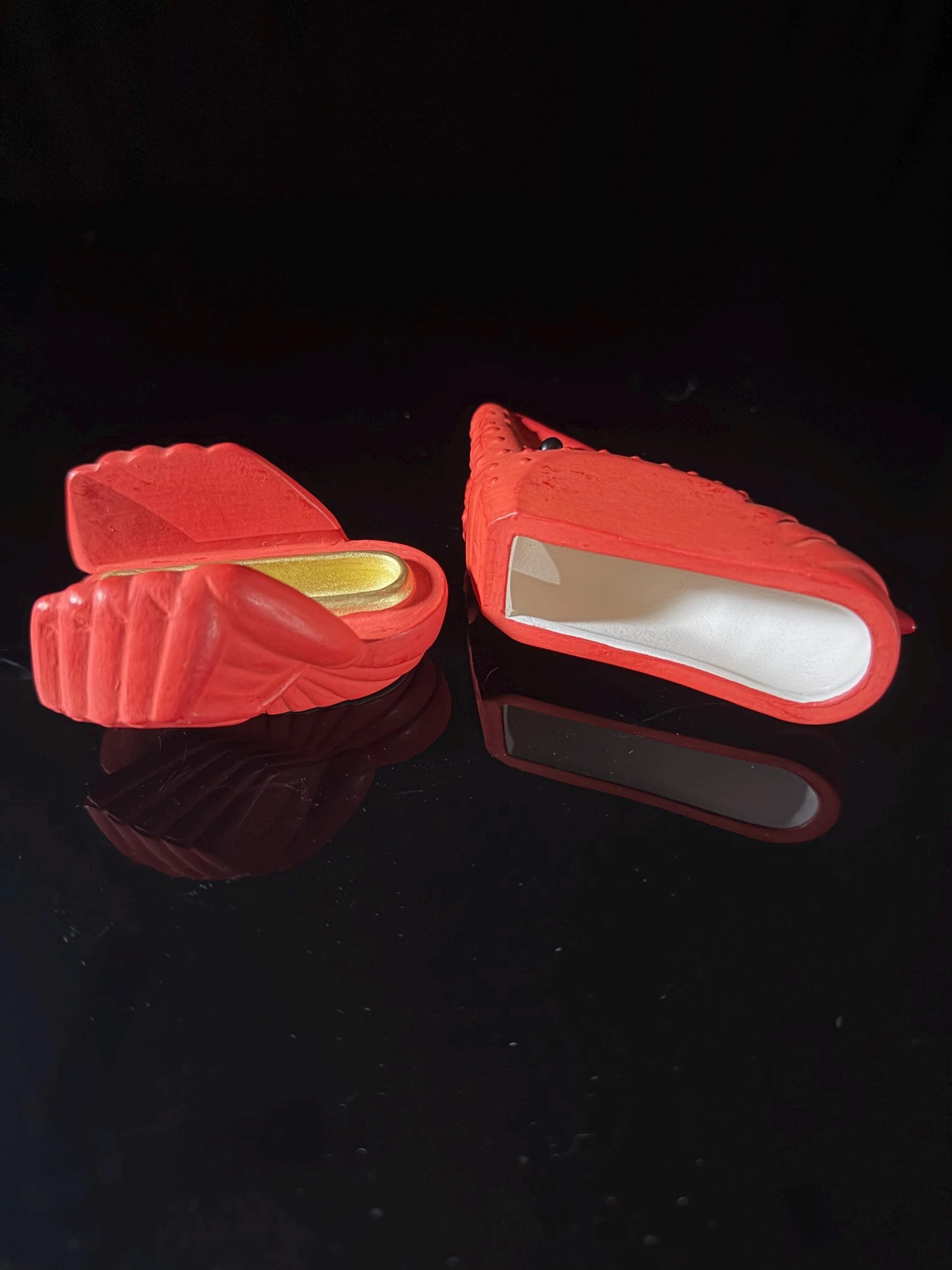 Image 12 of 15
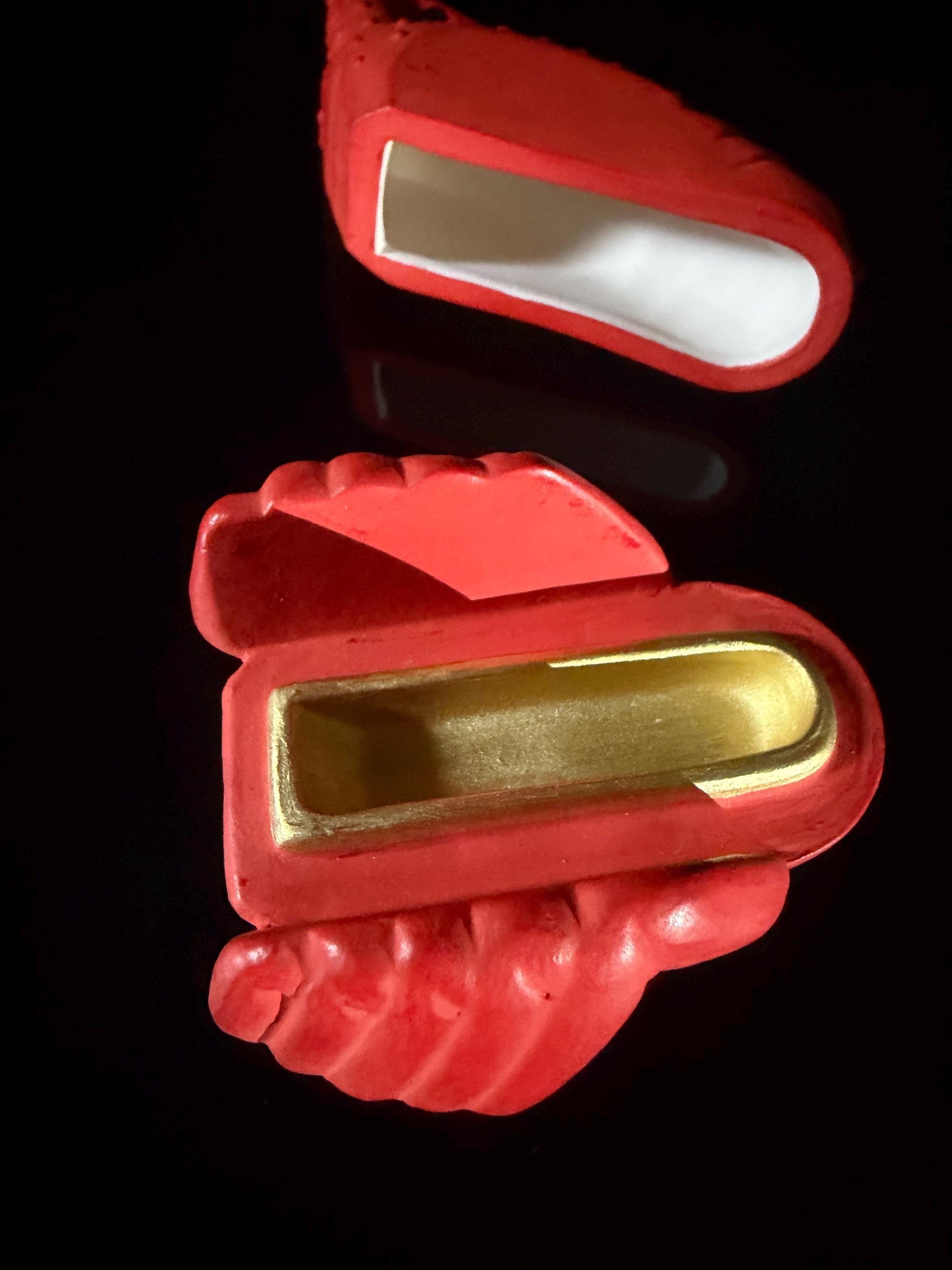 Image 13 of 15
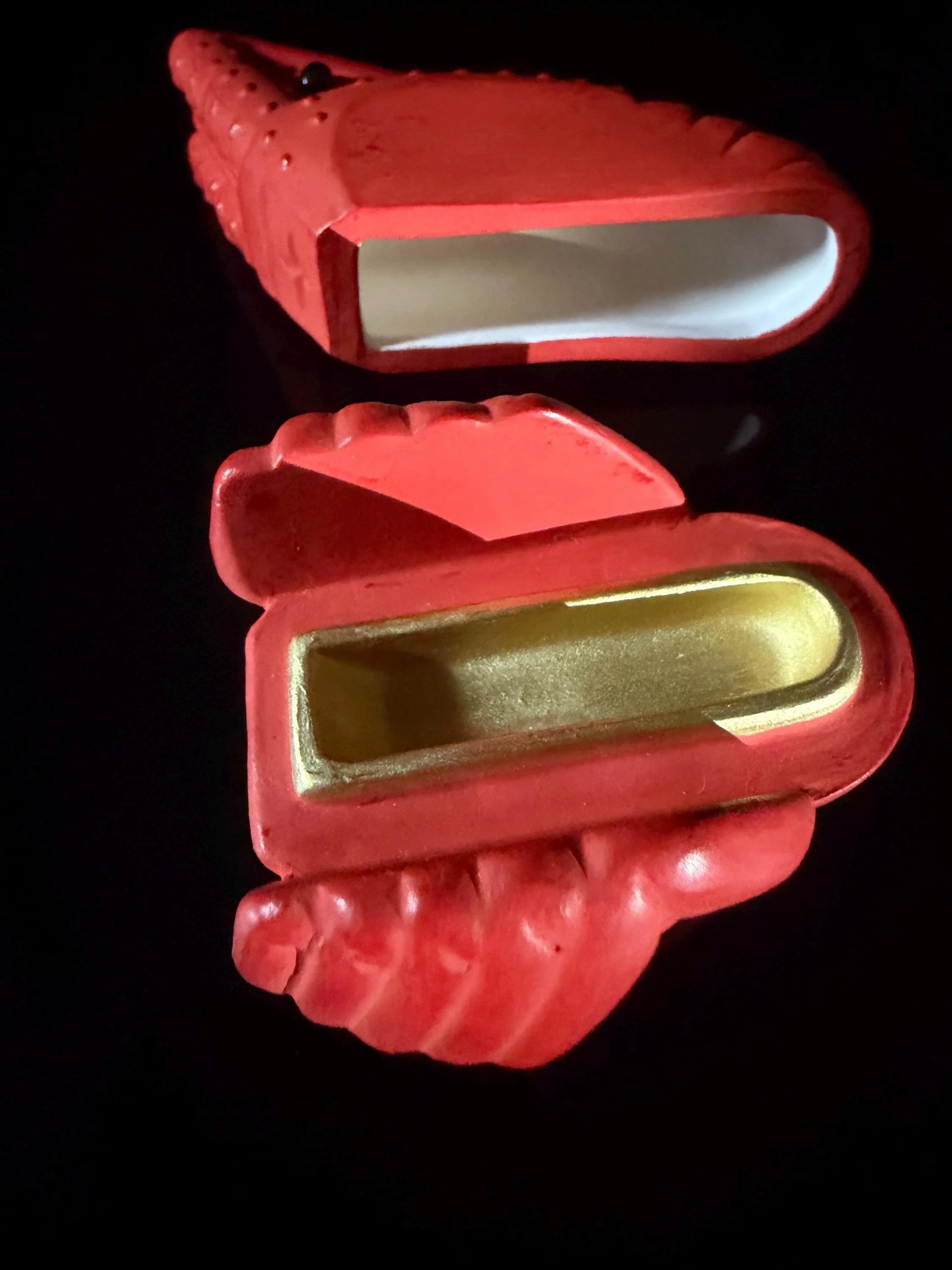 Image 14 of 15
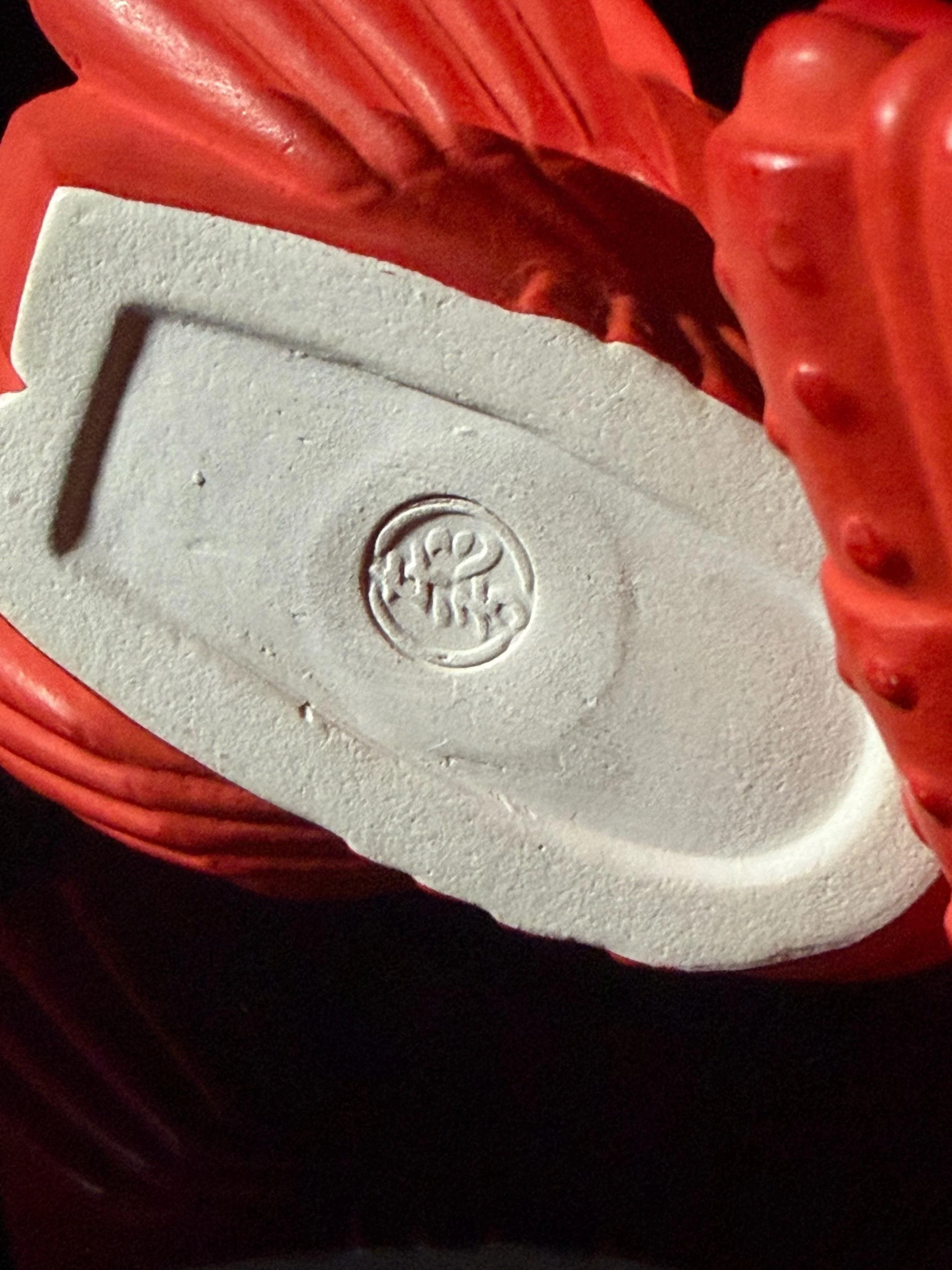 Image 15 of 15