Image 1 of 11
Image 2 of 11
Image 3 of 11
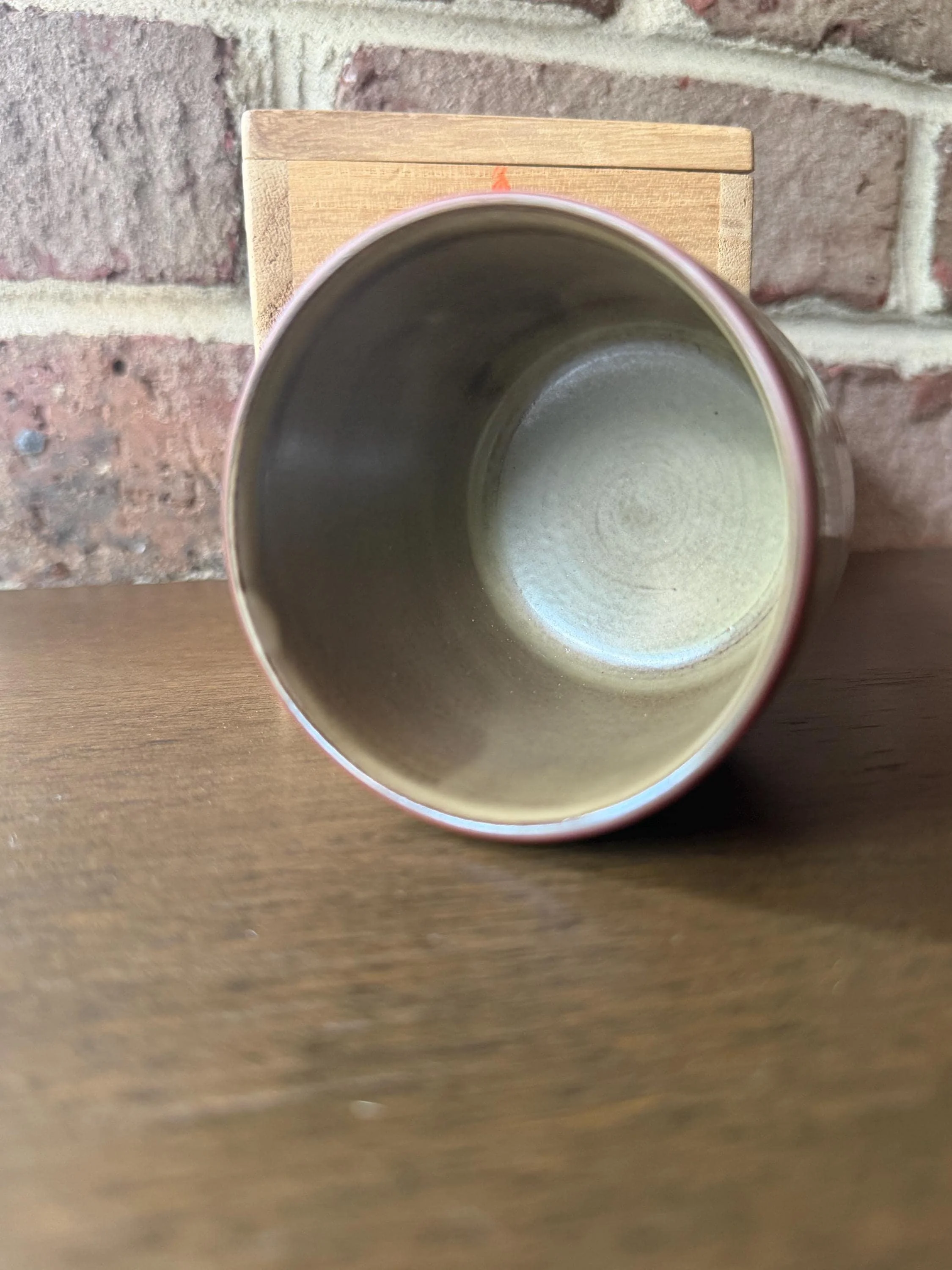
Image 4 of 11
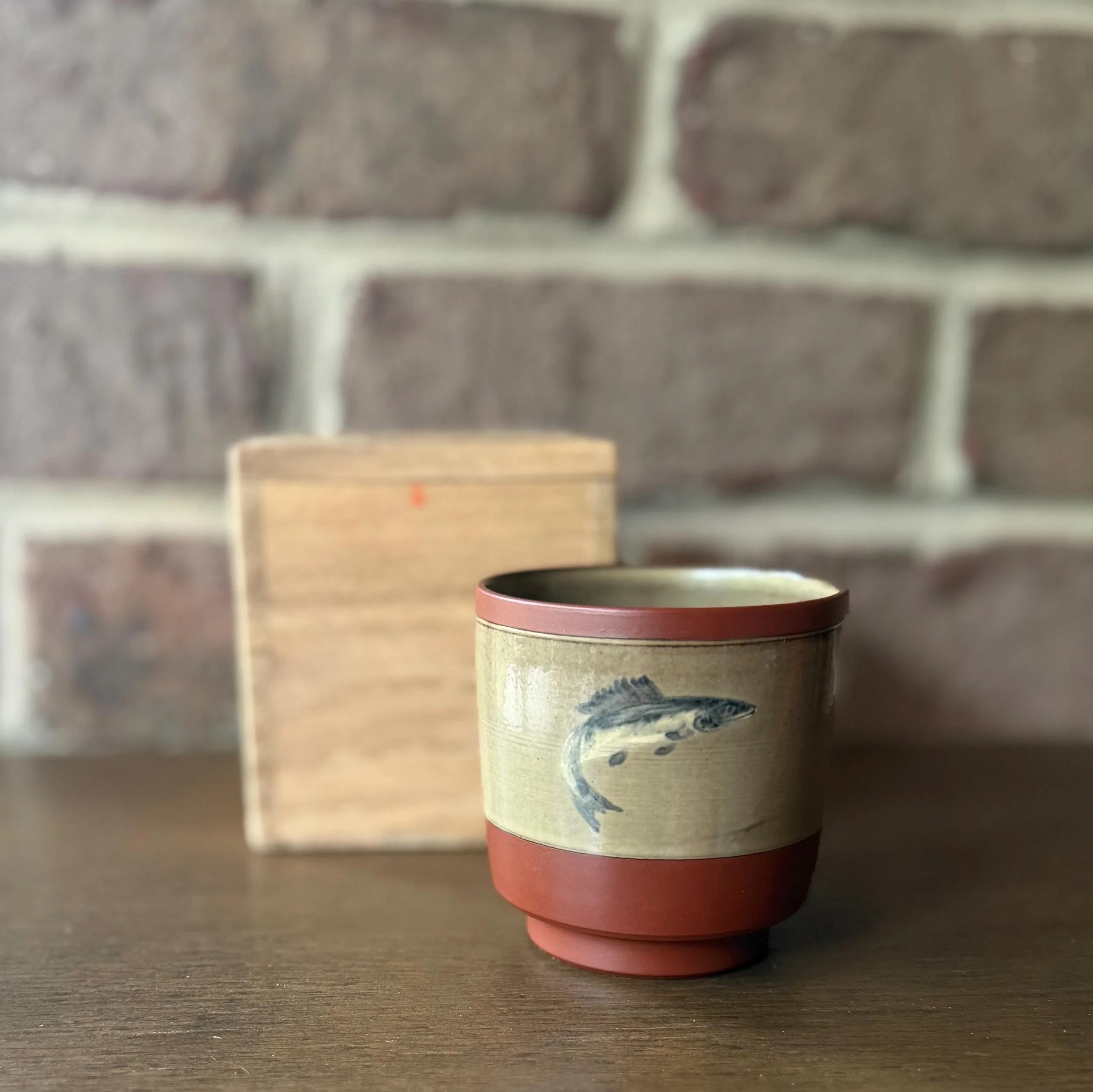
Image 5 of 11
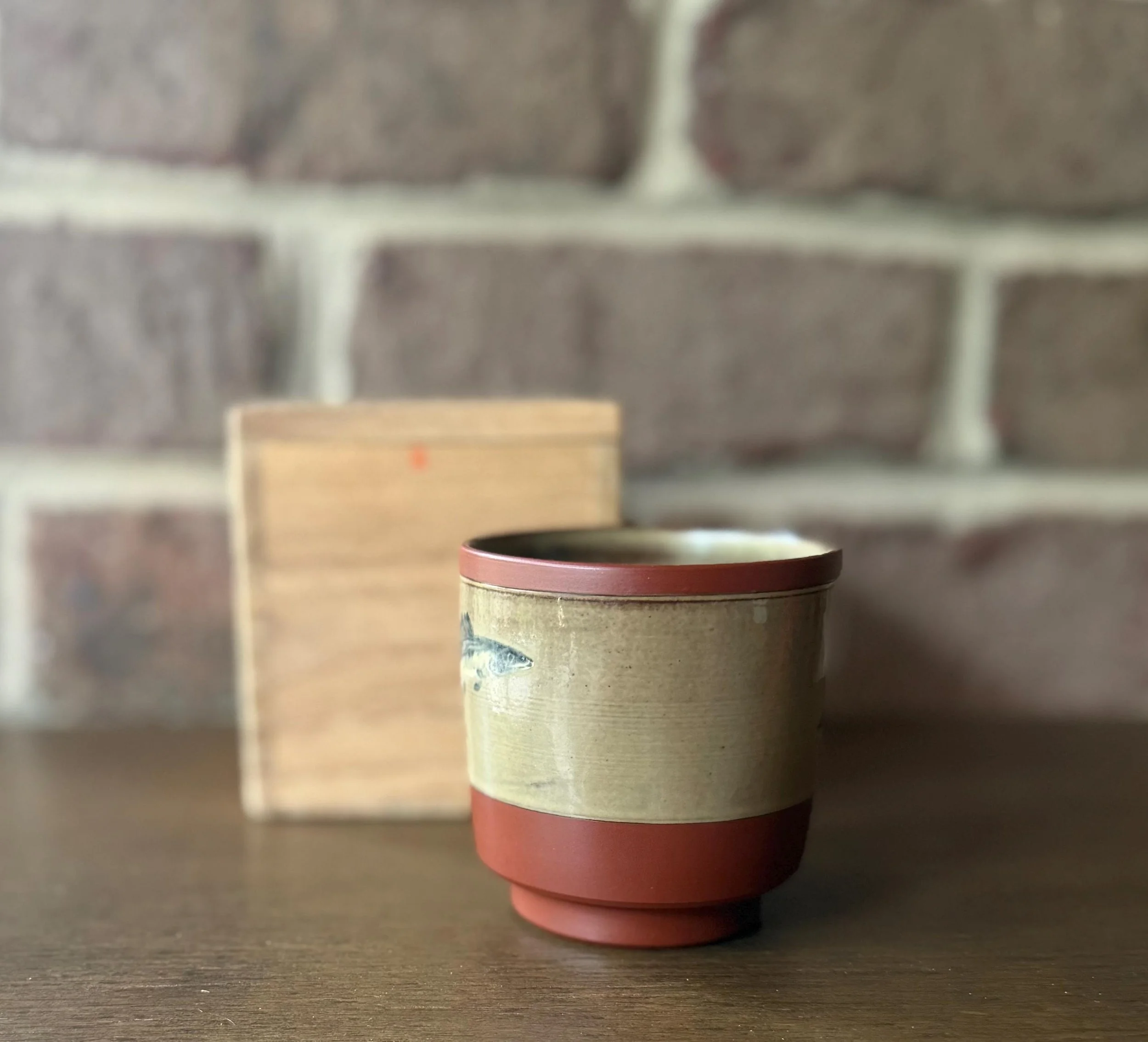
Image 6 of 11
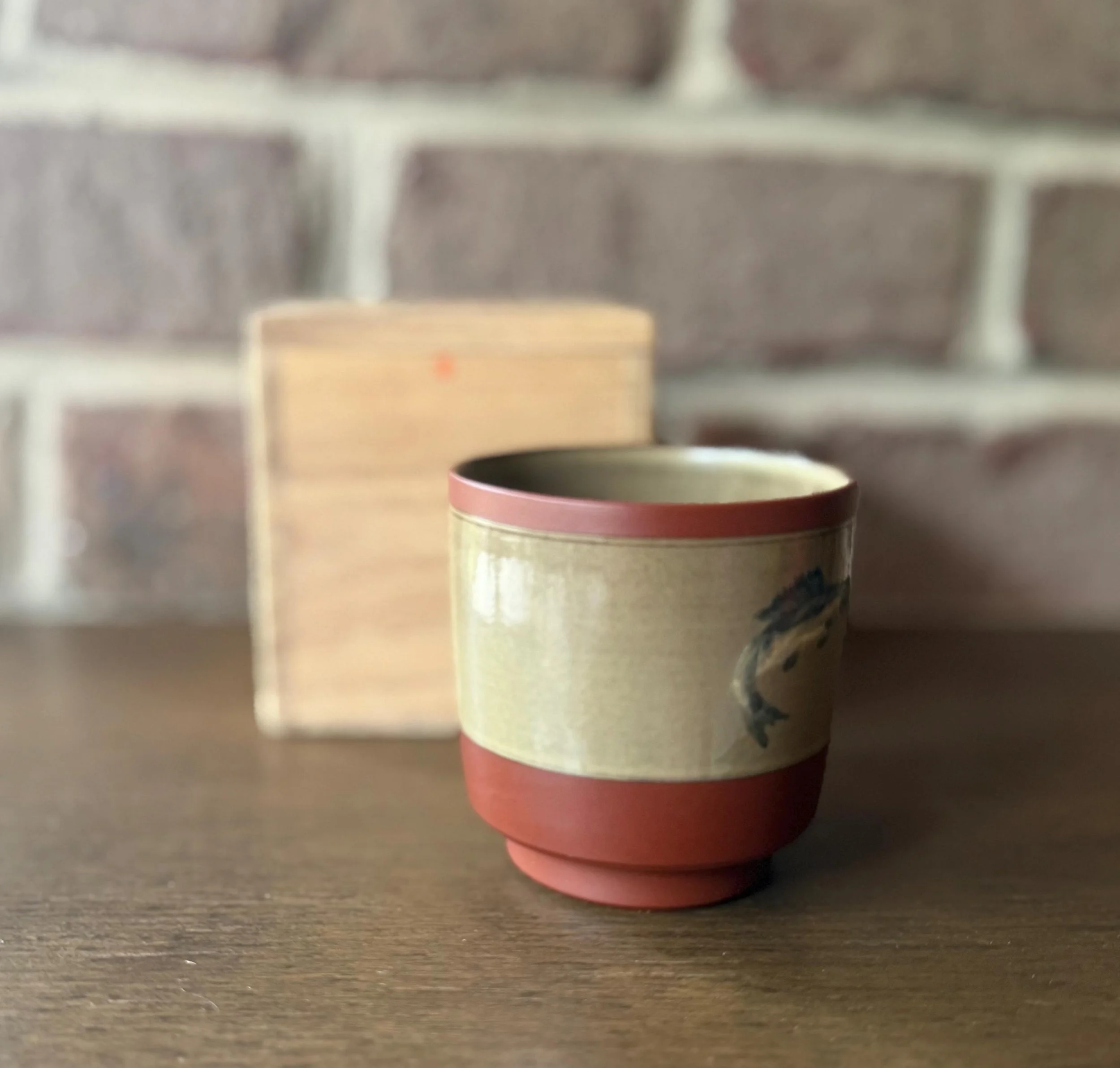
Image 7 of 11
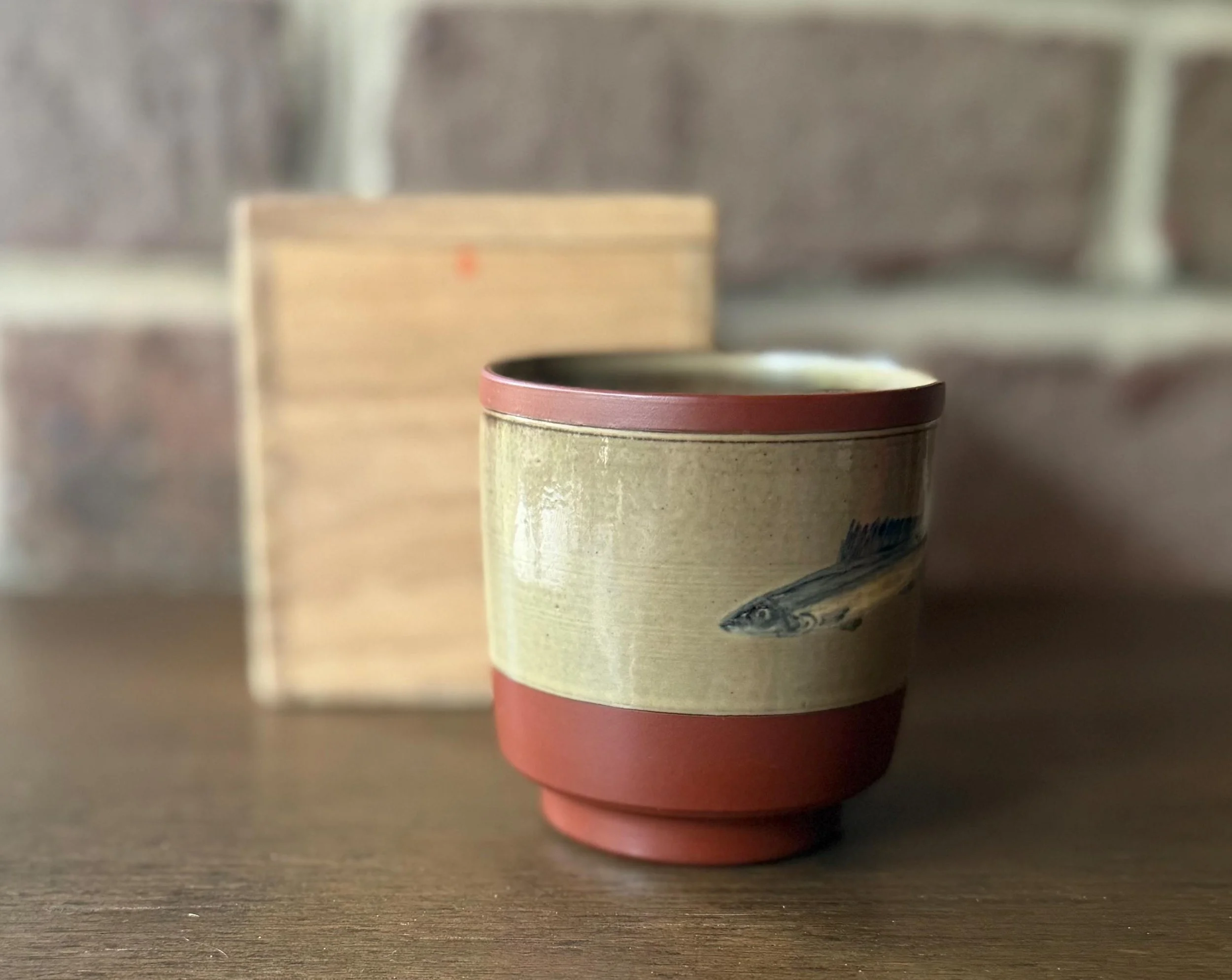
Image 8 of 11
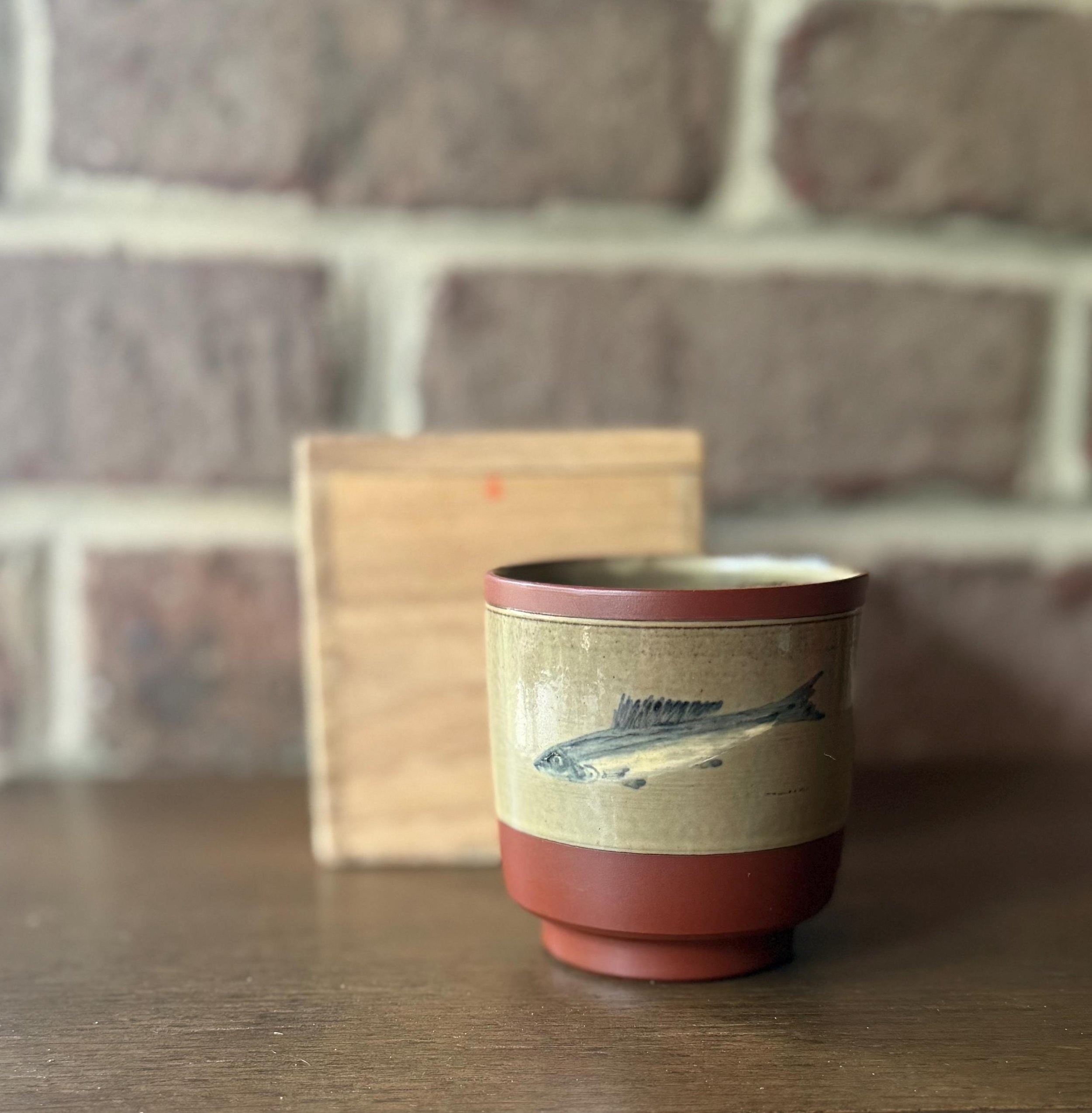
Image 9 of 11
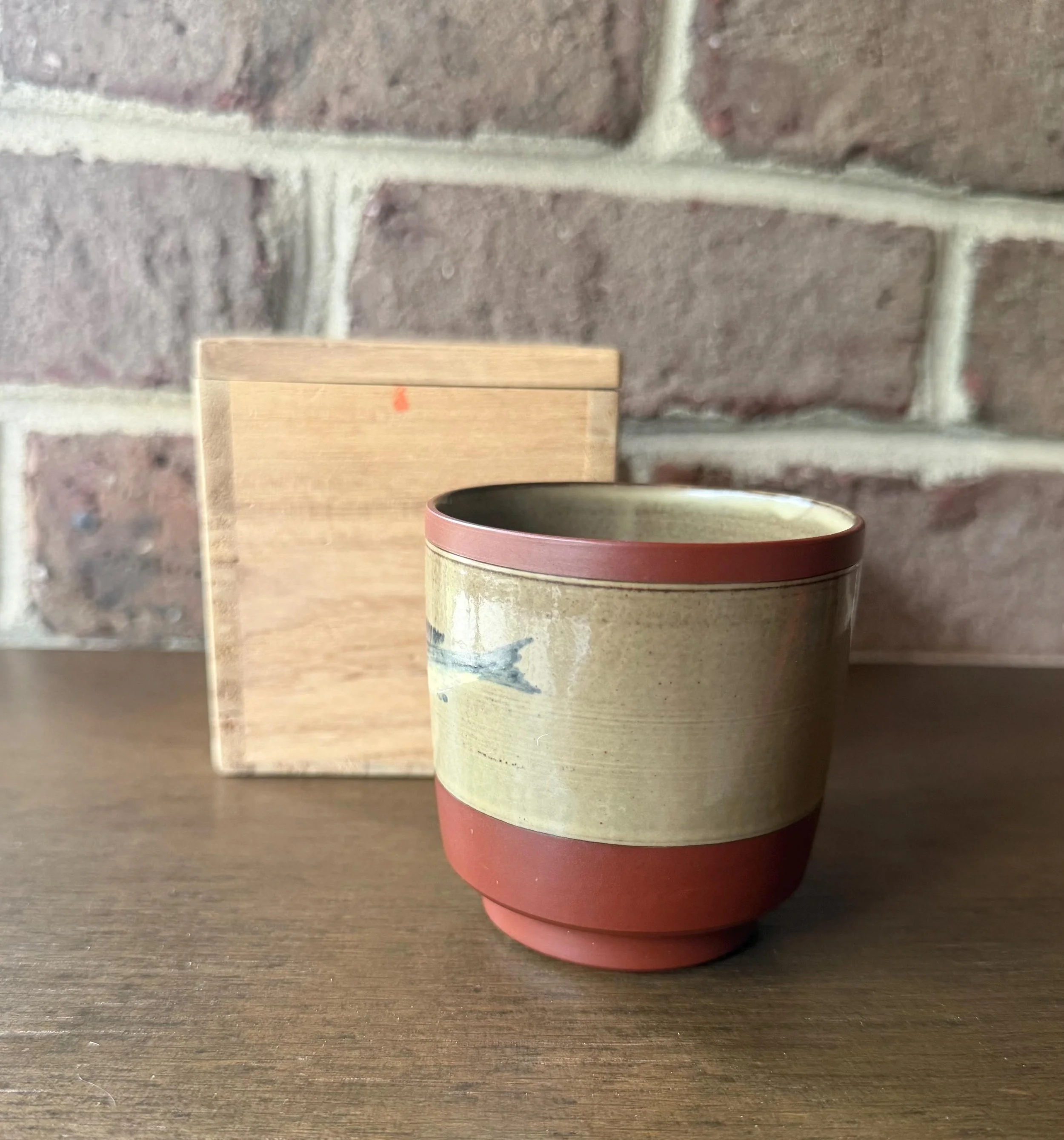
Image 10 of 11
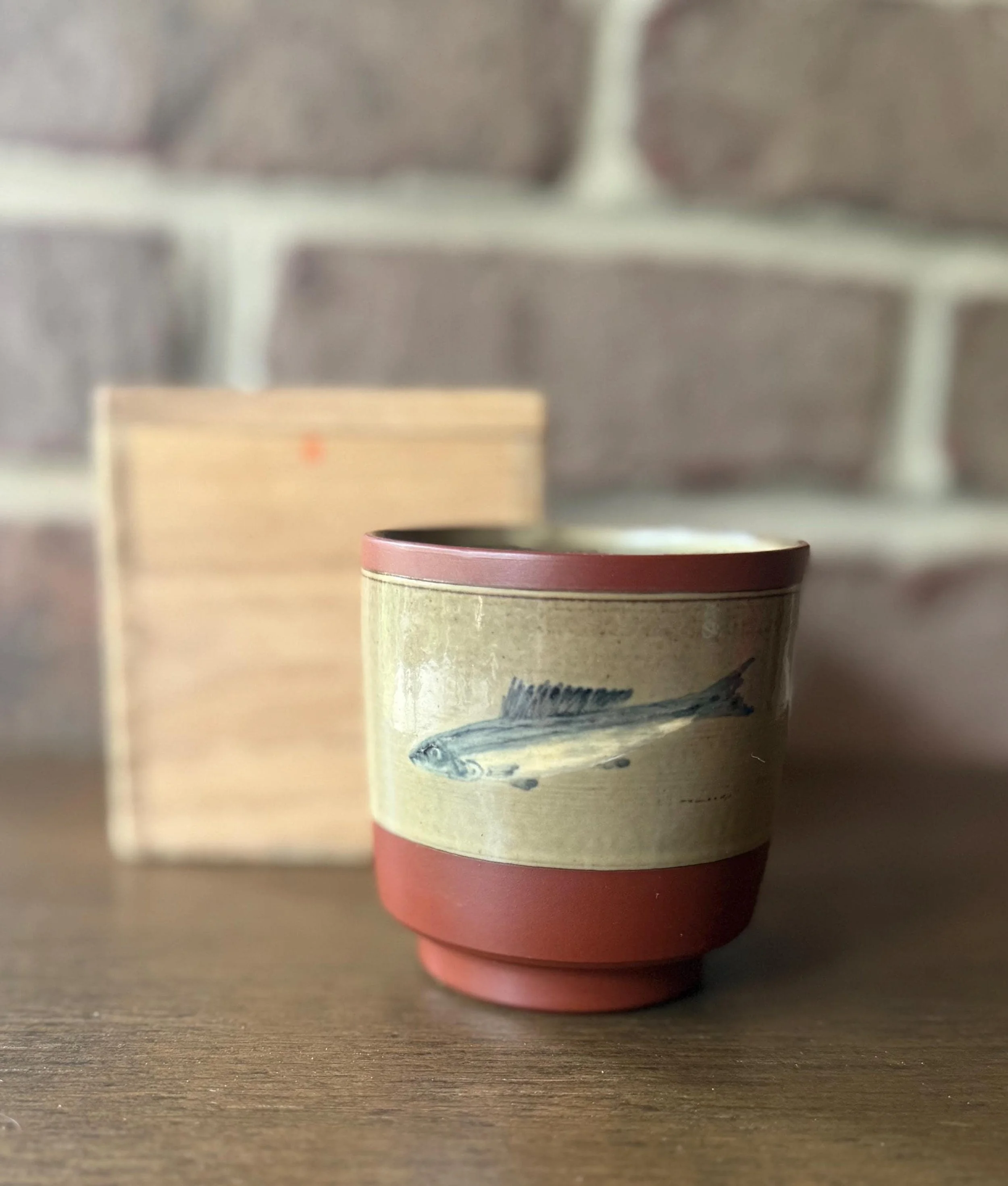
Image 11 of 11
Ito Sekisui V (b. 1941) | Mumyoi-yaki Zogan Yunomi (Sado Island Red Clay Teacup with Fish Motif)
$98.00
sold out
Gallery Overview
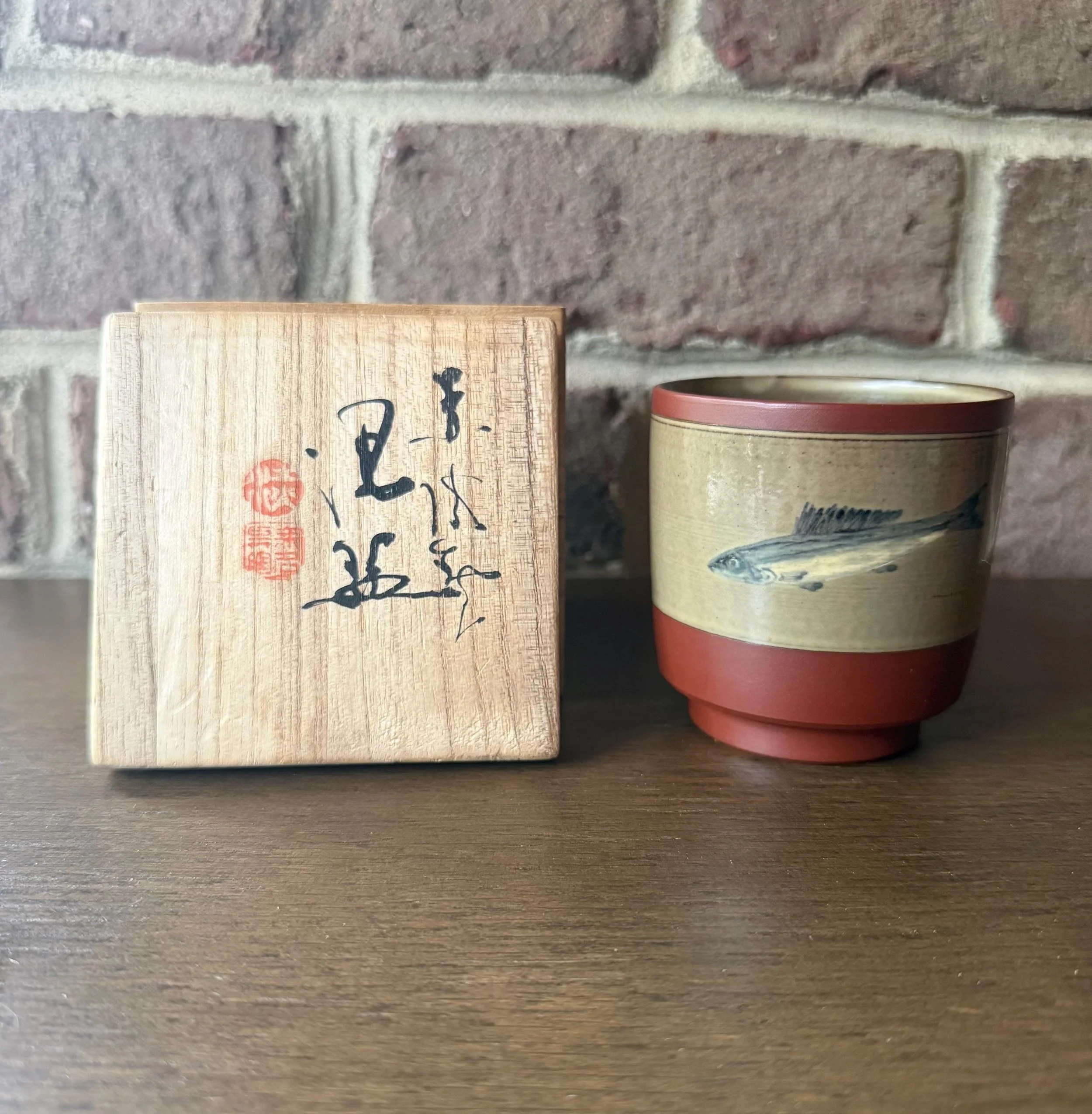
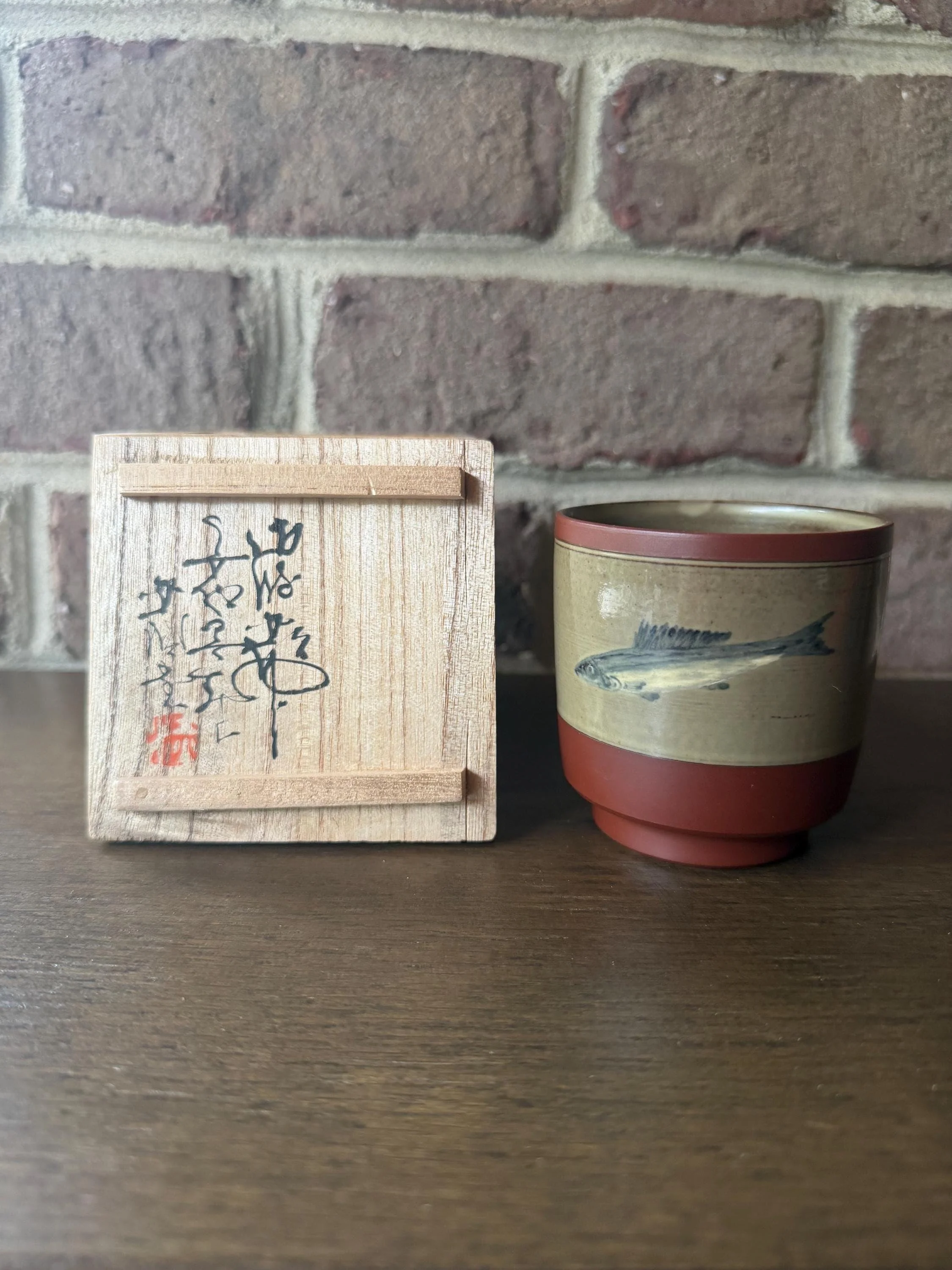
This serene 3-inch ceramic teacup (yunomi) is a beautiful example of Mumyoi-yaki by Living National Treasure Ito Sekisui V (b. 1941). Crafted from the iron-rich red clay excavated from the historic gold mines of Sado Island, the unglazed foot and upper rim have been burnished to a smooth, matte terracotta finish. The central banded area provides a striking contrast, featuring a pale slip ground decorated with Sekisui’s precise zogan (inlay) technique. The focal point is a beautifully rendered, naturalistic fish—a classical motif symbolizing purity and the flow of nature—gliding across the center of the vessel.
Curatorial Notes
Ito Sekisui V, the 5th generation head of the Sekisui kiln, was designated a Living National Treasure (Ningen Kokuho) in 2003 for his mastery of Sado Island's unique Mumyoi clay. While he is globally renowned for his nerikomi (marbled clay) abstract works, his slip-inlaid pieces showcasing traditional flora and fauna highlight his deep connection to the natural world and classical Japanese aesthetics.
Condition & Provenance
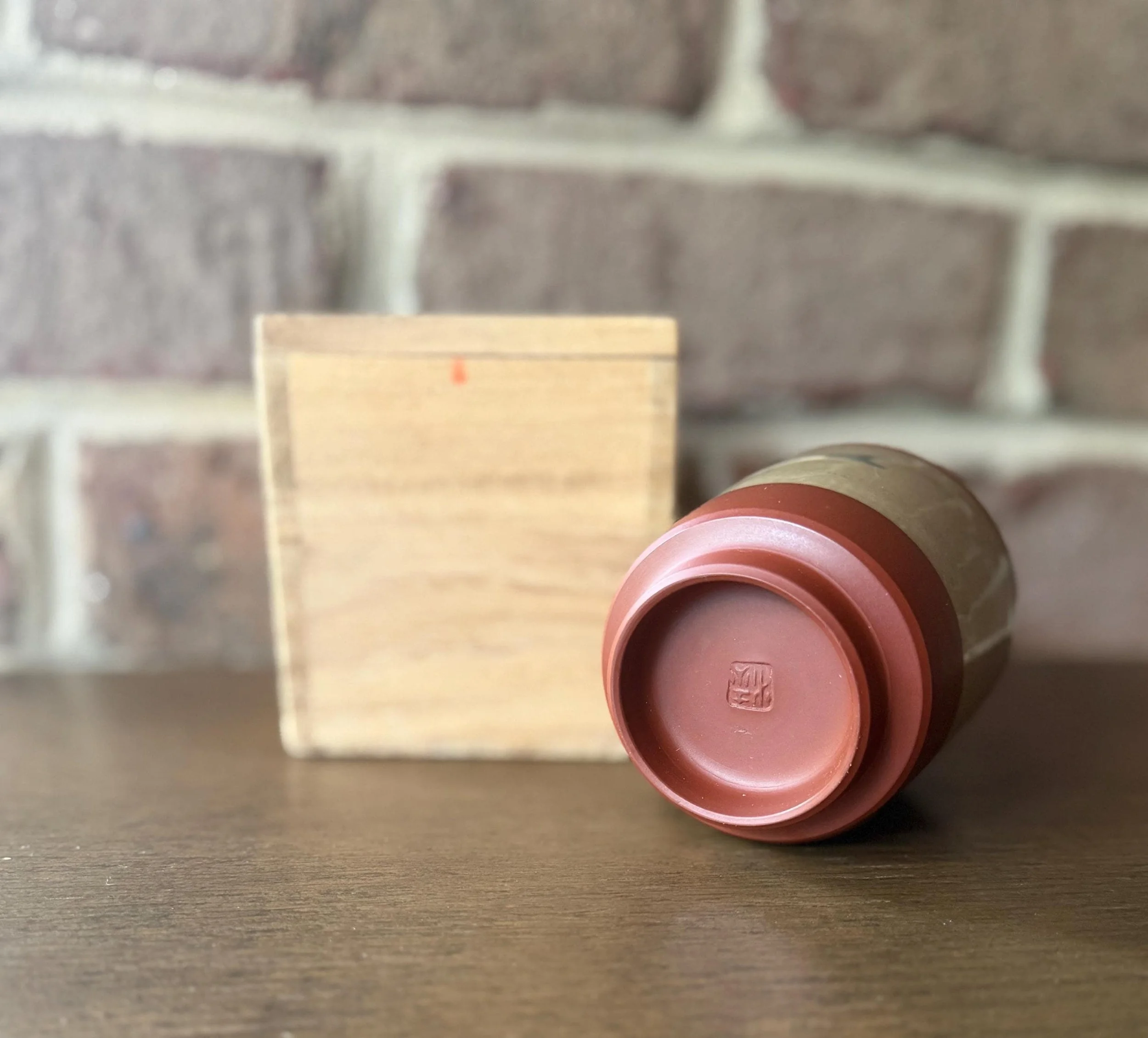
The ceramic teacup itself is preserved in immaculate, gallery-grade condition with no chips, cracks, or restorations. The unglazed foot bears the artist's stamped "赤水" (Sekisui) seal.
Condition Note Regarding Packaging: The piece is fully authenticated and accompanied by its original wooden presentation box (tomobako). Please note that while the box is authentic and features the artist's signature and seal, the wooden lid has developed a slight warp/bow over time due to natural humidity adjustments. It remains structurally intact and serves its purpose of authentication, but does not sit perfectly flat.
Specifications
Artist: Ito Sekisui V (五代 伊藤赤水, b. 1941)
Style: Mumyoi Ware (Sado Island Red Clay Pottery)
Technique: Burnished Mumyoi Clay with Zogan (Slip-Inlaid) Fish Motif
Form: Teacup (Yunomi)
Dimensions: Height 3.0" (7.6 cm) × Width 2.875" (7.3 cm)
Origin: Sado Island, Niigata Prefecture, Japan
Period: Heisei Era