Keisuke Iwata (岩田圭介) | Sculptural Hakuyu Chawan (White Glaze Tea Bowl) | Circa 1993
Gallery Overview
This exceptional Hakuyu Chawan (White Glaze Tea Bowl) by Keisuke Iwata (b. 1954) is a masterclass in modern wabi-sabi expression. The vessel features a deeply rutted, heavily textured dark clay body that appears almost geological in its formation, evoking the ruggedness of a carved cliffside. Flowing over this raw, charred landscape is a thick, snowy white glaze (hakuyu), creating a striking visual and tactile contrast. The irregular, undulating rim and the sheer physical weight of the form make this not just a functional tea utensil, but a commanding work of contemporary ceramic sculpture.
Curatorial Notes
Based on the accompanying original biographical slip (shiori), this piece dates definitively to circa 1993. This places its creation during a pivotal and highly sought-after era in Iwata's early career, coinciding directly with his acclaimed international solo exhibitions in Paris at Gallery KOUKI (1992) and Gallery EPONA (1993). It represents a bold, uncompromising departure from conventional, symmetrical tea bowls, showcasing the raw, avant-garde energy that firmly established his reputation in the global fine art ceramics market.
Condition & Provenance
The chawan is preserved in excellent condition, with no chips, cracks, or repairs. The underside of the heavily carved base bears the artist's incised signature, "圭" (Kei).
The piece is fully authenticated and accompanied by its original wooden presentation box (tomobako). The box lid is inscribed with the title "白釉 茶碗" (Hakuyu Chawan / White Glaze Tea Bowl) and is signed "圭介" (Keisuke) by the artist. The inclusion of the original 1993 shiori secures its definitive historical timeline and provenance.
Specifications
Artist: Keisuke Iwata (岩田圭介, b. 1954)
Studio: Muku Tōbō (椋陶房)
Style: Sculptural Studio Pottery
Glaze: Hakuyu (White Glaze)
Form: Tea Bowl (Chawan)
Dimensions: Diameter 4.7" - 4.4" (12.0 - 11.3 cm) × Height 4.4" (11.3 cm)
Origin: Fukuoka Prefecture, Japan
Period: Heisei Era (Circa 1993)
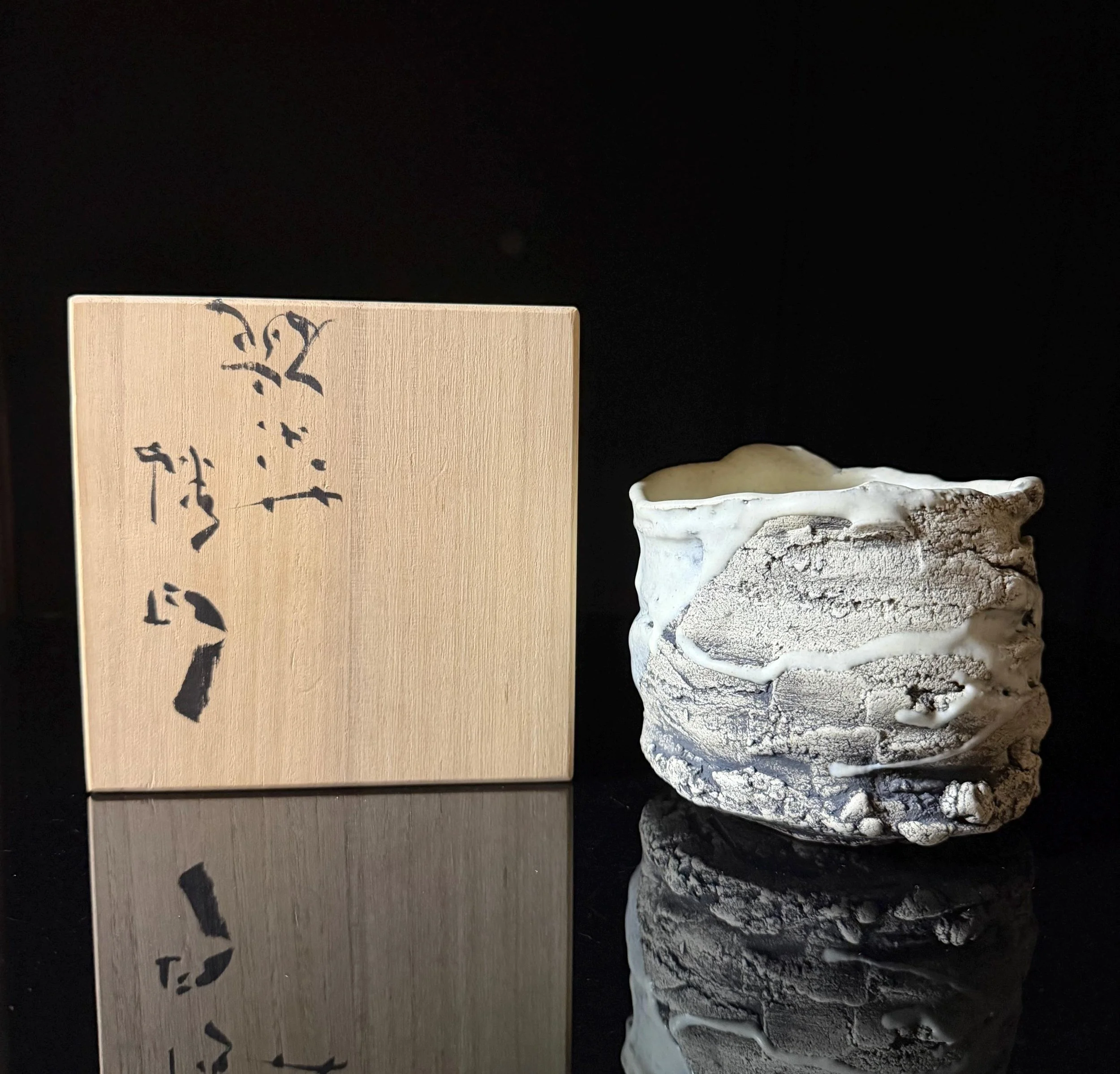 Image 1 of 6
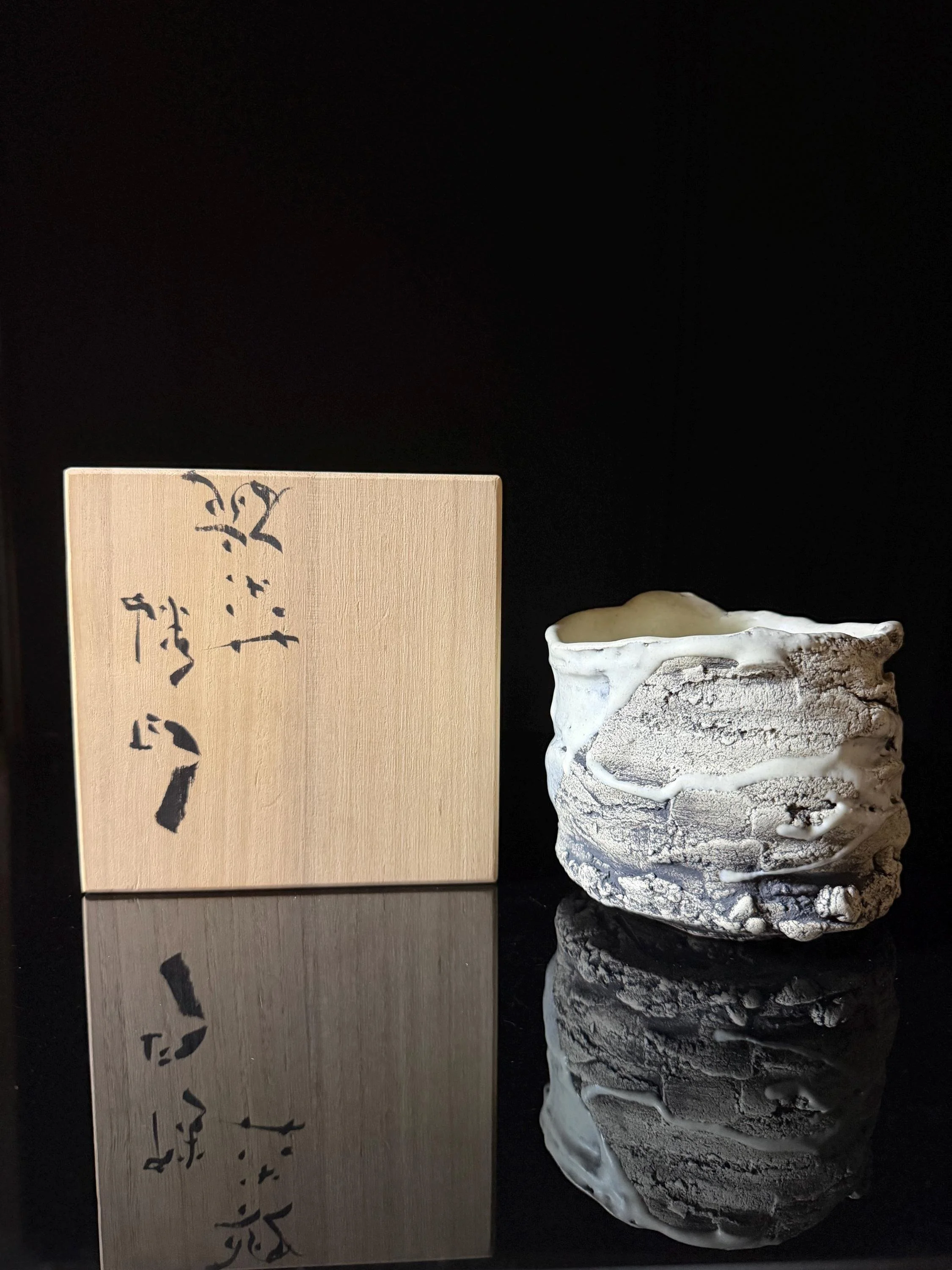 Image 2 of 6
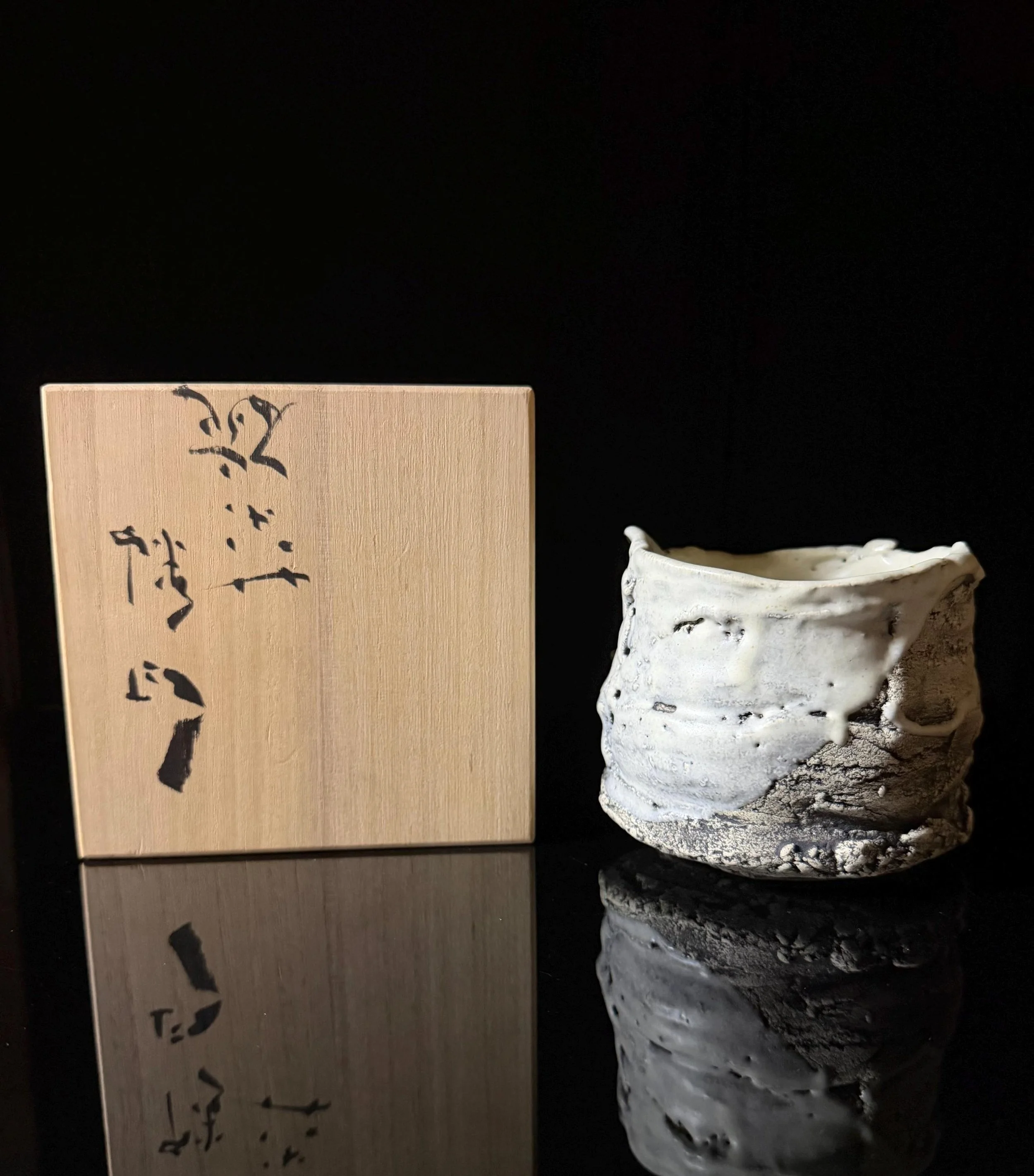 Image 3 of 6
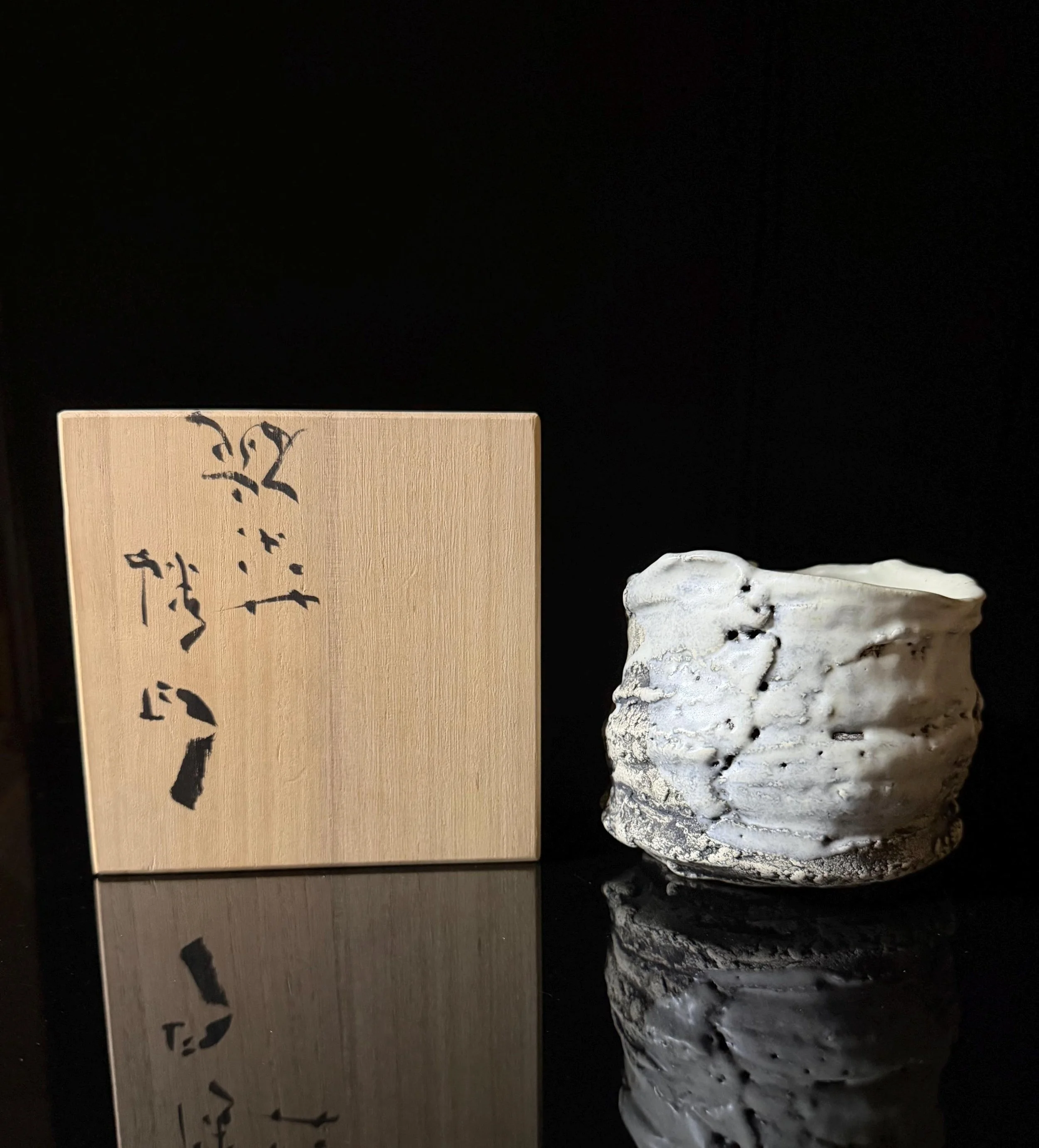 Image 4 of 6
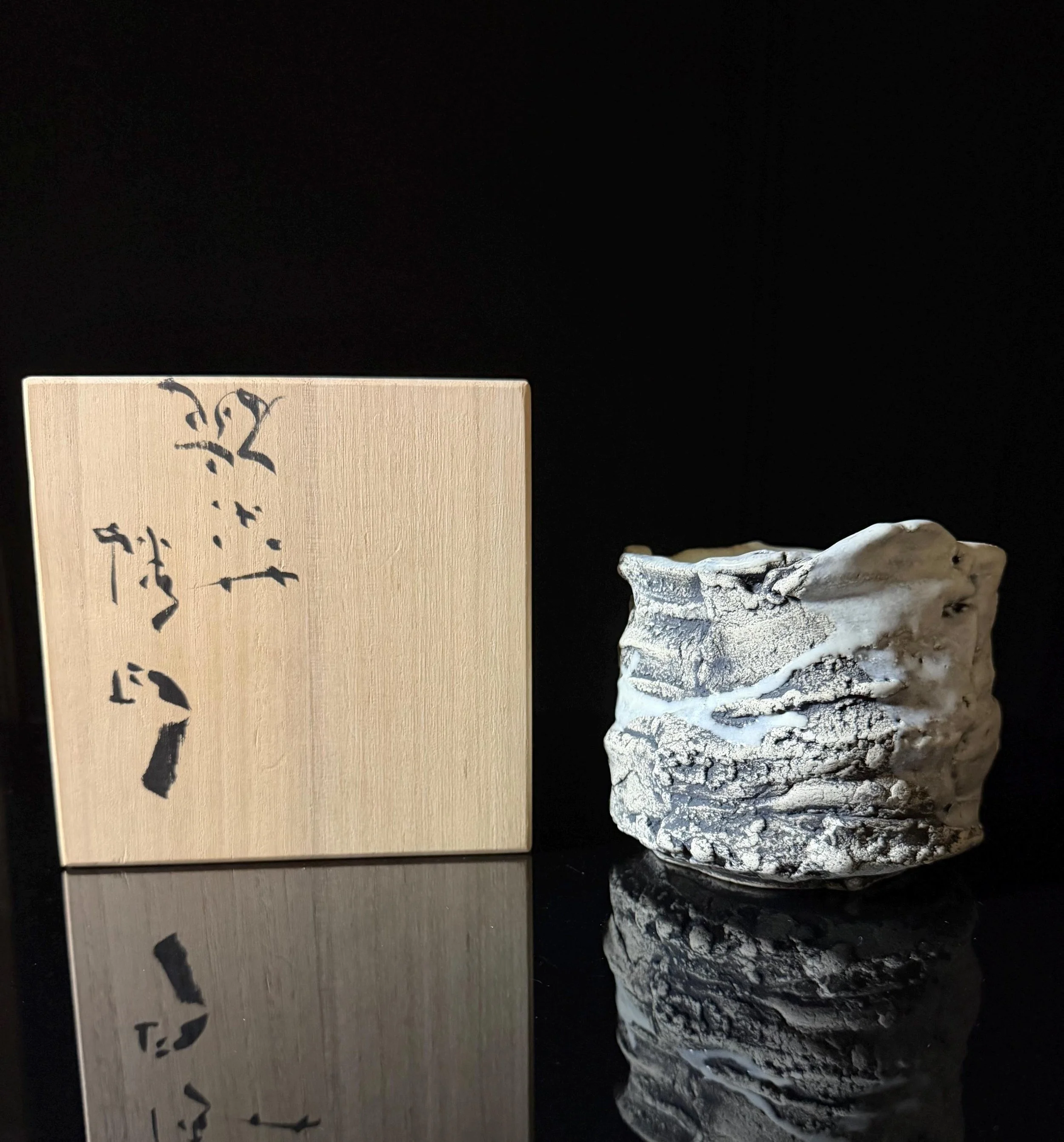 Image 5 of 6
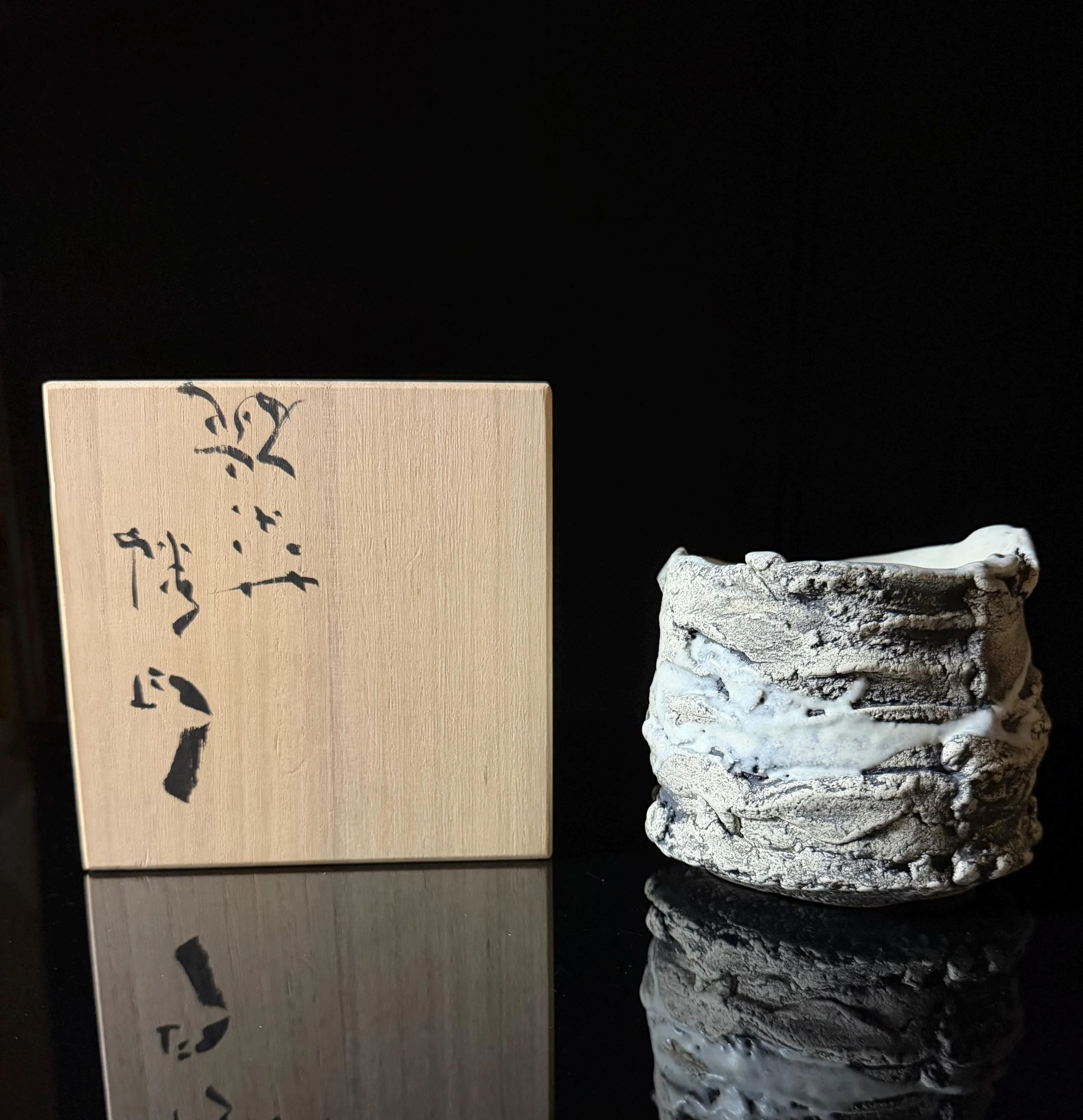 Image 6 of 6