Naokata Ueda IV (1898–1975) | Exhibition-Documented "Yabure-bukuro" (Ruptured Bag) Mizusashi | 1972
Gallery Overview
This is a monumental, exhibition-documented mizusashi (fresh water container) by Naokata Ueda IV (1898–1975), a designated Important Cultural Treasure of Shiga Prefecture. Executed in the heavily textured, unglazed Old Iga style, this vessel is a masterclass in the Yabure-bukuro ("ruptured bag") form. The dramatic, intentional fissure splitting the front of the clay body is a highly coveted wabi-sabi characteristic that pays homage to legendary Momoyama-period tea wares. Pushing a vessel to the absolute brink of structural failure without it collapsing requires an unparalleled mastery of the clay's tensile limits and the violent physics of the wood-fired kiln. The tomobako has a beautiful yake patina created through years of storage, a desireable trait further certifying authenticity and age.
The Alchemy of the Anagama
The breathtaking surface of this mizusashi is the direct result of extreme kiln chemistry. Fired in a traditional anagama (cave kiln), the piece was subjected to days of relentless wood firing, reaching temperatures exceeding 1300°C. During the firing, the kiln was intentionally starved of oxygen, creating a heavy reduction atmosphere.
As flying wood ash landed on the shoulders of the vessel, it melted and fused with the rich iron and feldspar inherent in the raw clay. Because of the oxygen deprivation, this reaction birthed brilliant, glassy emerald pools known as bidoro (natural ash glaze). These deep green jewel tones can be seen cascading down the scorch-marked body and pooling vividly around the feet on the underside of the vessel—a stunning, organic record of the kiln's fierce heat and erratic airflow.
Historical Provenance: A Father-Son Triumph
This specific masterwork (sakuhin) carries extraordinary historical weight. In 1971, Naokata IV and his son, the future Naokata V, constructed a new anagama kiln together, dedicating themselves to reproducing the raw, ancient styles of Old Shigaraki and Iga wares.
This vessel was born from those historic firings and was subsequently selected for the highly prestigious "Ueda Naokata Father and Son Ceramic Exhibition" held at the Nihonbashi Mitsukoshi in Tokyo in November 1972 (Showa 47). Naokata IV would pass away just three years later, making this exhibition—and this fiercely expressive vessel—a poignant culmination of his life's work. The original 1972 exhibition catalog, featuring a full-page photograph of this exact vessel (Item No. 12), accompanies the piece, providing ironclad provenance.
Condition & Specifications
The mizusashi is preserved in exceptional condition, with the structural firing crack being an intentional, defining aesthetic feature of the Yabure-bukuro style. The underside bears the stamped seal of the artist. The piece is fully authenticated and accompanied by its original inscribed and signed wooden presentation box (tomobako), along with the 1972 Nihonbashi Mitsukoshi exhibition catalog.
Artist: Naokata Ueda IV (四代 上田直方, 1898–1975)
Title/Form: Yabure-bukuro Mizusashi (Ruptured Bag Fresh Water Container)
Style: Old Iga / Shigaraki Wood-Fired Tradition
Exhibition History: 1972 Nihonbashi Mitsukoshi, Tokyo (Item No. 12)
Dimensions: Diameter 8.3" (21.0 cm) × Height 6.5" (16.5 cm)
Origin: Shiga Prefecture, Japan
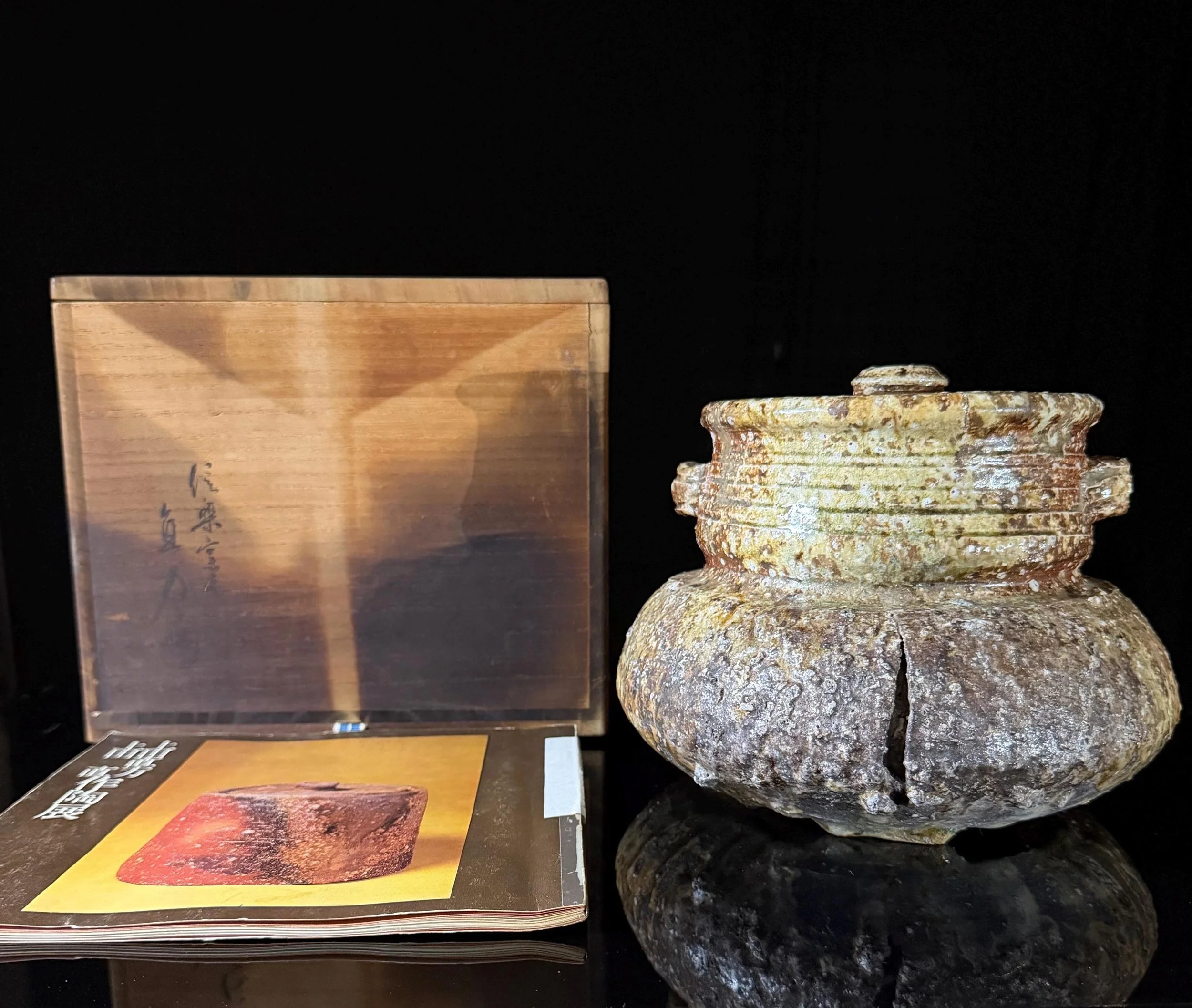 Image 1 of 12
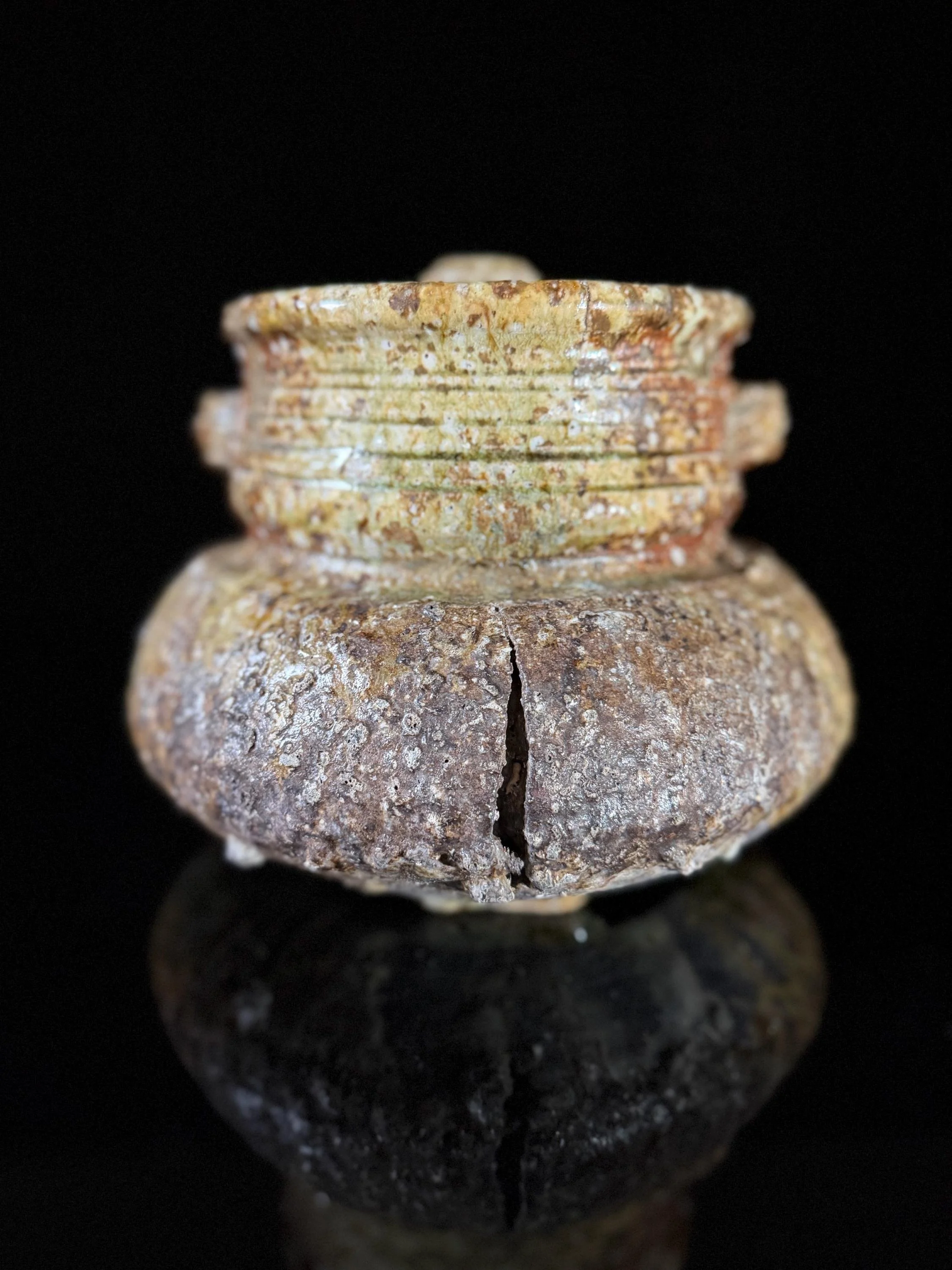 Image 2 of 12
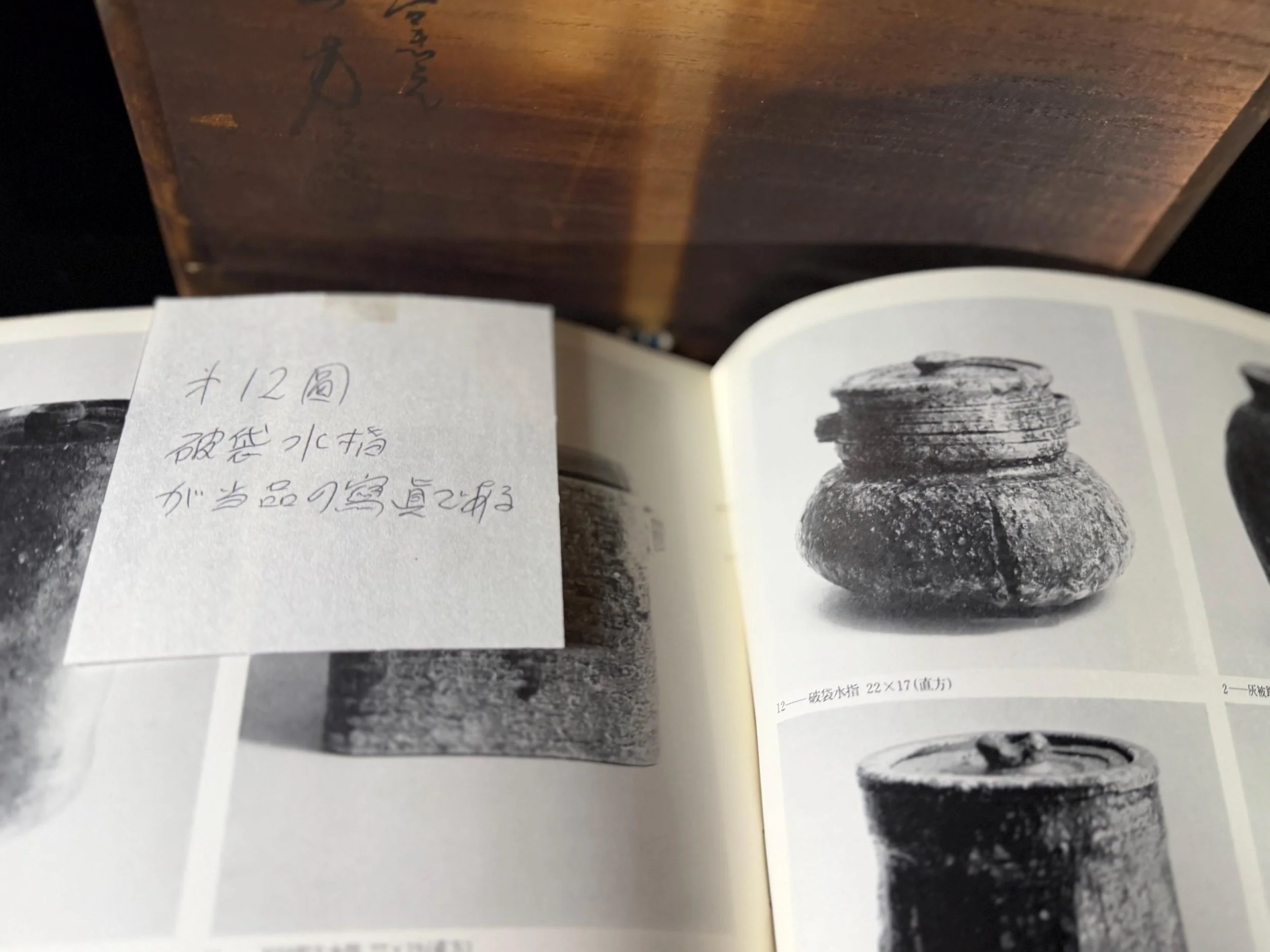 Image 3 of 12
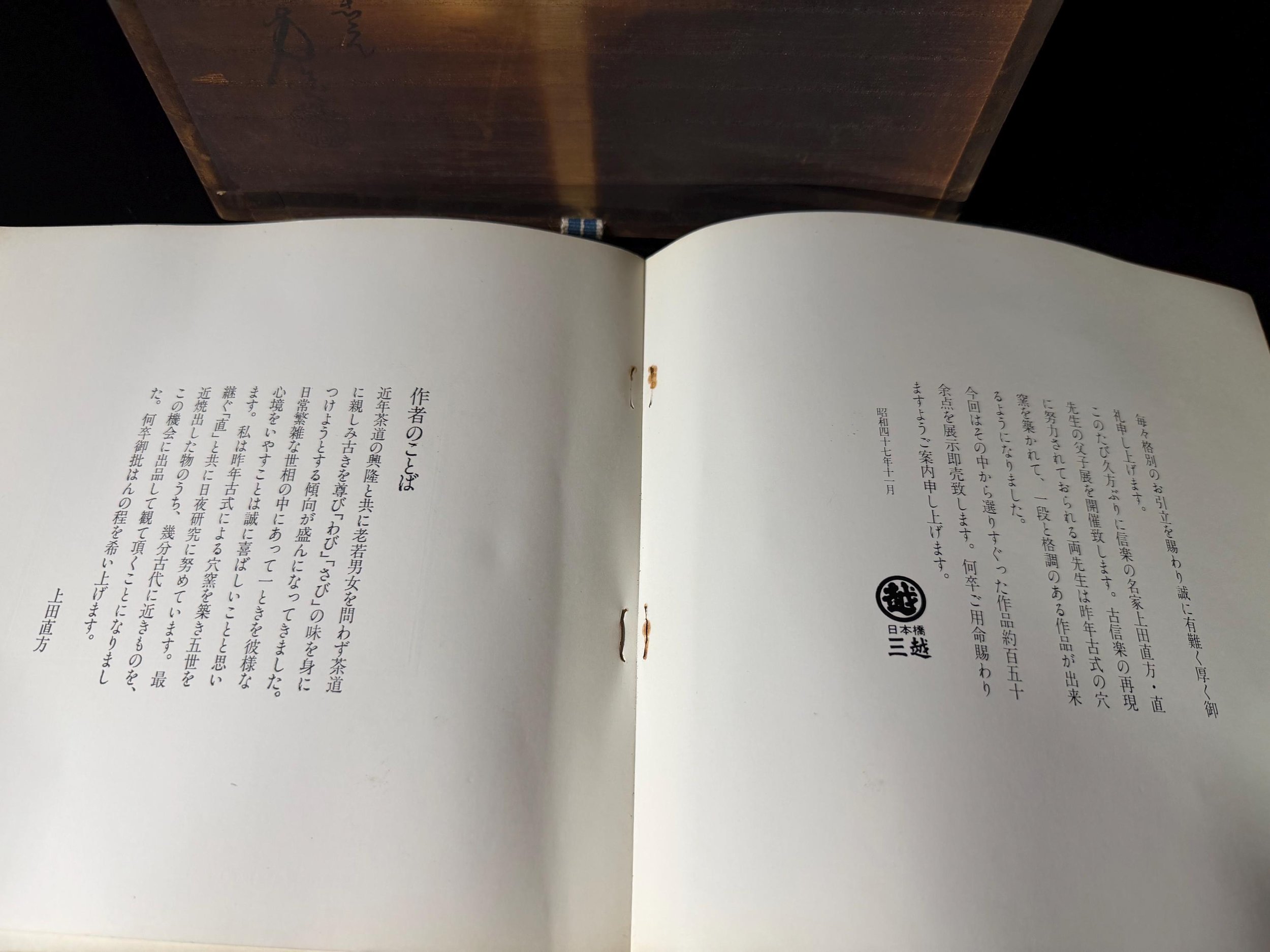 Image 4 of 12
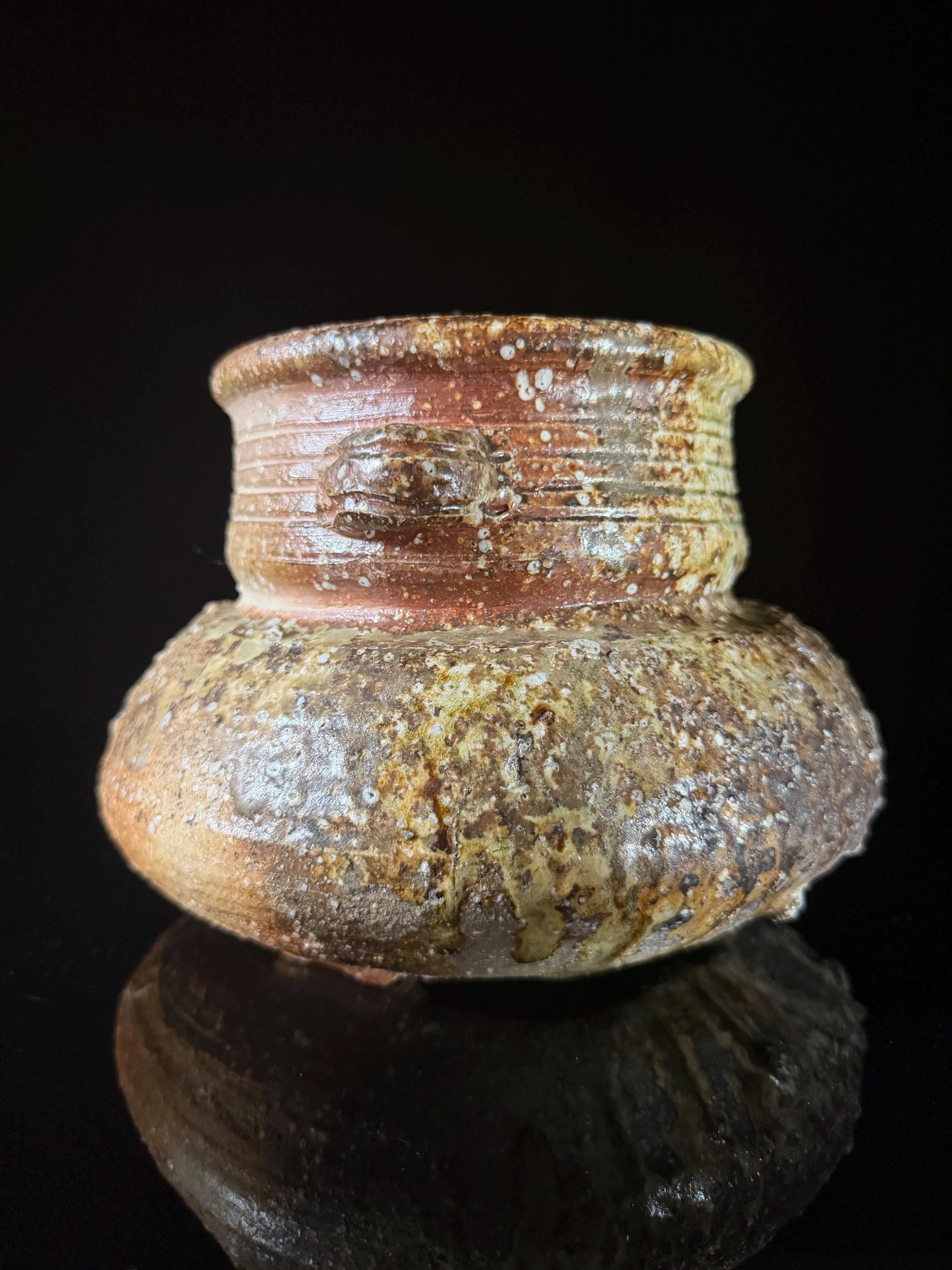 Image 5 of 12
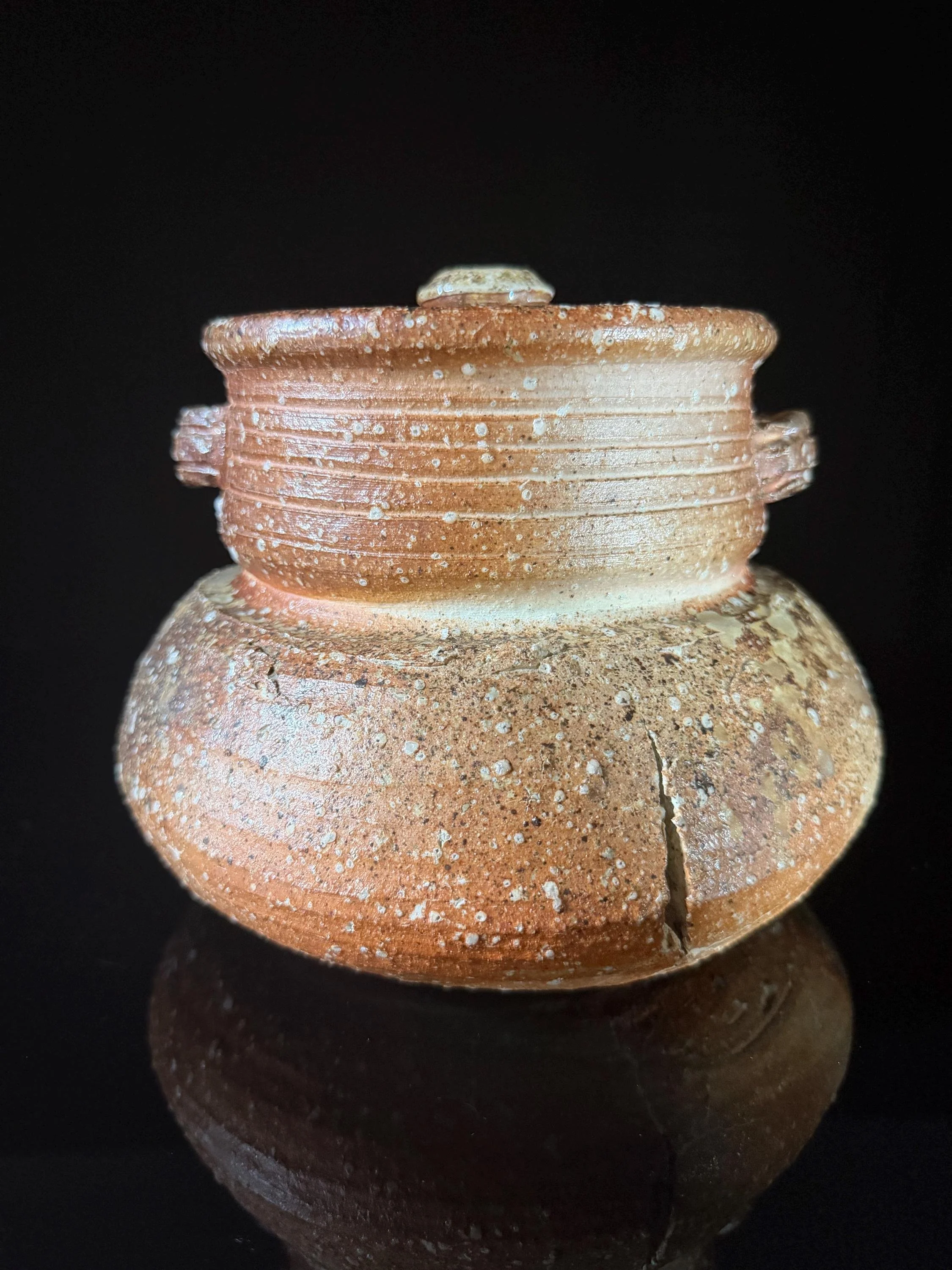 Image 6 of 12
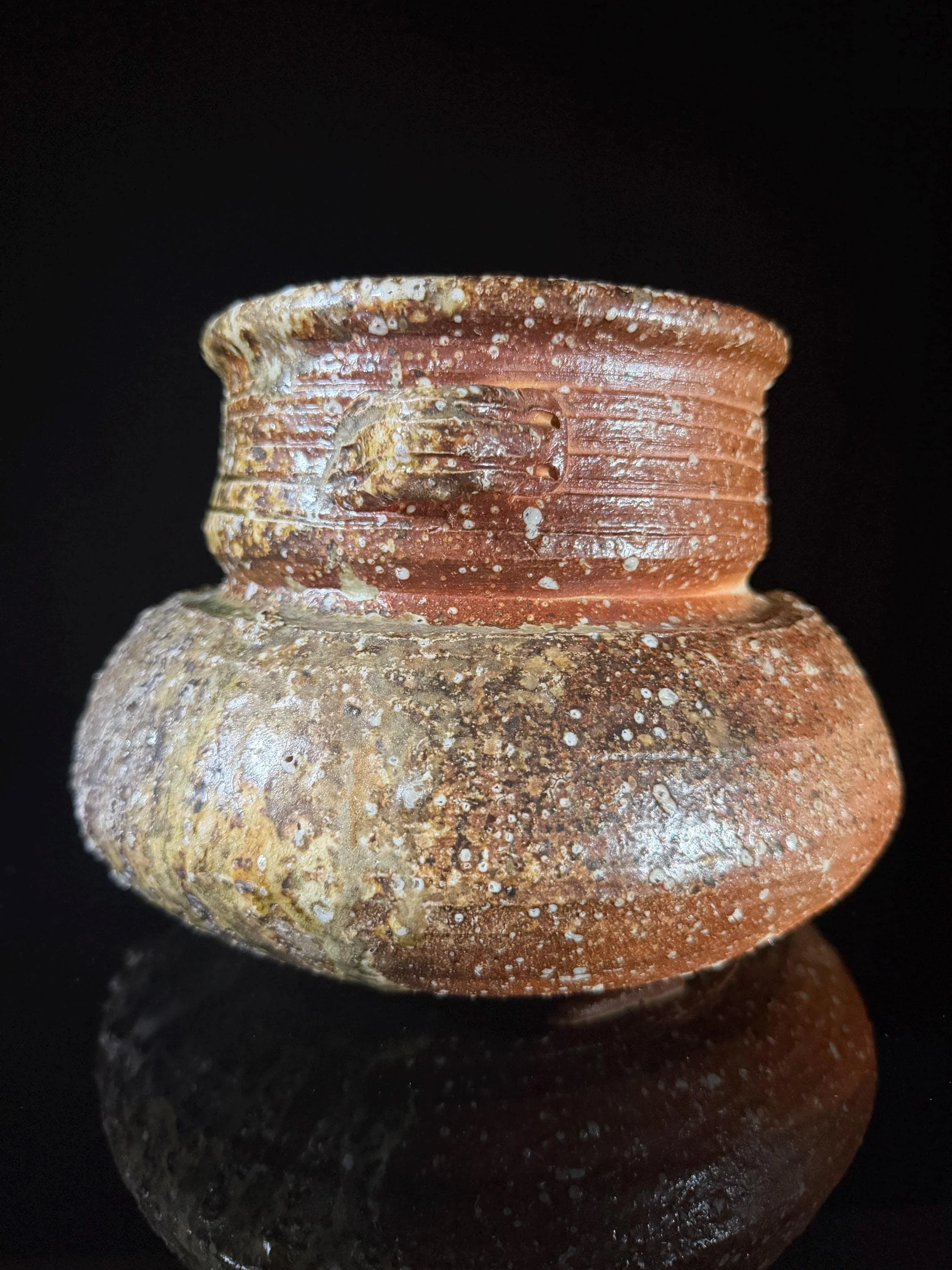 Image 7 of 12
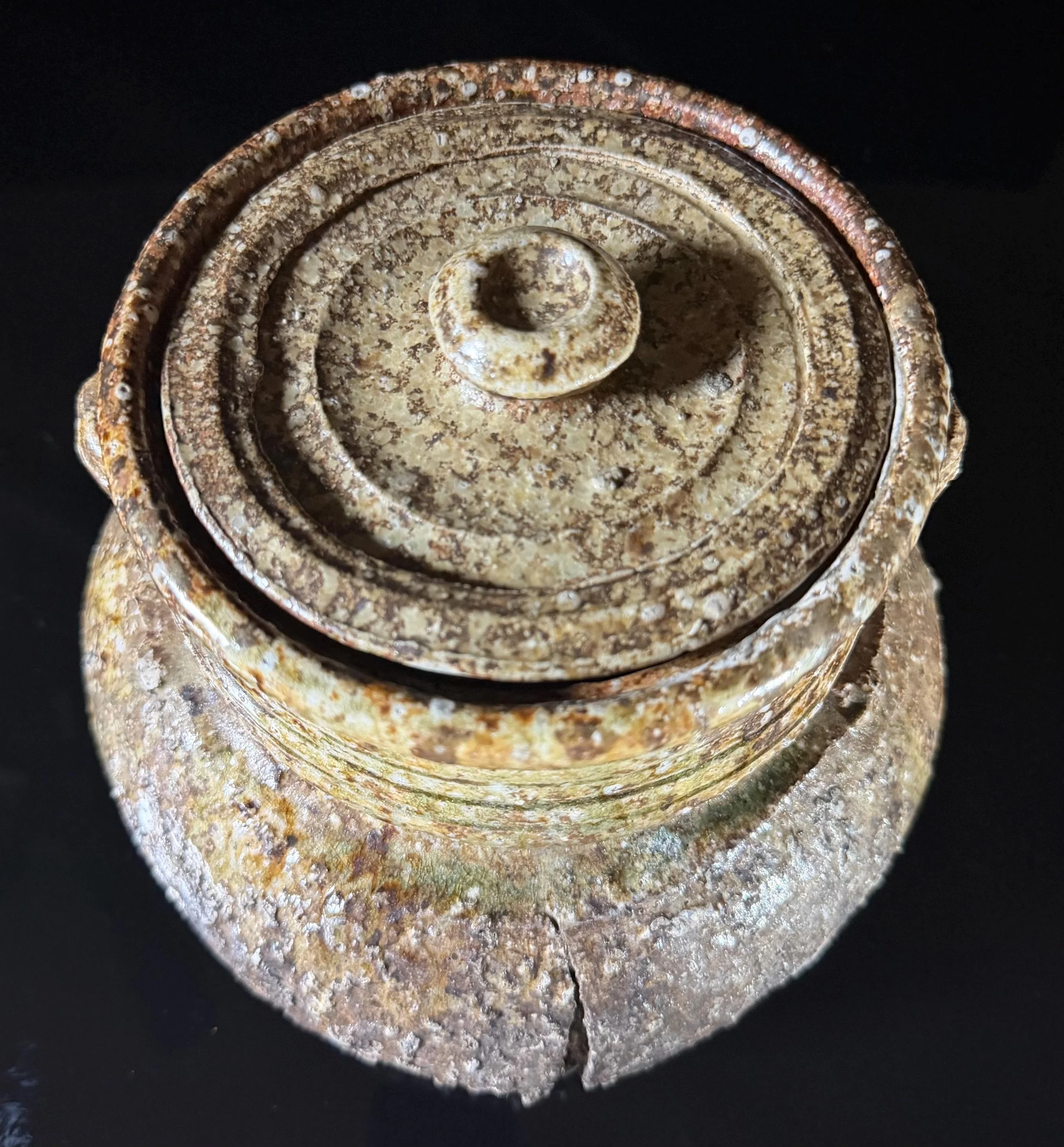 Image 8 of 12
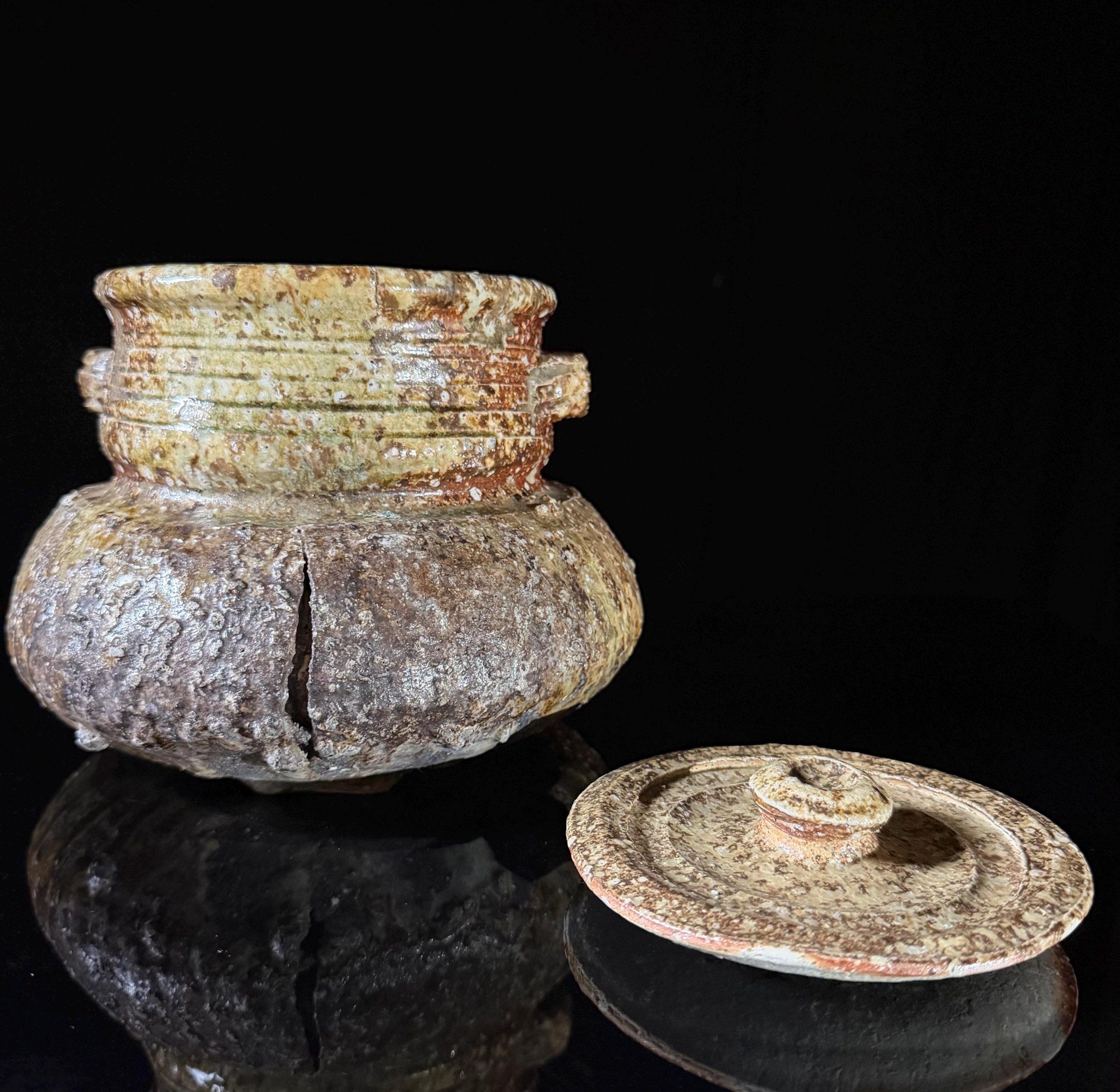 Image 9 of 12
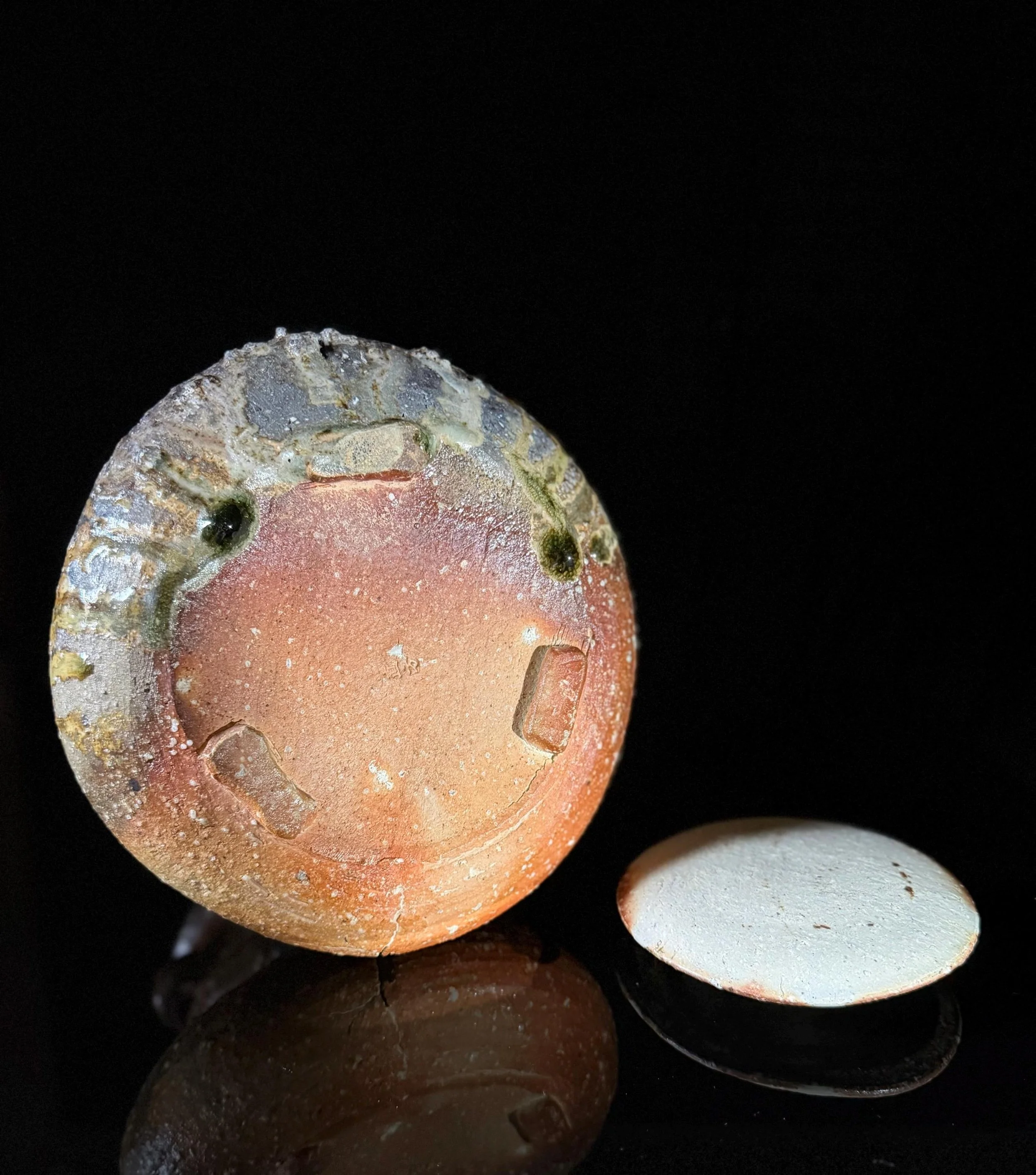 Image 10 of 12
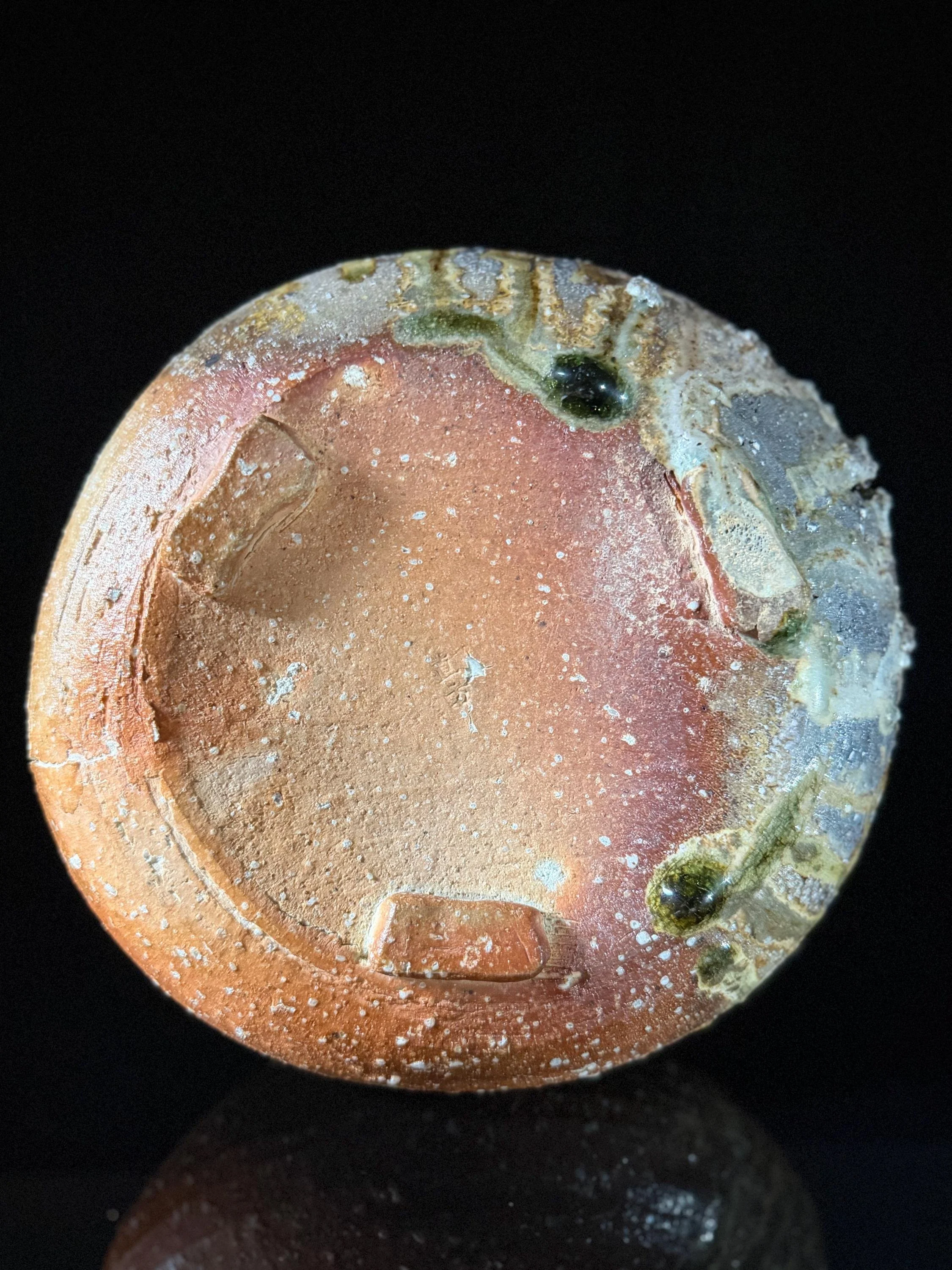 Image 11 of 12
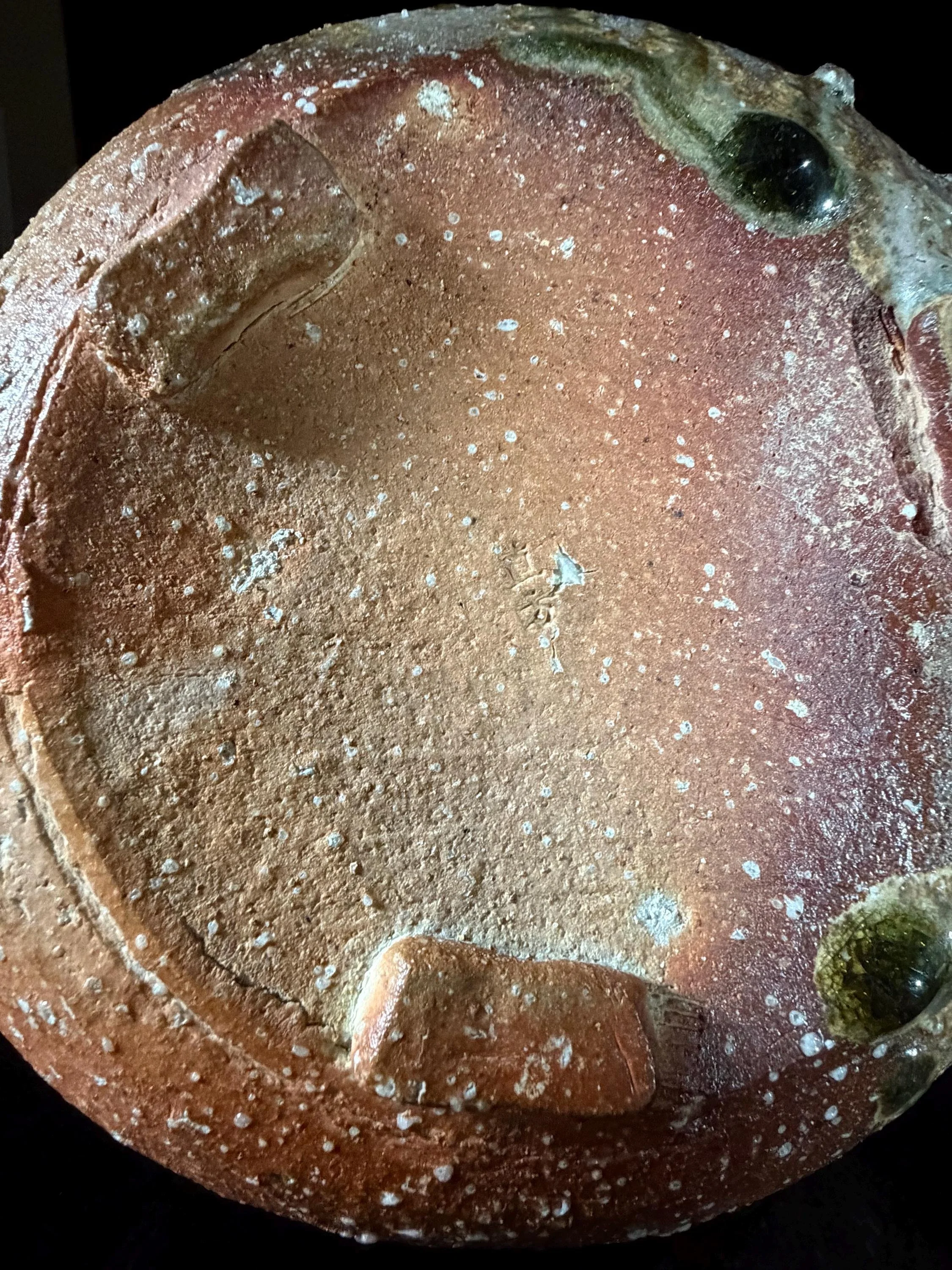 Image 12 of 12