Tojin Matsukaze (松風陶人) | Vintage Japanese Shino Ware Tea Bowl (抹茶碗) | Signed Tomobako (共箱) | Fine Studio Ceramic
Gallery overview
Operating within the revered Mino tradition, mid-century artisan Tojin Matsukaze (松風陶人) approached pottery not merely as the crafting of functional vessels, but as an alchemy of texture, earth, and prolonged heat. While the exact biographical details of his studio practice remain closely held within domestic Japanese collecting circles, his surviving works speak volumes about his profound technical discipline.
Matsukaze was a purist of the Shino style, a demanding lineage originating in the late 16th century that requires an intimate understanding of low-temperature, extended-duration firings. Unlike potters who seek symmetrical perfection or highly controlled, painted motifs, Matsukaze embraced the wabi-sabi philosophy, deliberately surrendering a degree of control to the kiln. His focus was on creating a deeply tactile, organic landscape on the surface of the clay, positioning him as a master of atmospheric firing effects rather than just a shaper of forms.
Curatorial notes
A Masterpiece of Texture. What elevates this specific chawan into a highly collectible gallery piece is Matsukaze’s exceptional manipulation of the notoriously difficult Shino feldspar glaze. The beauty of this bowl lies in its deliberate imperfections and the chemical reactions captured on its surface:
The Yuzu Skin (柚子肌): The thick, milky-white glaze has not melted smoothly. Instead, Matsukaze achieved a highly sought-after "crawling" effect. The glaze pooled and separated during the slow cooling process, resulting in a deeply pitted, organic texture resembling the skin of a citron fruit. This provides a dynamic tactile experience during the tea ceremony.
Hi-Iro Blushing (火色): The true hallmark of this piece's greatness is the prominent hi-iro, or "fire color." Where the thick white glaze thins or breaks, the iron within the raw clay has reacted intensely with the oxygen in the kiln, blossoming into gorgeous blushing pinks and warm, toasted oranges. Matsukaze achieved an incredibly vibrant contrast here that lesser Shino pieces often lack.
The Raw Foot: By leaving the lower body and the carved footring unglazed, the artisan invites the viewer to appreciate the raw, coarse, iron-bearing earth from which the bowl was born. The juxtaposition of the rugged base against the soft, snowy glaze above demonstrates Matsukaze's deep understanding of visual and textural tension.
Condition & Provenance
This ceramic is in flawless vintage condition, retaining its structural integrity with no chips or cracks. The bowl is accompanied by its original wooden tomobako (presentation box), which bears the natural aging of 40 to 50 years. The box lid features Matsukaze’s fluid, formal calligraphy and his registered red seal, serving as undeniable proof of origin and elevating the bowl to a documented work of art. The artisan's signature is also confidently hand-carved into the raw clay near the foot of the vessel.
Specifications
Artisan: Tojin Matsukaze (松風陶人)
Kiln / Style: Shino Ware (Mino Tradition)
Vessel Type: Matcha Tea Bowl (Chawan / 抹茶碗)
Dimensions: Dia. 4.7" (13.2cm) x Height 3.3" (9.5cm)
Inclusions: Signed Tomobako (共箱)
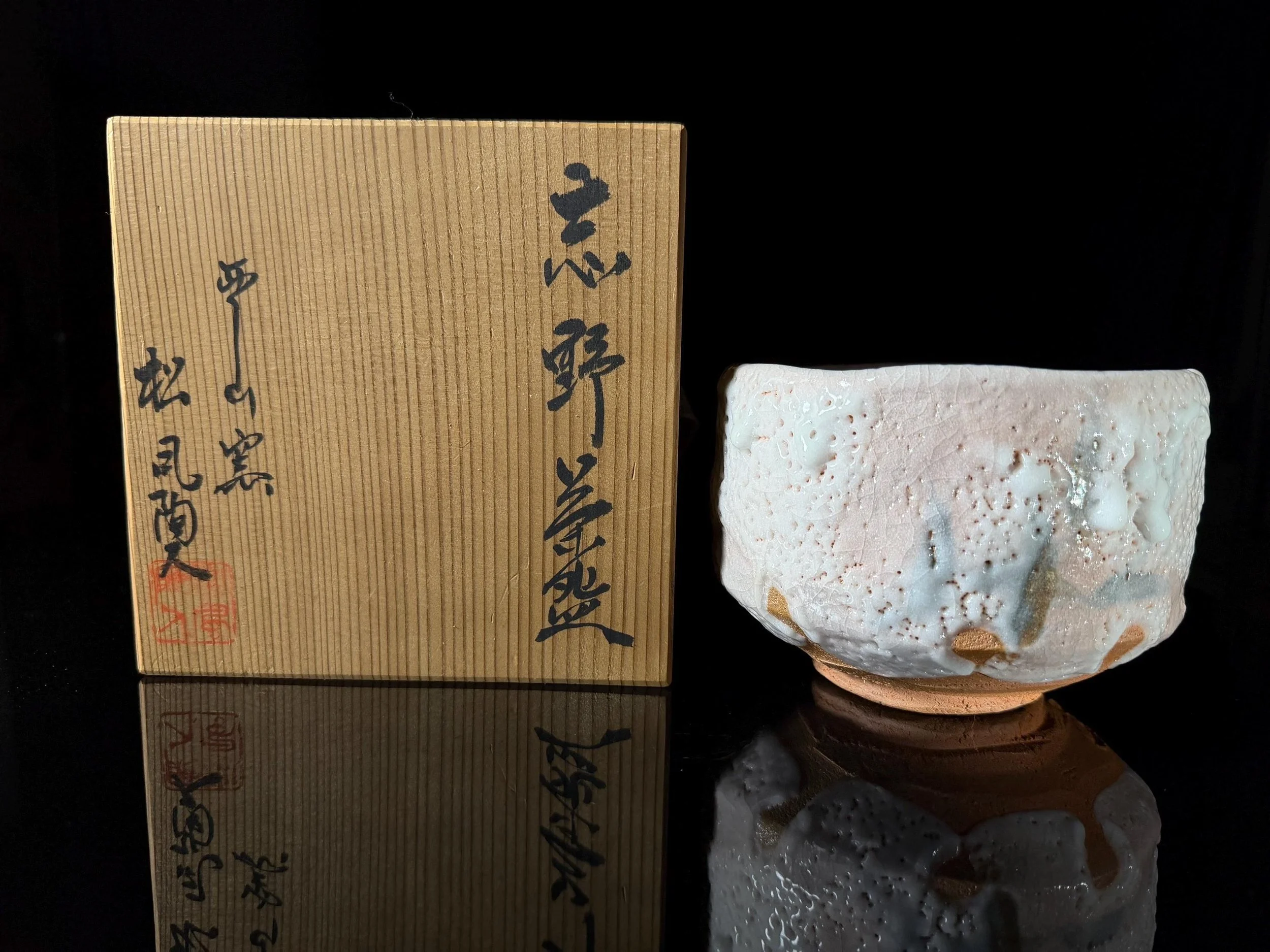 Image 1 of 9
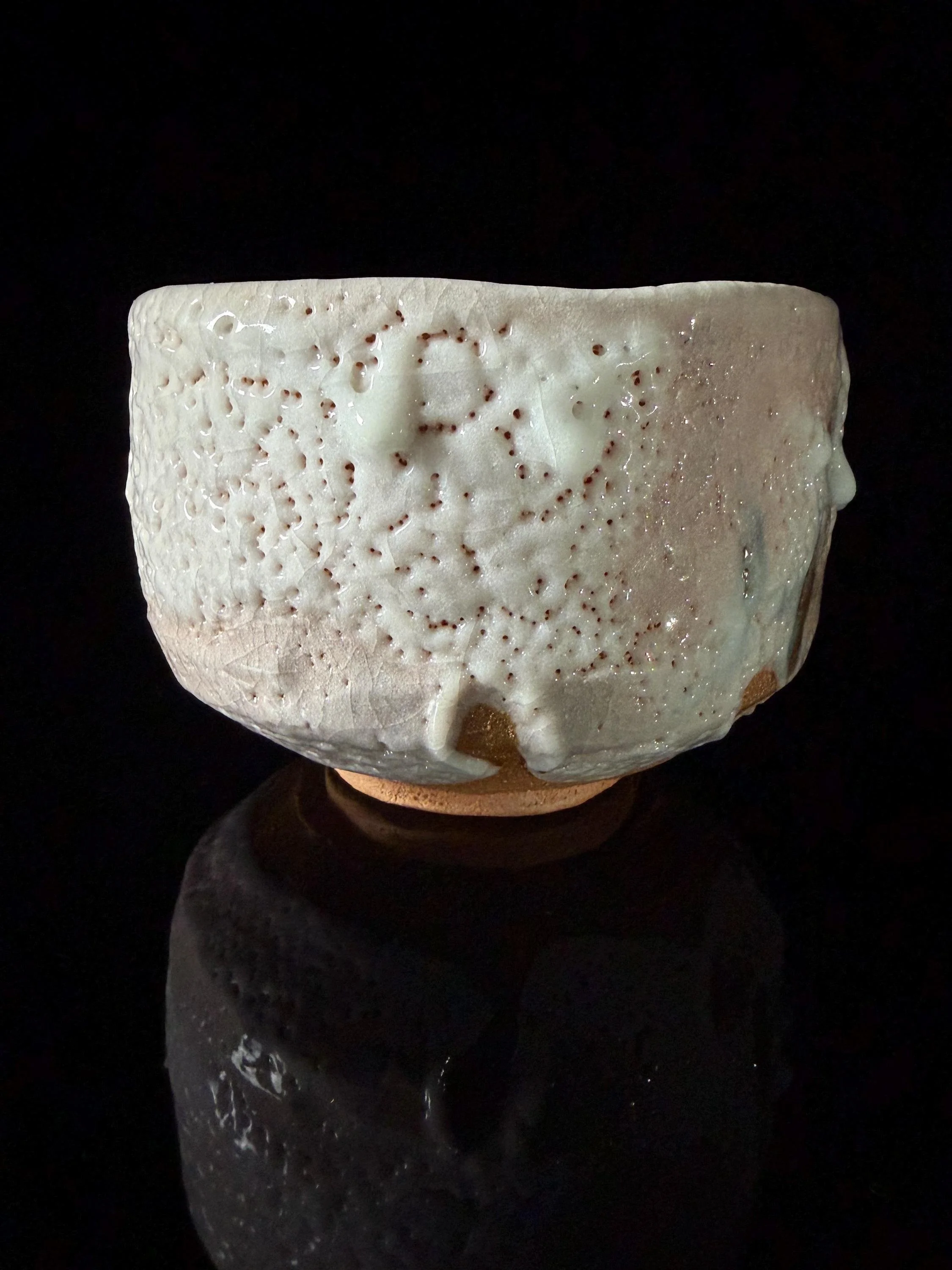 Image 2 of 9
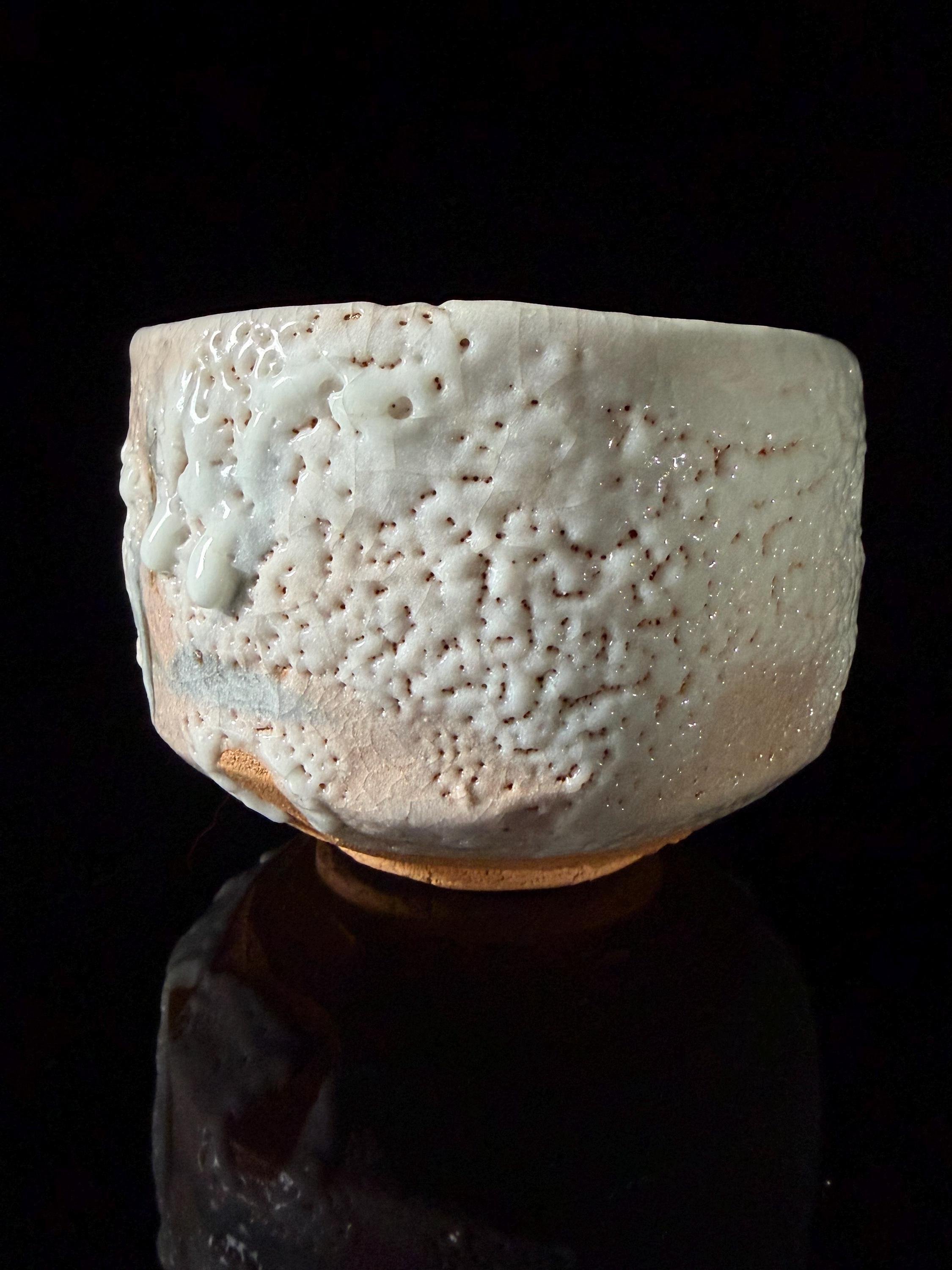 Image 3 of 9
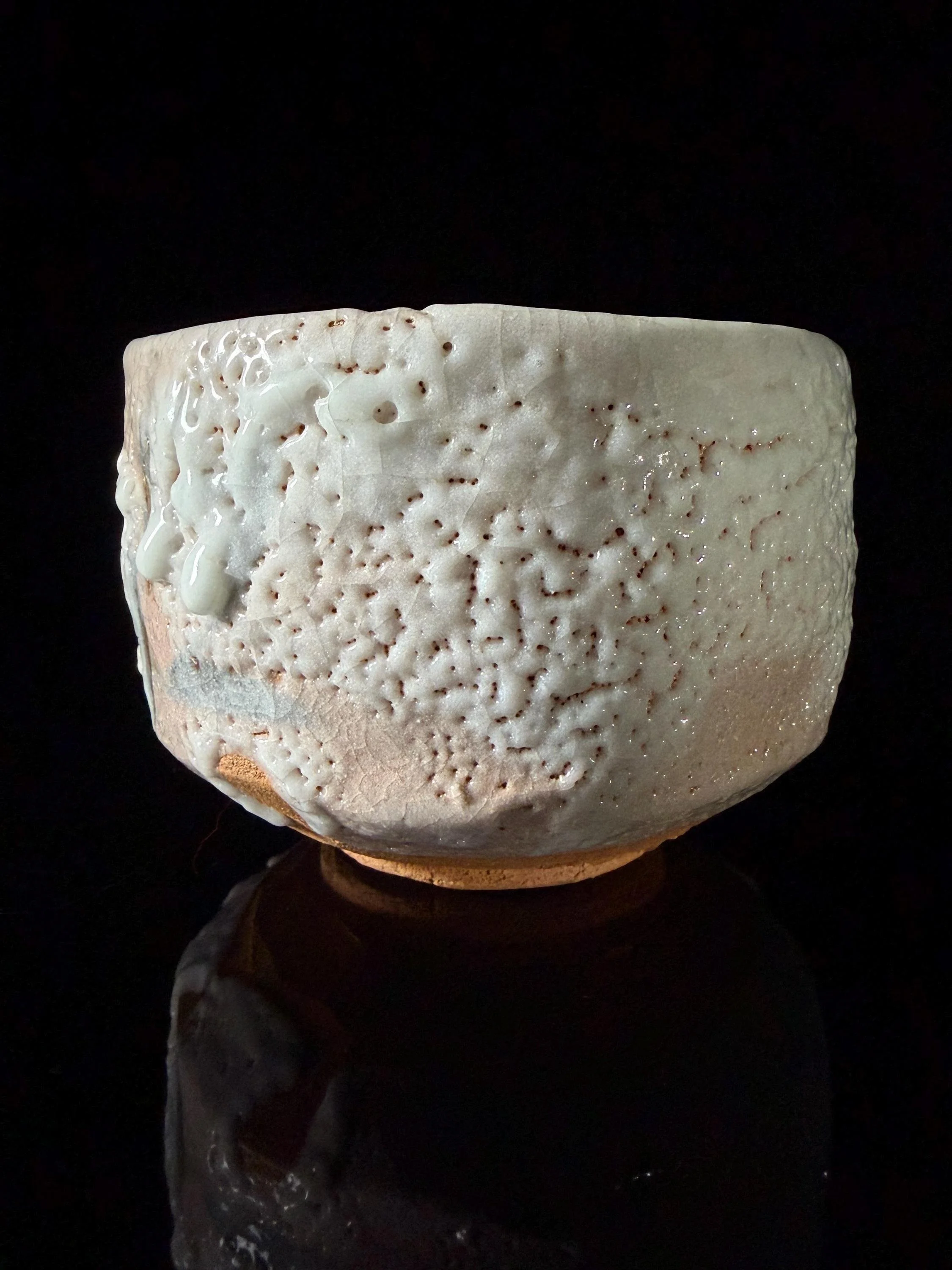 Image 4 of 9
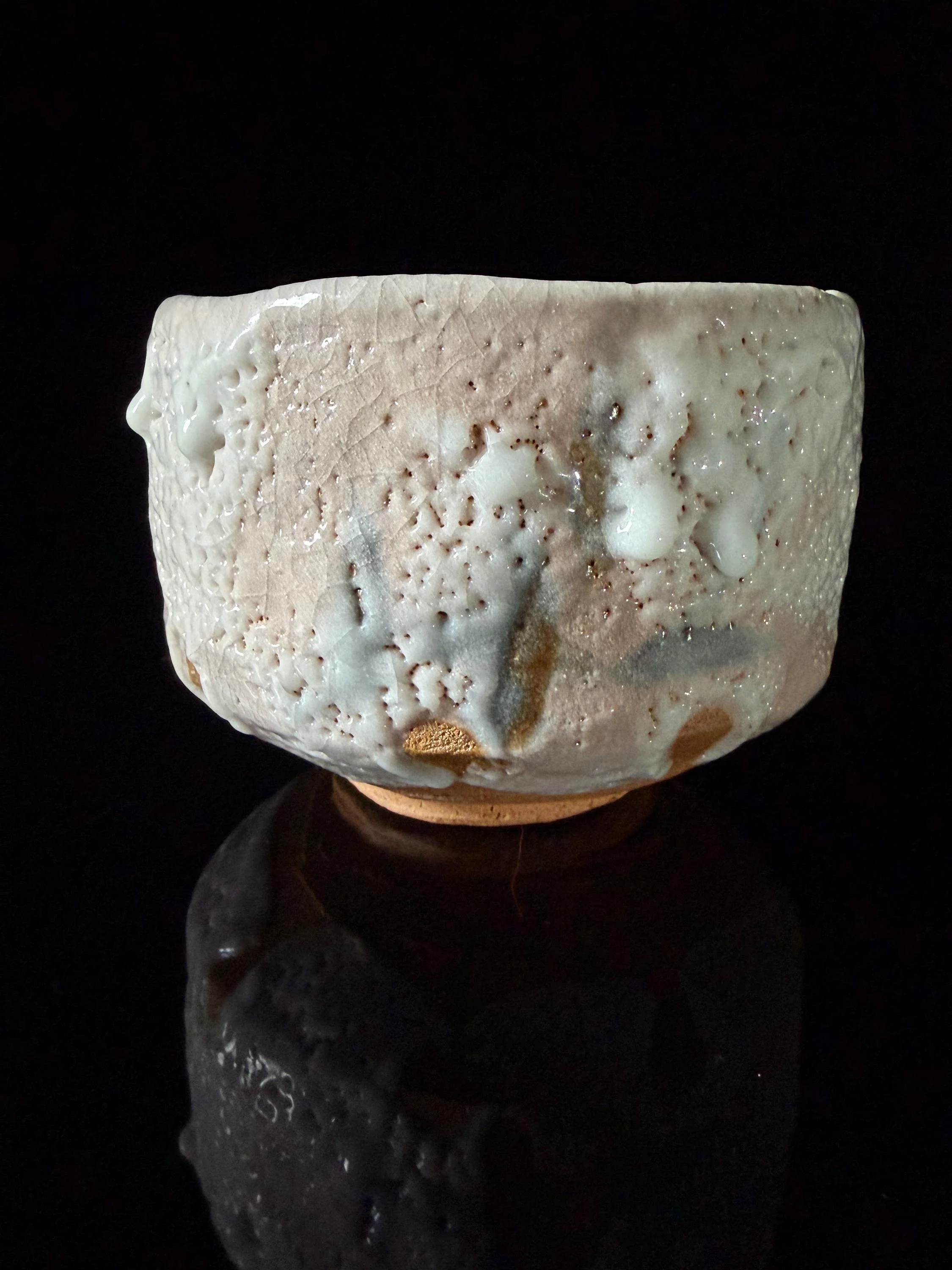 Image 5 of 9
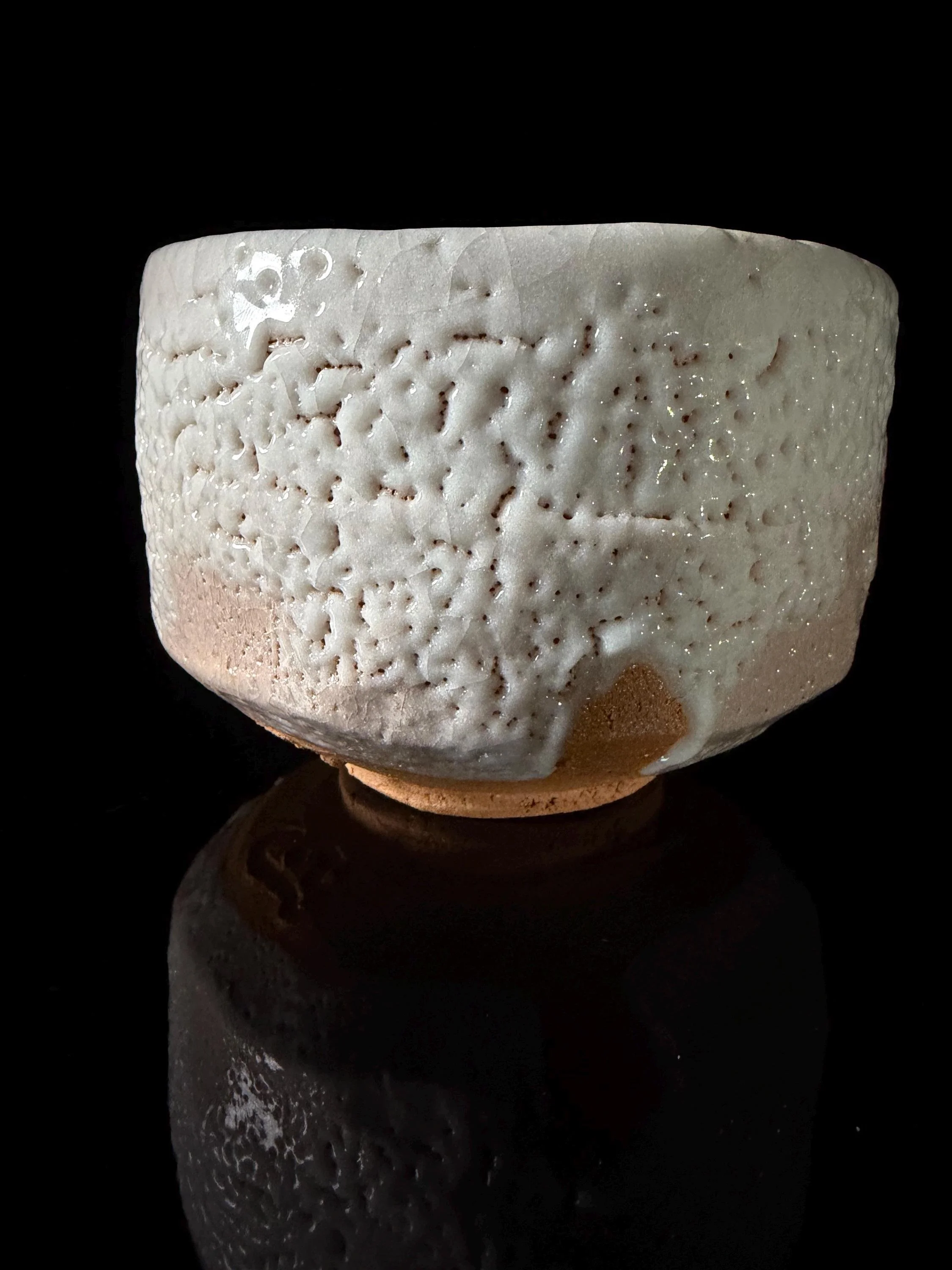 Image 6 of 9
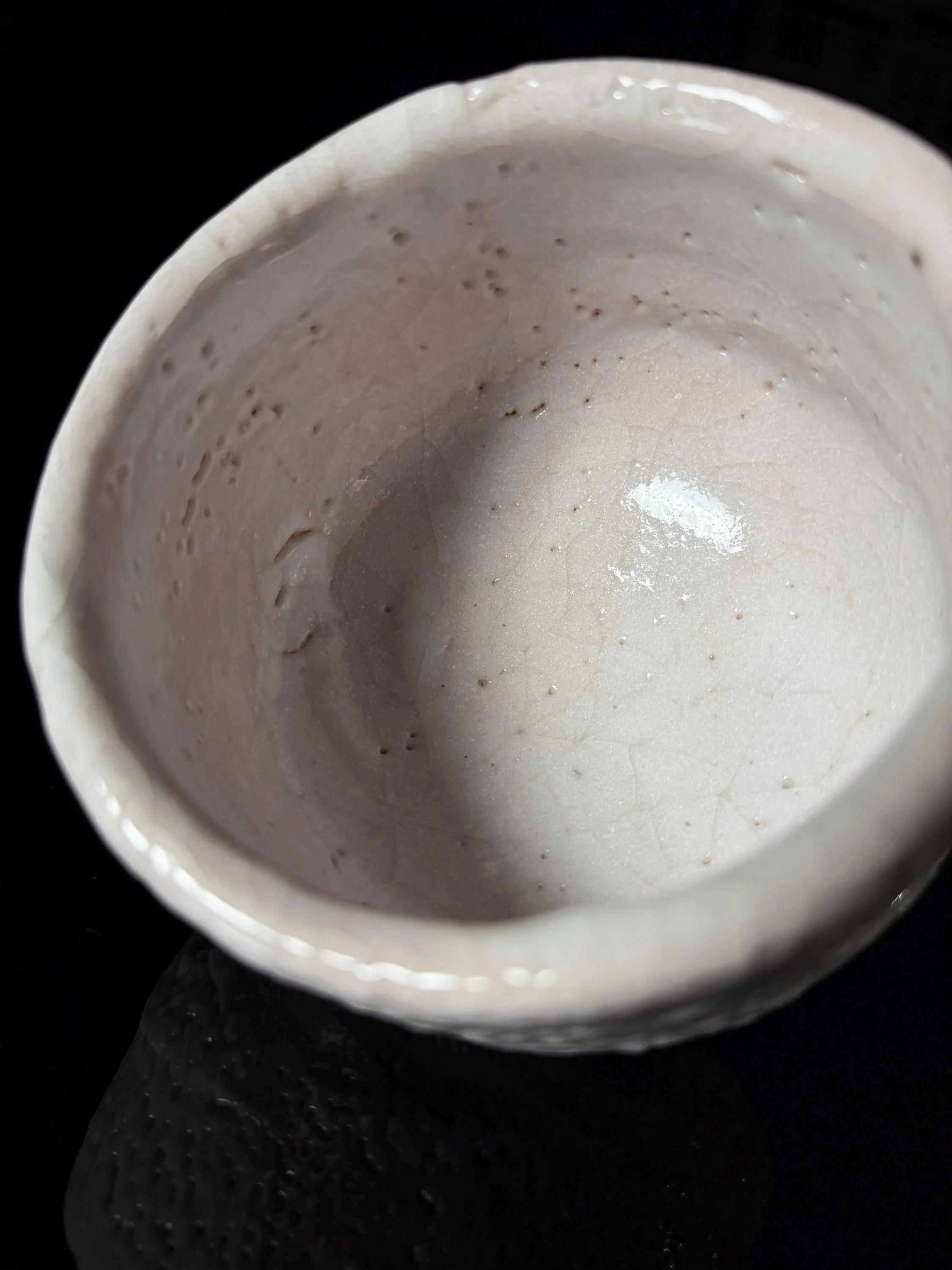 Image 7 of 9
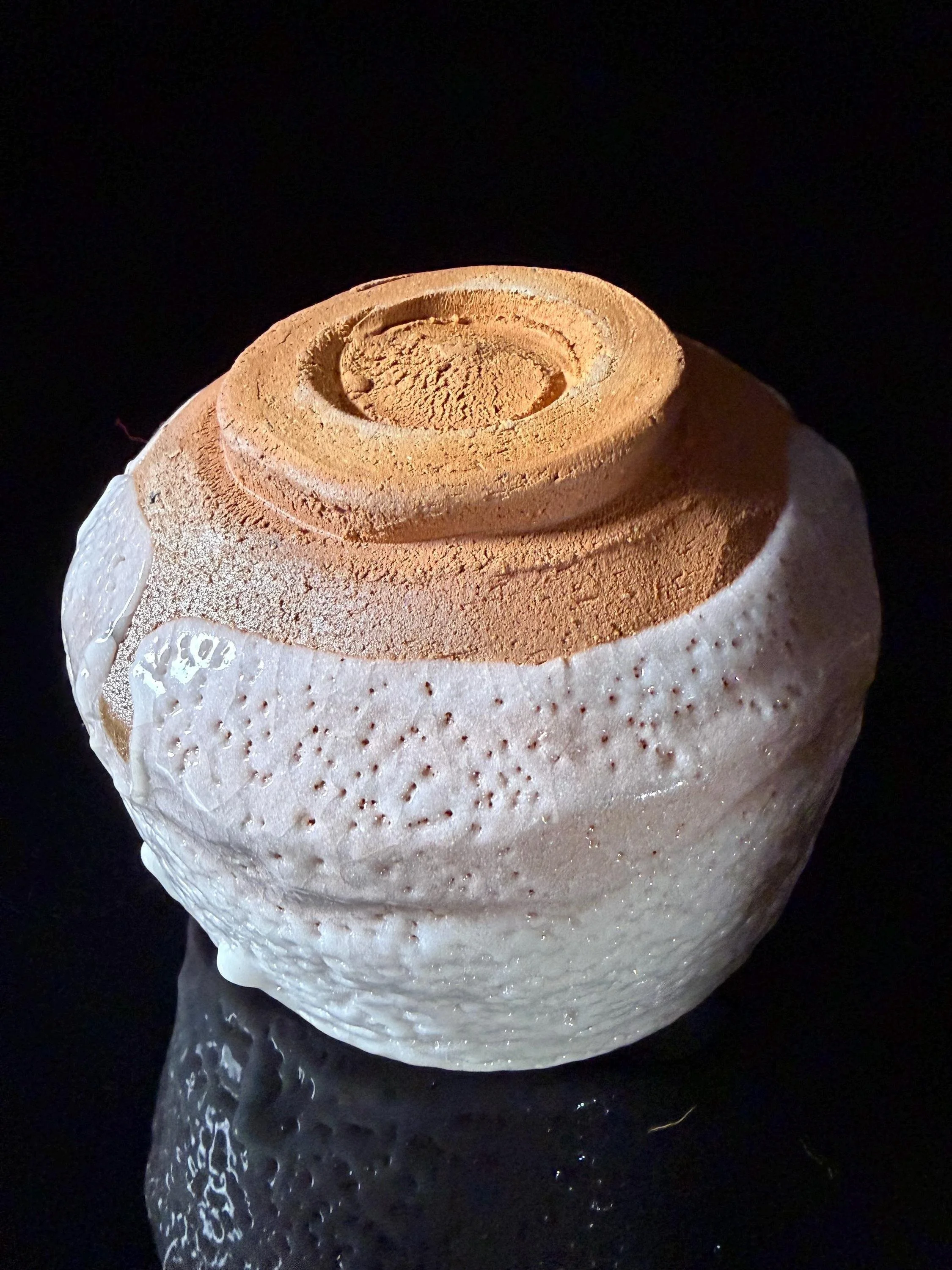 Image 8 of 9
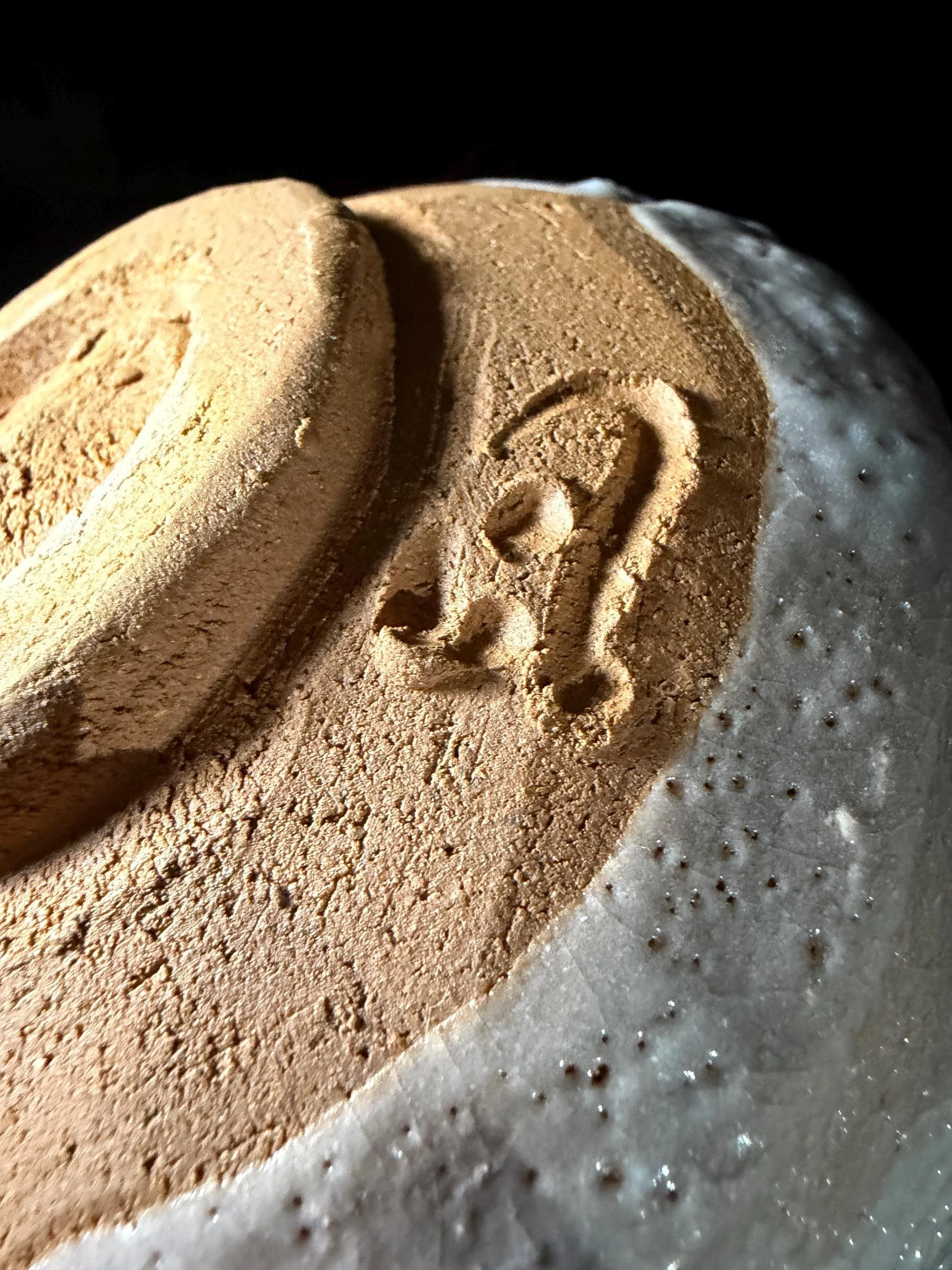 Image 9 of 9